


India has the most transparent companies, while Chinese firms are the most opaque, according to a global anti-graft watchdog’s survey released yesterday that assesses efforts by emerging market companies to fight corruption.
Transparency International said the report’s findings were “pathetic” and highlighted the urgent need for big multinational companies to do more to fight corruption.
The report covered 100 companies in 15 emerging market countries that also included Brazil, Mexico and Russia. The overall score slipped since the last Transparency in Corporate Reporting report in 2013, falling a fraction to 3.4 out of 10, with three-quarters of companies scoring less than half.
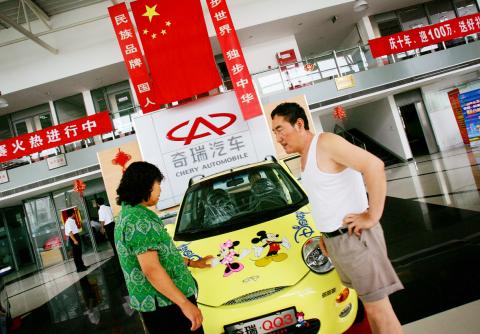
Photo: AP
The Berlin-based watchdog warned that the failure of a vast majority of companies surveyed to operate transparently risks creating an environment for corruption to thrive both in their businesses and the countries where they operate.
The weak scores are a big concern for global corruption fighting efforts, Transparency head of business integrity Susan Cote-Freeman said.
“All these companies, including the Chinese ones, are expanding in other geographies and they really have to raise the bar on their anticorruption and disclosure practices if we’re going to have a level playing field and if we’re going to really tackle this problem of corruption,” she said.
Companies were scored on three measures: anticorruption programs, the amount of information disclosed about subsidiaries, joint ventures and other holdings; and financial data released for operations in each country where it has business.
Thirty-seven Chinese companies were evaluated, making them the survey’s biggest group, but they had the weakest overall performance. The three companies that scored zero out of 10 were all Chinese: Chery Automobile Co (奇瑞汽車), appliance maker Guangdong Galanz Group Co (格蘭仕集團) and auto parts maker Wanxiang Group (萬向集團).
The list’s bottom 25 spots were also dominated by Chinese companies.
“The very weak Chinese results stem from weak or non-existent anticorruption policies and procedures, or a clear failure to disclose them in line with international practice,” Transparency International said in a press release accompanying its report.
Indian firms, on the other hand, dominated the top spots. Telecom company Bharti Airtel took first place with a score of 7.3 out of 10, followed by six units of conglomerate Tata and technology company Wipro.
One reason Indian firms came out on top is strict government requirements for financial disclosures, including operations in different countries.
Another is that older companies, such as Tata, have been focusing on anticorruption efforts for “quite a long time,” Cote-Freeman said.

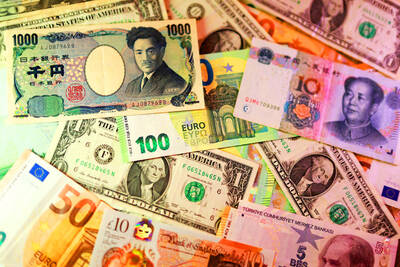
Taiwan’s foreign exchange reserves fell below the US$600 billion mark at the end of last month, with the central bank reporting a total of US$596.89 billion — a decline of US$8.6 billion from February — ending a three-month streak of increases. The central bank attributed the drop to a combination of factors such as outflows by foreign institutional investors, currency fluctuations and its own market interventions. “The large-scale outflows disrupted the balance of supply and demand in the foreign exchange market, prompting the central bank to intervene repeatedly by selling US dollars to stabilize the local currency,” Department of Foreign
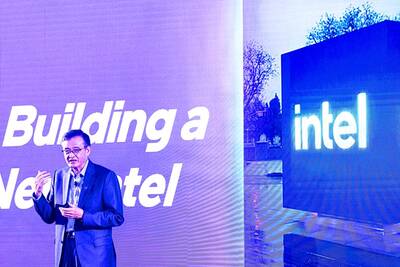
Intel Corp is joining Elon Musk’s long-shot effort to develop semiconductors for Tesla Inc, Space Exploration Technologies Corp and xAI, marking a surprising twist in the chipmaker’s comeback bid. Intel would help the Terafab project “refactor” the technology in a chip factory, the company said on Tuesday in a post on X, Musk’s social media platform. That is a stage in the development process that typically helps make chips more powerful or reliable. The chipmaker’s shares jumped 4.2 percent to US$52.91 in New York trading on Tuesday. The Terafab project is a grand plan by Musk to eventually manufacture his own chips for
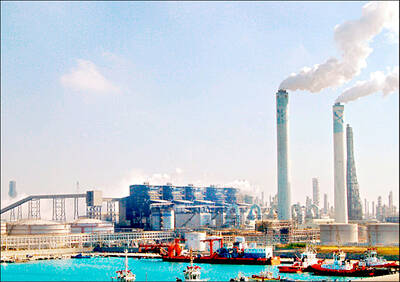
Taiwan Power Co (Taipower, 台電) yesterday said it plans to resume operations at two coal-fired power generators for three months to boost security of electricity supply as liquefied natural gas (LNG) supply risks are running high due to the Middle East conflict. The two coal-fired power generators are at Mailiao Power Plant in Yunlin County’s Mailiao Township (麥寮). The plant, operated by Formosa Plastics Group (台塑集團), supplied electricity to Taipower’s power grid until the end of last year. Taipower’s decision came about one month after Minister of Economic Affairs Kung Ming-hsin (龔明鑫) on March 10 said that the nation had no imminent

Some robotaxi passengers were left stranded in the middle of fast-moving traffic in a major Chinese city after their driverless vehicles stopped running, according to police and media reports on Wednesday. A preliminary investigation indicates more than 100 robotaxis came to a halt because of a “system malfunction,” police in the city of Wuhan said in a statement, without elaborating. No injuries were reported. One passenger told Chinese media that their robotaxi stopped after turning a corner. An instruction on a screen read: “Driving system malfunction. Staff are expected to arrive in 5 minutes.” After no one showed up, the passenger pushed


 RSS
RSS