


Taipei-based Cosmos Hotel & Resorts Group (天成飯店集團) aims to grow revenue this year aided by the launch of a new hotel next month, despite a soft economy at home and abroad.
The hospitality provider, which operates five hotels and one independent restaurant, expects to generate NT$1.7 billion (US$51.98 million) in revenue this year, a modest increase of 3 percent from last year, in line with a multi-branding expansion strategy, the company said.
“We have sensed the economic slowdown, but its impact is not evident on the group, thanks to quick strategy adjustments,” the company’s assistant director of marketing and communication Blythe Chao (趙芝綺) said by telephone.
Cosmos Hotel Taipei (台北天成大飯店), the company’s oldest hotel and main source of revenue, had an occupancy rate of 96.63 percent in the first quarter, extending its leadership from last year with 95.7 percent, the company said.
Its location in front of Taipei Main Station and low-price strategy make it a top choice among independent travelers exploring Taipei and Taiwan, the company said.
Cosmos Taipei room rates averaged NT$3,500 per night last year and are likely to stay flat this year, the company said.
The economic weakness increases the difficulty of securing customers, but the group has made adjustments to expand and diversify its customer base, the company said.
In particular, the group has opened new facilities targeting young independent travelers, it added.
The launch next month of a new hotel in Chaiyi under the Sun Dialogue Hotel (天成文旅-繪日之丘) brand is an example of the ongoing adjustments, after setting up the budget hotel Bee House (蜂巢) in 2013.
Independent travelers account for 95 percent of the group’s customer base with tourists from Taiwan, Japan, Hong Kong, South Korea, Singapore and Malaysia all contributing sizable shares, Chao said, adding that Japanese and Hong Kongers make up 20 percent of the market each.
The group is not losing its focus on business and high-end customers, with an occupancy rate of 91.55 percent at its five-star facility, Taipei Garden Hotel (台北花園大酒店) last year, the company said.
Various trade fairs, such as the Taipei International Cycle Show in March and Computex next month, help fill rooms and dining facilities, the company said.
In addition, the company is expected to open a luxury resort hotel in Hualien County’s Ruisui Township (瑞穗) in the second quarter of next year.
If things proceed smoothly, the company intends to seek primary listing in the local bourse in 2019, it said.
Taichung reported the steepest fall in completed home prices among the six special municipalities in the first quarter of this year, data compiled by Taiwan Realty Co (台灣房屋) showed yesterday. From January through last month, the average transaction price for completed homes in Taichung fell 8 percent from a year earlier to NT$299,000 (US$9,483) per ping (3.3m²), said Taiwan Realty, which compiled the data based on the government’s price registration platform. The decline could be attributed to many home buyers choosing relatively affordable used homes to live in themselves, instead of newly built homes in the city’s prime property market, Taiwan Realty
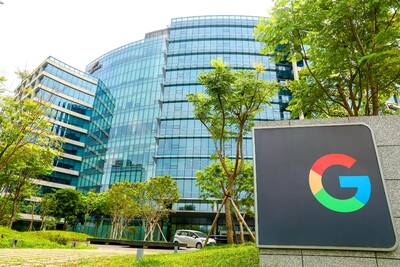
The government yesterday approved applications by Alphabet Inc’s Google to invest NT$27.08 billion (US$859.98 million) in Taiwan, the Ministry of Economic Affairs said in a statement. The Department of Investment Review approved two investments proposed by Google, with much of the funds to be used for data processing and electronic information supply services, as well as inventory procurement businesses in the semiconductor field, the ministry said. It marks the second consecutive year that Google has applied to increase its investment in Taiwan. Google plans to infuse NT$25.34 billion into Charter Investments Ltd (特許投資顧問) through its Singapore-based subsidiary Fructan Holdings Singapore Pte Ltd, and

JET JUICE: The war on Iran’s secondary effects have seen fuel prices skyrocket, knocking flight schedules down to earth in return as airlines struggle with costs Airline passengers should brace for more irritation in the next few months as carriers worldwide cancel flights and ground planes to cope with stratospheric increases in jet-fuel prices. Dutch flag carrier KLM is the latest company to cut its schedule, saying on Thursday that it would scrap 80 return flights at Amsterdam’s Schiphol Airport in the coming month. That puts it in the same league as United Airlines Holdings Inc, Deutsche Lufthansa AG and Cathay Pacific Airways Ltd, which have all pruned itineraries to mitigate costs. Global capacity for next month has been reduced by about 3 percentage points, with all

Micron Technology Inc is a driving force pushing the US Congress to pass legislation that would put new export restrictions on equipment its Chinese competitors use to make their chips, according to people familiar with the matter. A US House of Representatives panel yesterday was to vote on the “MATCH Act,” a bill designed to close gaps in restrictions on chipmaking equipment. It would also pressure foreign companies that sell equipment to Chinese chipmaking facilities to align with export curbs on US companies like Lam Research Corp and Applied Materials Inc. The bill targets facilities operated by China’s ChangXin Memory Technologies Inc


 RSS
RSS