


The music industry has faced more than a decade of financial woes, but in one area, business is soaring — festivals.
Music festivals have witnessed a boom in the past few years, with new events proliferating that cater to every taste and region in what has become a vital source of revenue and publicity for artists.
Coachella, often considered the tastemaker of US music events, opened on Friday in the southern California desert at the start of the busiest season yet for festivals.

Photo: Reuters
“I think music festivals are basically the future of the industry. It’s the only area where you are really seeing a lot of growth,” said Parag Bhandari, the head of UG Strategies, which recently launched the Uphoric digital television network dedicated to covering the global festival circuit.
“It’s really the last area in the music industry where there is real money to be made for artists,” he said.
Among the most ambitious newcomers is Rock in Rio USA, which will take place over two weekends next month at the new 13-hectare “City of Rock” grounds on the Las Vegas Strip.

Photo: Reuters
A spinoff of the major Brazilian festival, Rock in Rio USA seeks to tap a niche by offering a lineup of mainstream giants including pop superstar Taylor Swift and metal veterans Metallica.
Coachella and two other longstanding US festivals — Bonnaroo in Tennessee and Lollapalooza in Chicago — both have their roots in 1990s alternative culture and market themselves as staging grounds for emerging stars.
Also for the first time on the calendar this year are the Festival of the Desert, a classical event near the Coachella grounds led by Paris Opera music director Philippe Jordan; the Eaux Claires festival in Wisconsin dedicated to innovative music and curated by Bon Iver frontman Justin Vernon, and several new country music festivals.
Other festivals have sought to differentiate themselves not by lineup, but by amenities, with San Francisco’s Outside Lands seeking to attract gourmets through its selection of food and drink vendors.
While much of the growth has been in the US, festivals have been sprouting up around the world including in Europe, where England’s Glastonbury was considered the pioneer of modern music festivals.
Lollapalooza this year is expanding to Europe with a Berlin edition, after already starting sister festivals in Argentina, Brazil and Chile.
Not all festivals have succeeded. Kanrocksas in the Kansas City area folded after poor ticket sales and Lollapalooza called off an expansion to Israel.
However, industry watchers expect strong growth as festivals sprout up for uncatered niches and regions.
San Francisco-based company Eventbrite said it managed tickets for 50,000 music or other festivals worldwide last year — up 50 percent from just a year earlier. “We are not seeing signs of slowing down anytime soon,” said Martina Wang, head of music marketing at Eventbrite.
A key driving factor is the tastes of the millennial generation, with an Eventbrite study last year finding that one-quarter of university students had attended a music festival in the previous year.
“When it comes to millennials’ money, we are finding that buying experiences trumps buying things,” Wang said.
“More than three out of four said they would buy a desirable experience over a desirable thing, like the latest gadget,” she said.
Barring major flops, festivals offer guaranteed audiences and revenue for musicians, who rarely expect significant payouts from recordings in the age of instant music.
Coachella, which quickly sells out each year, grossed US$78 million last year, according to industry monitor Billboard Box Office.
About 175,000 people flock to Glastonbury, which is about the same number who go each year to Coachella — which since 2012 has held two weekends with identical lineups.
By comparison, about 75,000 people attended the World Cup final last year in Brazil, although far more watched.
Bhandari, sensing demand to create the Uphoric network, saw parallels to the World Cup as a growing number of fans fly to multiple festivals around the world and plan vacations around the dates.
“Music festivals are really becoming on the scale of sporting events,” he said.

Shares of contract chipmaker Taiwan Semiconductor Manufacturing Co (TSMC, 台積電) came under pressure yesterday after a report that Apple Inc is looking to shift some orders from the Taiwanese company to Intel Corp. TSMC shares fell NT$55, or 2.4 percent, to close at NT$2,235 on the local main board, Taiwan Stock Exchange data showed. Despite the losses, TSMC is expected to continue to benefit from sound fundamentals, as it maintains a lead over its peers in high-end process development, analysts said. “The selling was a knee-jerk reaction to an Intel-Apple report over the weekend,” Mega International Investment Services Corp (兆豐國際投顧) analyst Alex Huang
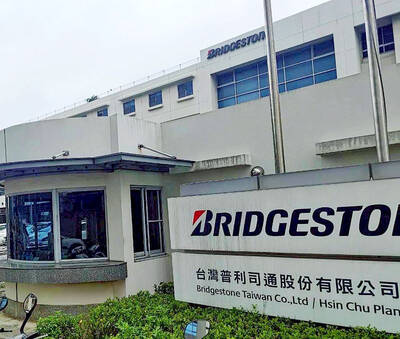
TRANSITION: With the closure, the company would reorganize its Taiwanese unit to a sales and service-focused model, Bridgestone said Bridgestone Corp yesterday announced it would cease manufacturing operations at its tire plant in Hsinchu County’s Hukou Township (湖口), affecting more than 500 workers. Bridgestone Taiwan Co (台灣普利司通) said in a statement that the decision was based on the Tokyo-based tire maker’s adjustments to its global operational strategy and long-term market development considerations. The Taiwanese unit would be reorganized as part of the closure, effective yesterday, and all related production activities would be concluded, the statement said. Under the plan, Bridgestone would continue to deepen its presence in the Taiwanese market, while transitioning to a sales and service-focused business model, it added. The Hsinchu

Taiwan Semiconductor Manufacturing Co (TSMC, 台積電) has approved a capital budget of US$31.28 billion for production expansion to meet long-term development needs during the artificial intelligence (AI) boom. The company’s board meeting yesterday approved the capital appropriation plan for purposes such as the installation of advanced technology capacity and fab construction, the world’s largest contract chipmaker said in a statement. At an earnings conference last month, TSMC forecast that its capital expenditure for this year would be at the higher end of the US$52 billion to US$56 billion range it forecast in January in response to robust demand for 5G, AI and

Taiwan Semiconductor Manufacturing Co’s (TSMC, 台積電) investment project in Arizona has progressed better than expected, but it still faces challenges such as water and labor shortages, National Development Council (NDC) Minister Yeh Chun-hsien (葉俊顯) said yesterday. Speaking with reporters after visiting TSMC’s Arizona hub and attending the SelectUSA Investment Summit in Maryland last week, Yeh said TSMC’s Arizona site turned a profit of NT$16.14 billion (US$514 million) last year in its first full year of mass production. “TSMC told me it was surprised by the smooth trial run of the first fab, which has left the company optimistic about the project’s outlook,”


 RSS
RSS