


E. Sun Financial Holding Co (玉山金控) yesterday inked a deal to buy Chiayi Fourth Credit Cooperative Association (嘉義第四信用合作社) for NT$110 million (US$3.72 million) to expand its service network, customer base and earnings, the company said in a stock filing.
The expansion move came less than a year after the financial service provider acquired Chu Nan Credit-Cooperative Association (竹南信用合作社) to lift its standing in Taiwan’s overcrowded and fragmented market.
The acquisition, which still needs approval from the companies’ respective shareholders and the Financial Supervisory Commission, is tentatively slated to take effect on Nov. 3 this year, the filing said.
E. Sun Commercial Bank (玉山銀行), the surviving entity, will take over all Chiayi Credit Cooperative’s assets except for 70 pieces of real estate that the latter promised to sell by the end of October, the filing said.
E. Sun Bank, the group’s main source of income, has sought to increase its scale and become one of the top three credit card issuers this year, from fourth place after Chinatrust Commercial Bank (中國信託商銀), Cathay United Bank (國泰世華銀行) and Taishin International Bank (台新銀行), E. Sun Financial president Joseph Huang (黃男州) said last month.
Unlike foreign lenders that target affluent Taiwanese, E. Sun Bank has reached out to middle-income earners.
The lender partnered with China’s leading online payment service provider, Alipay (支付寶), on Tuesday, in a joint effort to tap e-commerce opportunities across the Taiwan Strait.
Last month, it entered cooperation with US nutrition and skin-care product supplier Herbalife, after securing a credit card alliance with Carrefour Taiwan (家樂福), the largest hypermarket chain operator in Taiwan last year.
The company’s ambitions are not limited to Taiwan, as the bank’s board yesterday approved plans to sign cooperation agreements with China’s Bank of Communications Co (交通銀行) and China Merchants Bank Co (招商銀行), paving the way for its expansion in China, the parent company said in two extra filings.
In a separate filing, the board of Cathay United Bank (國泰世華銀行), a subsidiary of Cathay Financial Holding Co (國泰金控), gave its approval to plans to set up a branch in Qindao, Shandong Province, in northeastern China.
The planned new branch will strengthen Cathay United Bank’s bancassurance business, the filing said.

Shares of contract chipmaker Taiwan Semiconductor Manufacturing Co (TSMC, 台積電) came under pressure yesterday after a report that Apple Inc is looking to shift some orders from the Taiwanese company to Intel Corp. TSMC shares fell NT$55, or 2.4 percent, to close at NT$2,235 on the local main board, Taiwan Stock Exchange data showed. Despite the losses, TSMC is expected to continue to benefit from sound fundamentals, as it maintains a lead over its peers in high-end process development, analysts said. “The selling was a knee-jerk reaction to an Intel-Apple report over the weekend,” Mega International Investment Services Corp (兆豐國際投顧) analyst Alex Huang
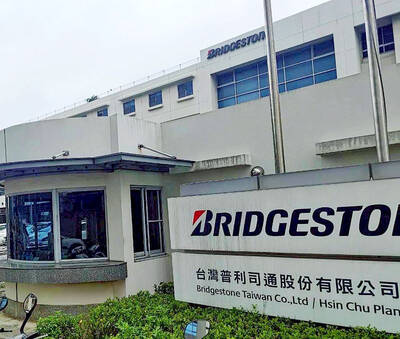
TRANSITION: With the closure, the company would reorganize its Taiwanese unit to a sales and service-focused model, Bridgestone said Bridgestone Corp yesterday announced it would cease manufacturing operations at its tire plant in Hsinchu County’s Hukou Township (湖口), affecting more than 500 workers. Bridgestone Taiwan Co (台灣普利司通) said in a statement that the decision was based on the Tokyo-based tire maker’s adjustments to its global operational strategy and long-term market development considerations. The Taiwanese unit would be reorganized as part of the closure, effective yesterday, and all related production activities would be concluded, the statement said. Under the plan, Bridgestone would continue to deepen its presence in the Taiwanese market, while transitioning to a sales and service-focused business model, it added. The Hsinchu

Taiwan Semiconductor Manufacturing Co (TSMC, 台積電) has approved a capital budget of US$31.28 billion for production expansion to meet long-term development needs during the artificial intelligence (AI) boom. The company’s board meeting yesterday approved the capital appropriation plan for purposes such as the installation of advanced technology capacity and fab construction, the world’s largest contract chipmaker said in a statement. At an earnings conference last month, TSMC forecast that its capital expenditure for this year would be at the higher end of the US$52 billion to US$56 billion range it forecast in January in response to robust demand for 5G, AI and

Taiwan Semiconductor Manufacturing Co’s (TSMC, 台積電) investment project in Arizona has progressed better than expected, but it still faces challenges such as water and labor shortages, National Development Council (NDC) Minister Yeh Chun-hsien (葉俊顯) said yesterday. Speaking with reporters after visiting TSMC’s Arizona hub and attending the SelectUSA Investment Summit in Maryland last week, Yeh said TSMC’s Arizona site turned a profit of NT$16.14 billion (US$514 million) last year in its first full year of mass production. “TSMC told me it was surprised by the smooth trial run of the first fab, which has left the company optimistic about the project’s outlook,”


 RSS
RSS