


Italian luxury goods maker Prada raised a lower-than-expected US$2.14 billion in its Hong Kong share sale as turbulent global markets and a tax hurdle dampened investors’ enthusiasm.
The family-owned brand sold 423.2 million shares at HK$39.50 (US$5) each, after earlier saying it could raise as much as US$2.6 billion before any option to issue extra shares, which would have pushed the deal to US$3 billion in all, Dow Jones Newswires cited an unnamed source as saying.
The Milan-based firm, which is hoping to tap surging demand for luxury goods in Asia, had previously said it might price the shares as high as HK$48 each. The -lowered price indicated weaker-than--expected demand.
Photo: Reuters
Prada, which is floating 20 percent of its shares, will make its trading debut in the Asian financial hub on Friday.
At a time of unease in markets around the world some firms have decided to delay or even cancel their listings in Hong Kong, the world’s No. 1 initial public offering (IPO) market for the past two years.
Earlier this month, Australian miner Resourcehouse shelved an IPO originally slated to raise as much as US$3.6 billion, citing weak market conditions. Luggage maker Samsonite had a poor trading debut in Hong Kong on Thursday after its shares closed nearly 8 percent below their IPO price.
“The Hong Kong market has been pretty weak for the last couple of months ... and [the Prada IPO] was expensive in the first place,” Alex Au, managing director of hedge fund Richland Capital Management said.
Although only about 10 percent of the Prada offering was set aside for retail investors, some of Hong Kong’s savvy stock buyers may have also been turned off by Italian tax rules that could shrink their profits.
Hong Kong and Rome do not have a tax treaty in place so shareholders in the territory would have to pay a 12.5 percent Italian capital gains tax and lose 27 percent of their dividend income to a separate withholding tax.
“So if, for example, their dividend income was US$100, only US$73 would be remitted to them, because it is regarded as Italian-sourced income,” Ayesha Lau, partner in charge of tax at KPMG in Hong Kong said.
“But how are [Italian tax authorities] going to enforce it? I -really don’t know the answer to that,” she said.
Lau added that Hong Kong investors also faced a cumbersome tax filing process with some documentation only available in Italian.
Most Hong Kong institutional investors are not used to accounting for capital gains tax in a city where it does not exist, weighing down enthusiasm for the stock, Alex Au said.
“For a lot of funds [here] there is no such thing as making provisions for capital gains tax,” he said.
The fashion house, which includes the Prada, Miu Miu, Church’s and Car Shoe brands and is 95 percent owned by the Prada family and executives, is the latest high-end fashion brand to tap the huge Chinese market, the world’s fastest-growing market for luxury goods.
Shares of contract chipmaker Taiwan Semiconductor Manufacturing Co (TSMC, 台積電) came under pressure yesterday after a report that Apple Inc is looking to shift some orders from the Taiwanese company to Intel Corp. TSMC shares fell NT$55, or 2.4 percent, to close at NT$2,235 on the local main board, Taiwan Stock Exchange data showed. Despite the losses, TSMC is expected to continue to benefit from sound fundamentals, as it maintains a lead over its peers in high-end process development, analysts said. “The selling was a knee-jerk reaction to an Intel-Apple report over the weekend,” Mega International Investment Services Corp (兆豐國際投顧) analyst Alex Huang
TRANSITION: With the closure, the company would reorganize its Taiwanese unit to a sales and service-focused model, Bridgestone said Bridgestone Corp yesterday announced it would cease manufacturing operations at its tire plant in Hsinchu County’s Hukou Township (湖口), affecting more than 500 workers. Bridgestone Taiwan Co (台灣普利司通) said in a statement that the decision was based on the Tokyo-based tire maker’s adjustments to its global operational strategy and long-term market development considerations. The Taiwanese unit would be reorganized as part of the closure, effective yesterday, and all related production activities would be concluded, the statement said. Under the plan, Bridgestone would continue to deepen its presence in the Taiwanese market, while transitioning to a sales and service-focused business model, it added. The Hsinchu
Taiwan Semiconductor Manufacturing Co (TSMC, 台積電) has approved a capital budget of US$31.28 billion for production expansion to meet long-term development needs during the artificial intelligence (AI) boom. The company’s board meeting yesterday approved the capital appropriation plan for purposes such as the installation of advanced technology capacity and fab construction, the world’s largest contract chipmaker said in a statement. At an earnings conference last month, TSMC forecast that its capital expenditure for this year would be at the higher end of the US$52 billion to US$56 billion range it forecast in January in response to robust demand for 5G, AI and
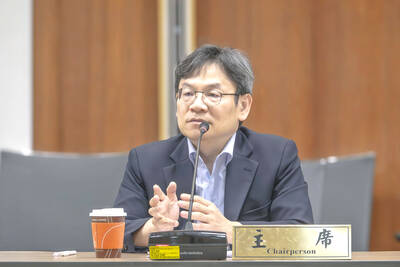
Taiwan Semiconductor Manufacturing Co’s (TSMC, 台積電) investment project in Arizona has progressed better than expected, but it still faces challenges such as water and labor shortages, National Development Council (NDC) Minister Yeh Chun-hsien (葉俊顯) said yesterday. Speaking with reporters after visiting TSMC’s Arizona hub and attending the SelectUSA Investment Summit in Maryland last week, Yeh said TSMC’s Arizona site turned a profit of NT$16.14 billion (US$514 million) last year in its first full year of mass production. “TSMC told me it was surprised by the smooth trial run of the first fab, which has left the company optimistic about the project’s outlook,”


 RSS
RSS