


China Zenith to issue TDRs
China Zenith Chemical Group Ltd (中國天化工集團) submitted an application to list Taiwan depositary receipts (TDRs) to the nation’s stock exchange and central bank, the company said in a Hong Kong stock exchange filing yesterday.
Z-Obee receives approval
Z-Obee Holdings Ltd has received approval from Taiwanese regulators to list not more than 80 million units of Taiwan Depository Receipts, the company said in a statement to the Hong Kong exchange yesterday.
The issue would represent not more than 40 million new shares and not more than 40 million existing shares to be transferred by vendors, the company said. The indicative offer price would be equivalent to about HK$2.8227 per share amounting to an aggregate of about NT$880 million (US$29.1 million), it said.
Ta Chong Bank gets approval
The Financial Supervisory Commission yesterday approved Ta Chong Bank’s (大眾銀行) plan to set up a branch in Hong Kong.
The Taiwanese lender, controlled by Carlyle Group LP, still needs permission from Hong Kong’s financial regulator before it can carry out the expansion, the commission said.
The plan is intended to improve the bank’s profitability and extend its services to Taiwanese business people there, the commission said.
Currently, domestic banks have a total of 18 branches, one subsidiary and two representative offices in the special Chinese administrative region, the commission said.
Credit card charges down
Taiwan’s credit card charges totaled NT$126.2 billion at the end of last month, a drop of NT$7.5 billion from a month earlier, due to slowing consumer spending, the Financial Supervisory Commission said yesterday.
Credit card bad loans for 36 domestic issuers dropped to NT$600 million on Sept. 30, from NT$790 million in late August, the commission said.
Likewise, cash card loans fell to NT$54.8 billion last month, from NT$55.9 billion a month earlier, the commission said.
Only Union Bank of Taiwan (聯邦銀行) had a bad-loan ratio above the 3 percent threshold although the lender stopped issuing cash cards, the commission said.
Kindom eyes fitness industry
Kindom Construction Corp (冠德建設), the operator of Global Mall (環球購物中心), is expanding into the fitness industry by launching its first fitness center at the Global Mall Banchiao branch today.
The company poured NT$50 million into the establishment, which is located on the 24th and 25th floors of the mall.
The company said it aims to recruit 3,000 new members, with revenue of NT$40 million for the first year.
NT climbs then slides
The New Taiwan dollar yesterday rose to a two-year high before surrendering most of the day’s gain on suspected intervention by the central bank.
The NT dollar closed 0.2 percent higher at NT$30.590 against its US counterpart, according to Taipei Forex Inc. It rose as much as 1.3 percent to NT$30.240 earlier, the highest level since June 2008. The currency was trading at NT$30.240 a minute before the close.
Share prices close higher
Share prices closed up 0.77 percent yesterday on expectations that a new round of the US Federal Reserve Board’s quantitative easing policy will pave the way for further fund inflows into Asian markets, dealers said.
The weighted index rose 63.95 points to 8,357.85, after moving between 8,317.86 and 8,367.19, on turnover of NT$98.18 billion.

SECOND-RATE: Models distilled from US products do not perform the same as the original and undo measures that ensure the systems are neutral, the US’ cable said The US Department of State has ordered a global push to bring attention to what it said are widespread efforts by Chinese companies, including artificial intelligence (AI) start-up DeepSeek (深度求索), to steal intellectual property from US AI labs, according to a diplomatic cable. The cable, dated Friday and sent to diplomatic and consular posts around the world, instructs diplomatic staff to speak to their foreign counterparts about “concerns over adversaries’ extraction and distillation of US AI models.” Distillation is the process of training smaller AI models using output from larger, more expensive ones to lower the costs of training a powerful new
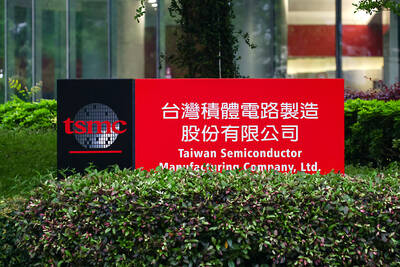
Shares of Taiwan Semiconductor Manufacturing Co (TSMC, 台積電) have repeatedly hit new highs, but an equity analyst said the stock’s valuation remains within a reasonable range and any pullback would likely be technical. The contract chipmaker’s historical price-to-earnings (P/E) ratio has ranged between 20 and 30, Cathay Futures Consultant Co (國泰證期) analyst Tsai Ming-han (蔡明翰) told Central News Agency. With market consensus projecting that TSMC would post earnings per share of about NT$100 (US$3.17) this year, supported by strong global demand for artificial intelligence (AI) applications, and the stock currently trading at a P/E ratio of below 25, Tsai said the valuation
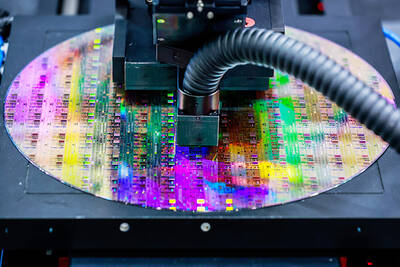
The artificial intelligence (AI) boom has triggered a seismic reshuffling of global equity markets, with Taiwan and South Korea muscling past European nations one by one. With its stock market now valued at nearly US$4.3 trillion, Taiwan surpassed the UK, Europe’s biggest market, earlier this month, data compiled by Bloomberg showed. South Korea is about US$140 billion away from doing the same. The tech-heavy Asian markets have shot past Germany and France in the past seven months. The shift is largely down to massive gains in shares of three companies that provide essential hardware for AI: Taiwan Semiconductor Manufacturing Co (TSMC, 台積電),
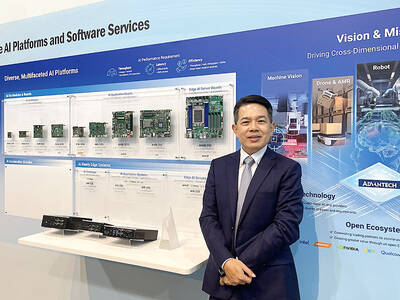
NEXT-GENERATION: The company announced plans to roll out platforms with 100 TOPS performance and expects AI-capable systems to become the standard Industrial computer maker Advantech Co (研華) is eyeing strong growth potential in edge artificial intelligence (AI), as the technology shifts from cloud-centric computing to edge deployment and real-world applications, Advantech embedded Internet of Things president Miller Chang (張家豪) said on Thursday last week. Amid rising demand for inference as the industry shifts from training, edge AI is emerging as a key field, given the need for low latency, real-time response and data privacy, Chang said in an exclusive interview with the Taipei Times. While consumer devices such as smartphones already feature some AI capabilities, large-scale inference demand would mainly come from applications


 RSS
RSS