


Former deputy minister of economic affairs Yang Shih-chien (楊世緘), now has a new business card — chairman of China Prosper Investment and Management (Tianjin) Co (中盛郵信投資管理公司), a new yupbr />
The fund, which sources said is still in the process of raising capital, will be mainly operated by Yang, an ally of former vice president Lien Chan (連戰), and is the latest sign that political and trade ties between Taiwan and China have reached the highest level in decades.
“The launch of the fund marks a milestone for cross-strait relations, and it means Taiwan-China M&A deals will be accelerating,” said Andrew Teng (鄧安瀾), an assistant vice president of Taiwan International Securities Corp (金鼎證券).
“China’s private equity funds and venture capital funds should be permitted to invest in Taiwanese firms in the foreseeable future,” Teng said.
Two Beijing-based state-owned enterprises — China Post Group (中郵集團) and CITIC Group (中信集團) — are the main shareholders of the new yuan-denominated China Prosper fund, fundraising documents show.
Sources said Yang and his local partners aim to raise multiple billions of yuan for the fund in the initial phase, targeting Taiwanese and Chinese technology and financial services firms.
Taiwan formally announced rules this month to let local and Chinese financial institutions invest in each other, and political and economic analysts expected more investments to be made across the Taiwan Strait.
The establishment of China Prosper won support from the National Development and Reform Commission (NDRC), China’s top economic planning body, since Beijing wants to set an example to improve business ties with Taiwan in the private equity industry, people with direct knowledge of the matter said.
The move makes Yang, who is well-known in Taiwan’s political world and is also a nephew of former Chinese vice president Rong Yiren (榮毅仁), the most senior former official from Taiwan to become a dealmaker in China.
Yang, who quit all his government posts in 2000, founded China Prosper as an investment firm focusing on the Greater China region, including Hong Kong, Taiwan and China, in 2008. Yang’s office in Taipei declined requests for comment.
Some Taiwanese businesspeople have moved to China and raised small, low-profile venture capital funds in the past few years, but Yang’s multi-billion-yuan fund plan is set to encourage establishment of more, larger Taiwan-linked China funds.
China Prosper’s Taiwan operation has invested NT$1.5 billion (US$47 million) locally and another US$79 million overseas, a company official said.
The sources interviewed in Taiwan and China all declined to be identified due to the sensitive political nature of the matter.
Once Yang registered the fund, Beijing’s NDRC quickly added it to a key list that helped China Prosper become qualified as a candidate to win capital commitments from the powerful National Social Security Fund, China’s national pension fund, sources said.
This quick acceptance comes thanks largely to Yang’s local partners as well as the strong connections of Lien, who has headed several Taiwanese delegations to meet Chinese President Hu Jintao (胡錦濤) and Premier Wen Jiabao (溫家寶), the sources said.
Shareholders China Post Group, which operates the nationwide postal service in China, and CITIC Group, China’s No.1 financial conglomerate, are directly led by the State Council, China’s Cabinet.
“Lien Chan is widely seen in mainland China as a close friend of Hu Jintao,” said a source who has observed Lien for eight years. “In China, connections matter a lot.”
Yang helped the Liens manage part of their family wealth by investing through some of China Prosper’s private equity and venture capital funds, the sources said.
It is unclear whether Yang’s new Tianjin-registered yuan fund would receive money from the Liens.
Lien Hui-hsin (連惠心), Lien’s eldest daughter, has a senior position in the Taiwanese operations of China Prosper, sources said. Her office declined an interview request for this article.
Shares of contract chipmaker Taiwan Semiconductor Manufacturing Co (TSMC, 台積電) came under pressure yesterday after a report that Apple Inc is looking to shift some orders from the Taiwanese company to Intel Corp. TSMC shares fell NT$55, or 2.4 percent, to close at NT$2,235 on the local main board, Taiwan Stock Exchange data showed. Despite the losses, TSMC is expected to continue to benefit from sound fundamentals, as it maintains a lead over its peers in high-end process development, analysts said. “The selling was a knee-jerk reaction to an Intel-Apple report over the weekend,” Mega International Investment Services Corp (兆豐國際投顧) analyst Alex Huang
TRANSITION: With the closure, the company would reorganize its Taiwanese unit to a sales and service-focused model, Bridgestone said Bridgestone Corp yesterday announced it would cease manufacturing operations at its tire plant in Hsinchu County’s Hukou Township (湖口), affecting more than 500 workers. Bridgestone Taiwan Co (台灣普利司通) said in a statement that the decision was based on the Tokyo-based tire maker’s adjustments to its global operational strategy and long-term market development considerations. The Taiwanese unit would be reorganized as part of the closure, effective yesterday, and all related production activities would be concluded, the statement said. Under the plan, Bridgestone would continue to deepen its presence in the Taiwanese market, while transitioning to a sales and service-focused business model, it added. The Hsinchu
Taiwan Semiconductor Manufacturing Co (TSMC, 台積電) has approved a capital budget of US$31.28 billion for production expansion to meet long-term development needs during the artificial intelligence (AI) boom. The company’s board meeting yesterday approved the capital appropriation plan for purposes such as the installation of advanced technology capacity and fab construction, the world’s largest contract chipmaker said in a statement. At an earnings conference last month, TSMC forecast that its capital expenditure for this year would be at the higher end of the US$52 billion to US$56 billion range it forecast in January in response to robust demand for 5G, AI and
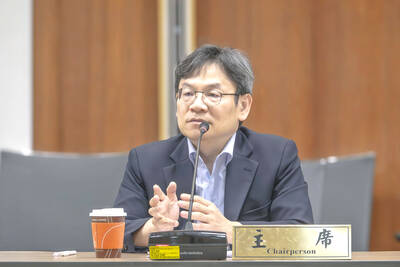
Taiwan Semiconductor Manufacturing Co’s (TSMC, 台積電) investment project in Arizona has progressed better than expected, but it still faces challenges such as water and labor shortages, National Development Council (NDC) Minister Yeh Chun-hsien (葉俊顯) said yesterday. Speaking with reporters after visiting TSMC’s Arizona hub and attending the SelectUSA Investment Summit in Maryland last week, Yeh said TSMC’s Arizona site turned a profit of NT$16.14 billion (US$514 million) last year in its first full year of mass production. “TSMC told me it was surprised by the smooth trial run of the first fab, which has left the company optimistic about the project’s outlook,”


 RSS
RSS