


The US Supreme Court threw out a US$79.5 million award that a jury had ordered a cigarette maker to pay to a smoker's widow, a ruling that could bode well for other businesses seeking stricter limits on big-dollar verdicts.
The 5-4 decision on Tuesday was a victory for Altria Group Inc's Philip Morris USA, which contested an Oregon Supreme Court decision upholding the jury's verdict.
Yet the decision did not address a key argument made by Philip Morris and its supporters across a wide range of businesses -- that the size of the award was unconstitutionally large. They had hoped the court would limit the amount that can be awarded in punitive damage cases.
Instead, Justice Stephen Breyer wrote in his majority opinion that the award to Mayola Williams could not stand because a jury may punish a defendant only for the harm done to the person who is suing, not to others whose cases were not before it.
"To permit punishment for injuring a nonparty victim would add a near standardless dimension to the punitive damages question," Breyer said.
The company had argued that the jury was encouraged to punish Philip Morris for health problems suffered by every Oregonian who smoked its cigarettes.
Chief Justice John Roberts and justices Samuel Alito, Anthony Kennedy and David Souter, joined with Breyer.
Dissenting were justices Ruth Bader Ginsburg, Antonin Scalia, John Paul Stevens and Clarence Thomas. Ginsburg said Tuesday's ruling made punitive damages law even more confusing.
Jesse Williams died of lung cancer in 1997 at the age of 67. He had smoked two packs a day of Philip Morris-made Marlboros for 45 years.
His widow argued that the jury award was appropriate as it punished Philip Morris for a decades-long "massive market-directed fraud" that misled people into thinking cigarettes were not dangerous or addictive.
She won compensatory damages of US$800,000 and punitive damages of US$79.5 million in the fraud lawsuit she filed against Philip Morris. A state court previously cut the compensatory award to US$500,000, which is unaffected by Tuesday's ruling.
Shares of contract chipmaker Taiwan Semiconductor Manufacturing Co (TSMC, 台積電) came under pressure yesterday after a report that Apple Inc is looking to shift some orders from the Taiwanese company to Intel Corp. TSMC shares fell NT$55, or 2.4 percent, to close at NT$2,235 on the local main board, Taiwan Stock Exchange data showed. Despite the losses, TSMC is expected to continue to benefit from sound fundamentals, as it maintains a lead over its peers in high-end process development, analysts said. “The selling was a knee-jerk reaction to an Intel-Apple report over the weekend,” Mega International Investment Services Corp (兆豐國際投顧) analyst Alex Huang
Taiwan Semiconductor Manufacturing Co (TSMC, 台積電) is expected to remain Apple Inc’s primary chip manufacturing partner despite reports that Apple could shift some orders to Intel Corp, industry experts said yesterday. The comments came after The Wall Street Journal reported on Friday that Apple and Intel had reached a preliminary agreement following more than a year of negotiations for Intel to manufacture some chips for Apple devices. Taiwan Institute of Economic Research (台灣經濟研究院) economist Arisa Liu (劉佩真) said TSMC’s advanced packaging technologies, including integrated fan-out and chip-on-wafer-on-substrate, remain critical to the performance of Apple’s A-series and M-series chips. She said Intel and Samsung
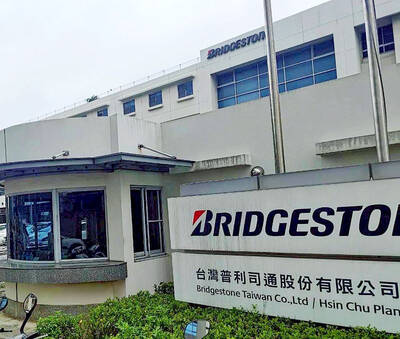
TRANSITION: With the closure, the company would reorganize its Taiwanese unit to a sales and service-focused model, Bridgestone said Bridgestone Corp yesterday announced it would cease manufacturing operations at its tire plant in Hsinchu County’s Hukou Township (湖口), affecting more than 500 workers. Bridgestone Taiwan Co (台灣普利司通) said in a statement that the decision was based on the Tokyo-based tire maker’s adjustments to its global operational strategy and long-term market development considerations. The Taiwanese unit would be reorganized as part of the closure, effective yesterday, and all related production activities would be concluded, the statement said. Under the plan, Bridgestone would continue to deepen its presence in the Taiwanese market, while transitioning to a sales and service-focused business model, it added. The Hsinchu
Taiwan Semiconductor Manufacturing Co (TSMC, 台積電) has approved a capital budget of US$31.28 billion for production expansion to meet long-term development needs during the artificial intelligence (AI) boom. The company’s board meeting yesterday approved the capital appropriation plan for purposes such as the installation of advanced technology capacity and fab construction, the world’s largest contract chipmaker said in a statement. At an earnings conference last month, TSMC forecast that its capital expenditure for this year would be at the higher end of the US$52 billion to US$56 billion range it forecast in January in response to robust demand for 5G, AI and


 RSS
RSS