


The nation's video-game manufacturers saw a weak summer this year as a result of the saturated market and the lack of blockbuster local games, analysts said yesterday, adding that the industry's near-term prospects seem equally gloomy.
"I think the decline of Taiwan's online gaming industry has already reached the halfway mark," said Derek Wu (吳奉遠), an analyst at Capital Securities Corp (群益證券). "As a result, we hardly pay attention to game-company stocks anymore."
With market saturation increasing against a background of stiff competition in China, the local games industry will plummet if local developers fail to come up with their own killer products, he said.
Soft-World International Corp (
"The market is getting tougher over time, and I think a few smaller players will be forced out of the business soon," said Vera Wu (
Wayi reported a 2.13 percent decline in sales to NT$19.59 million last month. The company saw a deficit of NT$2.25 per share for the first half of the year.
With game players constantly demanding better quality, it takes developers longer to produce new games. Consequently most distributors import games from South Korea or Japan to fill the hiatus, Vera Wu said.
But the road to homemade games is also getting bumpier as a result of limited resources and a shortage of talent, she said.
Soft-World has injected massive funds into research and development at its subsidiary ChineseGamer International Corp (中華網龍) in a bid to broaden its homemade game portfolio, Wu said.
But after years of efforts, ChineseGamer has become Soft-World's biggest money loser, making the company cautious about developing its own games, she said.
Unlike the South Korean government, which actively nurtures the the nation's game developers, local game companies rarely receive any help from the government despite promises to promote the digital sector as a strategic development industry, Wu said.
If they are to survive, Taiwanese companies will have to expand to the massive market in China, where players share the same language and culture with Taiwan, she added.
However, it is not that easy to capitalize on the lucrative Chinese market after Beijing implemented a protectionist policy to safeguard its own game developers, said Hsieh Ming-chuan (
Soft-World entered China more than 10 years ago, where it established channels to distribute both its own and foreign games.
However, the company decided to close its outlets in China last year and license its games to Chinese vendors because of various limitations on Taiwanese companies.
Nonetheless, Hsieh is not that pessimistic about the industry, saying the company is planning to introduce a variety of games aimed at various segments of the market in Taiwan.
The company believes there are still new markets to tap, Hsieh said.

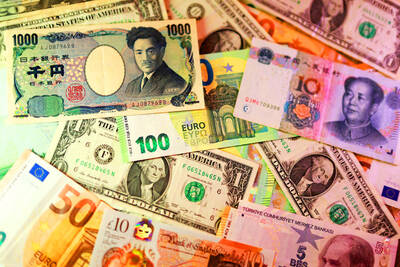
Taiwan’s foreign exchange reserves fell below the US$600 billion mark at the end of last month, with the central bank reporting a total of US$596.89 billion — a decline of US$8.6 billion from February — ending a three-month streak of increases. The central bank attributed the drop to a combination of factors such as outflows by foreign institutional investors, currency fluctuations and its own market interventions. “The large-scale outflows disrupted the balance of supply and demand in the foreign exchange market, prompting the central bank to intervene repeatedly by selling US dollars to stabilize the local currency,” Department of Foreign

Intel Corp is joining Elon Musk’s long-shot effort to develop semiconductors for Tesla Inc, Space Exploration Technologies Corp and xAI, marking a surprising twist in the chipmaker’s comeback bid. Intel would help the Terafab project “refactor” the technology in a chip factory, the company said on Tuesday in a post on X, Musk’s social media platform. That is a stage in the development process that typically helps make chips more powerful or reliable. The chipmaker’s shares jumped 4.2 percent to US$52.91 in New York trading on Tuesday. The Terafab project is a grand plan by Musk to eventually manufacture his own chips for
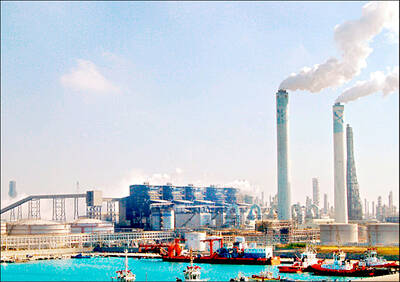
Taiwan Power Co (Taipower, 台電) yesterday said it plans to resume operations at two coal-fired power generators for three months to boost security of electricity supply as liquefied natural gas (LNG) supply risks are running high due to the Middle East conflict. The two coal-fired power generators are at Mailiao Power Plant in Yunlin County’s Mailiao Township (麥寮). The plant, operated by Formosa Plastics Group (台塑集團), supplied electricity to Taipower’s power grid until the end of last year. Taipower’s decision came about one month after Minister of Economic Affairs Kung Ming-hsin (龔明鑫) on March 10 said that the nation had no imminent

Some robotaxi passengers were left stranded in the middle of fast-moving traffic in a major Chinese city after their driverless vehicles stopped running, according to police and media reports on Wednesday. A preliminary investigation indicates more than 100 robotaxis came to a halt because of a “system malfunction,” police in the city of Wuhan said in a statement, without elaborating. No injuries were reported. One passenger told Chinese media that their robotaxi stopped after turning a corner. An instruction on a screen read: “Driving system malfunction. Staff are expected to arrive in 5 minutes.” After no one showed up, the passenger pushed


 RSS
RSS