


The government-set privatization plan for Taiwan Tobacco and Liquor Corp (
"It'll be a mission impossible [before July]," Hwang told the Taipei Times yesterday.
The company hasn't earmarked a new timetable to complete the privatization plan, he said.
Hwang, 63, was former director of National Taipei University's Business School, before turning to serve as the first chairman of Taiwan Tobacco after the state-run monopoly was corporatized in July 2002.
He urged the government to facilitate "new strategies to address difficulties arising from executing the privatization plan, including opposition from employees."
Taiwan Tobacco held a company poll last week, allowing its 7,000 employees to voice their opinions on the privatization plan.
With a 90 percent turnout rate, 82 percent of polled respondents cast votes on the proposal to maintain the company as a state-run entity but undertake corporate restructuring.
Only 17 percent of the employees agreed with the government's plan to sell off 51 percent of the company's shares and gradually privatize the company, while another 14 percent approved of the idea of bringing in strategic partners before selling shares to complete the privatization plan, the poll found.
"If state-run enterprises can be further corporatized to strengthen competitiveness, the privatization plan won't be necessary," said Shieh Su-fan (
Taiwan Tobacco is a spin-off of the Taiwan Tobacco and Wine Monopoly Bureau (
Refusing to view the privatization plan as the only way to strengthen the company's competitiveness, Shieh yesterday expressed the hope that the government could halt its privatization plan.
He urged President Chen Shui-bian (
Shieh yesterday backed up his argument by lauding the company's management success after it was corporatized in July 2002.
Taiwan Tobacco, under Hwang's leadership, made NT$6.7 billion in after-tax profits last year, with NT$70 billion in annual revenues and an earning per share (EPS) of more than NT$2. The company also cut its number of employees from some 12,000 people in 1997 to 7,000 now.
According to Hwang, the fact that Taiwan Tabacco is still making a profit also diminishes the company's motive and momentum to push the privatization plan aggressively.
He said that the company saw a 40 percent growth in profits last year from a year earlier.
In response to resistance from employees, the Ministry of Finance had previously insisted that the company's privatization plan should be implemented as scheduled.
But Shih Jun-ji (施俊吉), a research fellow at Academia Sinica's Institute of Social Science, yesterday sided with the employees, saying that any hasty move to privatization without blessing from the employees may cause difficulties and spell failure.
"With or without privatization, Taiwan Tabacco is facing steeper competition as the market opens up, and it has to find ways to cope with this," Shih said.
If the employees therefor prefer to maintain the state-run ownership, they will have to shoulder all the responsibilities like any other private corporation and cannot count on any governmental subsidies should losses be incurred, Shih said.

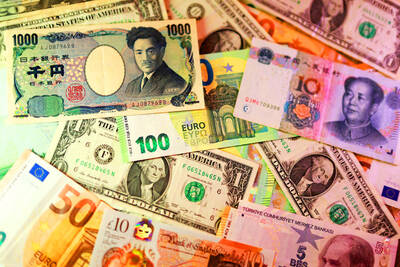
Taiwan’s foreign exchange reserves fell below the US$600 billion mark at the end of last month, with the central bank reporting a total of US$596.89 billion — a decline of US$8.6 billion from February — ending a three-month streak of increases. The central bank attributed the drop to a combination of factors such as outflows by foreign institutional investors, currency fluctuations and its own market interventions. “The large-scale outflows disrupted the balance of supply and demand in the foreign exchange market, prompting the central bank to intervene repeatedly by selling US dollars to stabilize the local currency,” Department of Foreign

Intel Corp is joining Elon Musk’s long-shot effort to develop semiconductors for Tesla Inc, Space Exploration Technologies Corp and xAI, marking a surprising twist in the chipmaker’s comeback bid. Intel would help the Terafab project “refactor” the technology in a chip factory, the company said on Tuesday in a post on X, Musk’s social media platform. That is a stage in the development process that typically helps make chips more powerful or reliable. The chipmaker’s shares jumped 4.2 percent to US$52.91 in New York trading on Tuesday. The Terafab project is a grand plan by Musk to eventually manufacture his own chips for
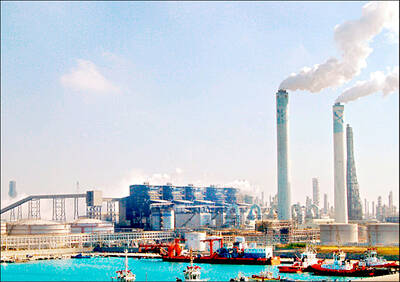
Taiwan Power Co (Taipower, 台電) yesterday said it plans to resume operations at two coal-fired power generators for three months to boost security of electricity supply as liquefied natural gas (LNG) supply risks are running high due to the Middle East conflict. The two coal-fired power generators are at Mailiao Power Plant in Yunlin County’s Mailiao Township (麥寮). The plant, operated by Formosa Plastics Group (台塑集團), supplied electricity to Taipower’s power grid until the end of last year. Taipower’s decision came about one month after Minister of Economic Affairs Kung Ming-hsin (龔明鑫) on March 10 said that the nation had no imminent
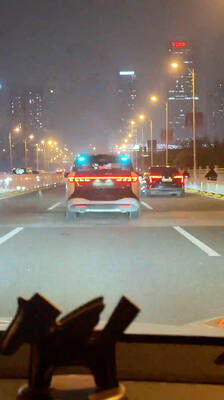
Some robotaxi passengers were left stranded in the middle of fast-moving traffic in a major Chinese city after their driverless vehicles stopped running, according to police and media reports on Wednesday. A preliminary investigation indicates more than 100 robotaxis came to a halt because of a “system malfunction,” police in the city of Wuhan said in a statement, without elaborating. No injuries were reported. One passenger told Chinese media that their robotaxi stopped after turning a corner. An instruction on a screen read: “Driving system malfunction. Staff are expected to arrive in 5 minutes.” After no one showed up, the passenger pushed


 RSS
RSS