


Is there a future for Lego's little plastic building bricks, with children increasingly opting for interactive computer games and electronic gadgets? The answer, the Danish toy empire says, is yes.
But it will be a tough battle to remain at the top of kiddies' wish lists, and the company is now hammering out a plan for its future after recent attempts to diversify its brandname failed.
The family-owned company said this week that it expected to post a loss for 2003 -- only its third loss since its creation in 1932 in the windswept town of Billund.
It forecast a pre-tax loss of 1.4 billion kroner (US$242 million) for the year, and said sales would be down by 25 percent to 8.5 billion kroner as the global toy market "nearly came to standstill in 2003."
Yet its US rivals, Mattel and Hasbro, the world's two leading toy manufacturers, remain nonetheless profitable.
Lego's owner and president, Kjeld Kirk Kristiansen -- the 56-year-old grandson of company founder Ole Kirk Christiansen -- said he was now taking matters into his own hands and had fired the company's No. 2 and the head of product development.
He said the company would now go back to its roots, focusing on building blocks and abandoning its forays into multimedia and film products.
"We are returning to Lego's former concept. We're going to focus on building bricks as our main product, concentrating on little kids' eagerness to assemble," he said.
"That's why we're pursuing much more aggressive marketing for building bricks, leaving products linked to films such as Star Wars on the back burner," he said.
One key factor for the weak result this year was the poor sales of games based on the Star Wars and Harry Potter films in 2002.
Kristiansen acknowledged that Lego's recent attempts to diversify had been a catastrophe.
"We tried to follow trends, to have toys that were in fashion, that are `in' one year and `out' the next. But it didn't work," he said.
"In our efforts to follow the trend, we forgot about our traditional, basic products -- the plastic building bricks -- and we spent all our efforts on new toys that we launched together with films like Star Wars and Harry Potter."
Other forays included Lego theme parks in England, the US and Germany, a collaboration with the Formula 1 Williams car racing team to get children interested in the sport, and a clothing line bearing the Lego brand.
Facing tough competition from electronic games, Lego also jumped into the fray and began producing in 2002 videos and animated films based on its hugely successful Bionicle series, signing contracts with US companies Creative Capers Entertainment and Miramax Films.
Its film Bionicle Mask and Light, produced in DVD and VHS formats, got off to a strong start when it was launched in the US and Canada on Sept. 16. Lego is still hoping for similar success in Europe and in the rest of the world.
Children's toy researcher Joern Martin Steenhold said there were several reasons for Lego's poor health.
"Lego was not able to follow up on the success it had on its new products. There was a void after the Bionicle, Harry Potter and Star War series," he said.
"In addition, Lego was not skillful enough to exploit its `smart building brick' with an electronic chip, a super product with enormous potential," he added.
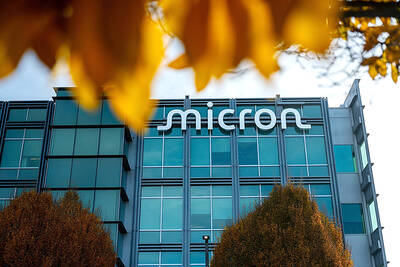
Micron Memory Taiwan Co (台灣美光), a subsidiary of US memorychip maker Micron Technology Inc, has been granted a NT$4.7 billion (US$149.5 million) subsidy under the Ministry of Economic Affairs A+ Corporate Innovation and R&D Enhancement program, the ministry said yesterday. The US memorychip maker’s program aims to back the development of high-performance and high-bandwidth memory chips with a total budget of NT$11.75 billion, the ministry said. Aside from the government funding, Micron is to inject the remaining investment of NT$7.06 billion as the company applied to participate the government’s Global Innovation Partnership Program to deepen technology cooperation, a ministry official told the
Taiwan Semiconductor Manufacturing Co (TSMC, 台積電), the world’s leading advanced chipmaker, officially began volume production of its 2-nanometer chips in the fourth quarter of this year, according to a recent update on the company’s Web site. The low-key announcement confirms that TSMC, the go-to chipmaker for artificial intelligence (AI) hardware providers Nvidia Corp and iPhone maker Apple Inc, met its original roadmap for the next-generation technology. Production is currently centered at Fab 22 in Kaohsiung, utilizing the company’s first-generation nanosheet transistor technology. The new architecture achieves “full-node strides in performance and power consumption,” TSMC said. The company described the 2nm process as
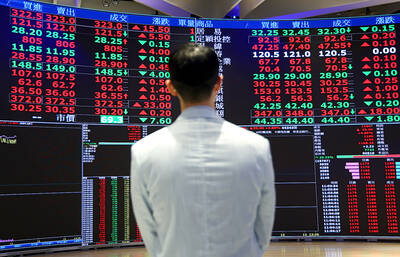
Shares in Taiwan closed at a new high yesterday, the first trading day of the new year, as contract chipmaker Taiwan Semiconductor Manufacturing Co (TSMC, 台積電) continued to break records amid an artificial intelligence (AI) boom, dealers said. The TAIEX closed up 386.21 points, or 1.33 percent, at 29,349.81, with turnover totaling NT$648.844 billion (US$20.65 billion). “Judging from a stronger Taiwan dollar against the US dollar, I think foreign institutional investors returned from the holidays and brought funds into the local market,” Concord Securities Co (康和證券) analyst Kerry Huang (黃志祺) said. “Foreign investors just rebuilt their positions with TSMC as their top target,
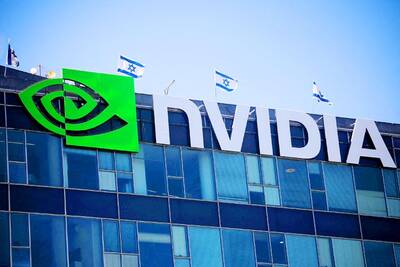
H200 CHIPS: A source said that Nvidia has asked the Taiwanese company to begin production of additional chips and work is expected to start in the second quarter Nvidia Corp is scrambling to meet demand for its H200 artificial intelligence (AI) chips from Chinese technology companies and has approached contract manufacturer Taiwan Semiconductor Manufacturing Co (TSMC, 台積電) to ramp up production, sources said. Chinese technology companies have placed orders for more than 2 million H200 chips for this year, while Nvidia holds just 700,000 units in stock, two of the people said. The exact additional volume Nvidia intends to order from TSMC remains unclear, they said. A third source said that Nvidia has asked TSMC to begin production of the additional chips and work is expected to start in the second


 RSS
RSS