


As Asia enters a phase of geopolitical transition, the Taiwan-Indonesia relationship warrants greater strategic consideration. The two societies are significantly interconnected beyond what their lack of formal diplomatic relations might imply. Economic exchanges, educational cooperation and human mobility have quietly established a robust foundation for engagement. Nonetheless, this connection remains under the radar, pragmatic, cautious, yet full of potential. In a region increasingly characterized by competition among major powers, Taiwan and Indonesia exemplify moderation and adaptability. Their relationship embodies a form of regional diplomacy that is understated, but consistent; informal yet effective. It is based on the shared understanding that stability in the Indo-Pacific region would depend less on grand alliances and more on practical cooperation among middle and emerging-power states.
Indonesia’s foreign policy under Indonesian President Prabowo Subianto continues a long-standing tradition of strategic autonomy. Jakarta maintains an independent posture toward Washington and Beijing, while deepening ties with regional partners that respect its sovereignty. This balance leaves space for cooperation with Taiwan, especially in areas of education, technology, labor and innovation, all fields where Taipei could contribute without creating political friction.
Taiwan, for its part, has shown through its New Southbound Policy that engagement with Southeast Asia could be pragmatic and visionary. Among ASEAN members, Indonesia occupies a central position. It is the region’s largest economy, a key manufacturing base and a demographic powerhouse. Over the past decade, Taiwan and Indonesia have strengthened their economic and educational ties, and trade volumes are expanding, Taiwanese investment in the digital and manufacturing sectors is growing, and more than 10,000 Indonesian students now study at Taiwanese universities.
Equally important is the human dimension. About 270,000 Indonesian workers are employed in Taiwan, contributing to essential sectors such as care, fisheries and small-scale industry. Managed responsibly, this connection could become a pillar of long-term trust between Jakarta and Taipei. The relationship, in other words, already exists beyond official diplomacy; it only needs recognition and structure. A further element that adds complexity and promise to the partnership is maritime geography.
Both Indonesia and Taiwan occupy strategic positions along vital sea lanes. Cooperation in maritime safety, port connectivity and sustainable fisheries could serve as a new platform for engagement. These initiatives would not only improve economic resilience, but also support regional security in a nonconfrontational way. Taiwan’s experience in digital monitoring, marine research and coastal management could complement Indonesia’s vast maritime ambitions under its Global Maritime Fulcrum doctrine.
Cooperation with Jakarta enables Taiwan to maintain engagement within the broader ASEAN framework while respecting regional sensitivities. Additionally, this partnership aligns with Indonesia’s aspiration to establish an inclusive Indo-Pacific order, devoid of hegemony by a single power. Taiwan’s capabilities in education, technology and sustainable industries align with Indonesia’s requirements for skill development and innovation. Collaborative efforts in digital governance, renewable energy and maritime logistics could solidify the relationship around shared priorities rather than formal diplomatic engagements. Such discreet and consistent cooperation would contribute directly to ASEAN’s objectives of connectivity and resilience, areas where Taiwan’s expertise offers distinct value.
This partnership could also evolve into a platform for triangular cooperation. Taiwan and Indonesia could work jointly in capacity-building programs for other ASEAN countries, particularly in green technology and public administration. By doing so, they would position themselves as cocreators of regional solutions rather than competitors. This would also reinforce ASEAN’s own centrality by demonstrating that regional cooperation can emerge organically from shared interests, not just from formal institutions.
Indonesia and Taiwan have constructed their regional outlooks on the principle of moderation. Neither country seeks confrontation; both favor adaptability and pragmatic dialogue. This shared disposition affords their partnership a stability that is uncommon in an era characterized by polarization. As major powers vie for influence, the capacity of middle-tier states and societies to cooperate calmly and unobtrusively becomes a vital component of regional security.
Institutionalizing this cooperation should be prioritized. Regular consultations on labor, vocational education and maritime development could foster predictability and transparency. Expanding academic partnerships would deepen mutual understanding among their peoples and establish a sustainable foundation for future leaders. Both sides could also explore a more structured economic dialogue, perhaps in the form of a Taiwan-Indonesia business and innovation forum, designed to connect industries and policymakers in an ongoing exchange of expertise.
Indonesia and Taiwan already share a vision of an Asia that values autonomy, development and dignity. Their discreet partnership serves as a reminder that diplomacy need not always be overt to be effective. In a region riddled with tensions and ambitions, the most resilient connections are often those cultivated patiently, with respect and consistency. In many ways, Taiwan and Indonesia are quietly proving that regional order can also be built from below, through trust, moderation and shared purpose, rather than through power alone.
Aniello Iannone is a lecturer in Indonesian and Southeast Asian politics at the Department of Political Science and Government at Diponegoro University in Indonesia. His research focuses on ASEAN regionalism, Indonesian politics and the international political economy of Southeast Asia.
A gap appears to be emerging between Washington’s foreign policy elites and the broader American public on how the United States should respond to China’s rise. From my vantage working at a think tank in Washington, DC, and through regular travel around the United States, I increasingly experience two distinct discussions. This divergence — between America’s elite hawkishness and public caution — may become one of the least appreciated and most consequential external factors influencing Taiwan’s security environment in the years ahead. Within the American policy community, the dominant view of China has grown unmistakably tough. Many members of Congress, as
The Hong Kong government on Monday gazetted sweeping amendments to the implementation rules of Article 43 of its National Security Law. There was no legislative debate, no public consultation and no transition period. By the time the ink dried on the gazette, the new powers were already in force. This move effectively bypassed Hong Kong’s Legislative Council. The rules were enacted by the Hong Kong chief executive, in conjunction with the Committee for Safeguarding National Security — a body shielded from judicial review and accountable only to Beijing. What is presented as “procedural refinement” is, in substance, a shift away from
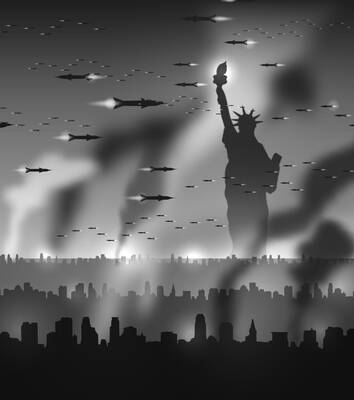
After declaring Iran’s military “gone,” US President Donald Trump appealed to the UK, France, Japan and South Korea — as well as China, Iran’s strategic partner — to send minesweepers and naval forces to reopen the Strait of Hormuz. When allies balked, the request turned into a warning: NATO would face “a very bad” future if it refused. The prevailing wisdom is that Trump faces a credibility problem: having spent years insulting allies, he finds they would not rally when he needs them. That is true, but superficial, as though a structural collapse could be caused by wounded feelings. Something
The shifting geopolitical tectonic plates of this year have placed Beijing in a profound strategic dilemma. As Chinese President Xi Jinping (習近平) prepares for a high-stakes summit with US President Donald Trump, the traditional power dynamics of the China-Japan-US triangle have been destabilized by the diplomatic success of Japanese Prime Minister Sanae Takaichi in Washington. For the Chinese leadership, the anxiety is two-fold: There is a visceral fear of being encircled by a hardened security alliance, and a secondary risk of being left in a vulnerable position by a transactional deal between Washington and Tokyo that might inadvertently empower Japan


 RSS
RSS