


Apple’s top selling iPhone faces one of its biggest challenges yet when it goes on sale this weekend in South Korea, the world’s most wired nation and long accustomed to cutting-edge gadgets.
The iconic smartphone hits stores today having already shifted more than 50,000 units in pre-sale orders, said KT Corp, the country’s second biggest mobile operator and sole iPhone provider.
However, in a country dominated 90 percent by giants Samsung Electronics and LG Electronics, Apple will face stiff competition, a problem made worse by the fact the nation is one of the most advanced technological markets on the planet.
And KT Corp is staying tight-lipped about its sales target due to the phone’s relatively lukewarm response in other Asian launches such as Japan, another high-tech-savvy market.
Analysts are divided over whether the iPhone will become a hit in one of the world’s most advanced mobile phone markets.
Local media say the iPhone will appeal to younger customers in South Korea, where more than 90 percent of people own a cellphone.
Kim Ji-hyun, a market researcher at Daum Communications, forecast KT’s annual sales of the multi-media handset would stand at about 200,000 units.
But Eugene Securities analyst Kim Dong-joon said the launch would simply lead to tougher competition.
“The sale of iPhones is expected to step up the production of smartphones here and competition in the local mobile Internet industry,” he said in a research note.
Samsung Electronics has already slashed the price of its most advanced and expensive phone, an 8-gigabyte touch-screen model called Omnia2, by 44,000 won (US$38) to 924,000 won.
KT set the price of the 32-gigabyte iPhone 3GS at 396,000 won for customers who subscribe with a monthly service fee of 45,000 won. The price is 264,000 won for customers who subscribe with a monthly fee of 65,000 won.
KT are staying confident about the phone’s introduction.
“The iPhone has been enjoying great enthusiasm from South Korean customers even before its official launch,” spokesman Kim Cheol-Kee said, adding: “We hope the iPhone will strengthen our competitiveness against other mobile carriers.”
KT’s online store has been visited by 40,000 people a day since it began pre-sales on Sunday and about 53,000 phones have been ordered over the Internet and at shops, KT said.
The company hopes its deal with Apple will dent the dominance of SK Telecom, which has a 50.5 percent share of the market compared with KT’s 31 percent.
“The iPhone has a competitive edge in its price and is more convenient than existing local models, but we are not worried much about its debut,” SK said.

Japan has deployed long-range missiles in a southwestern region near China, the Japanese defense minister said yesterday, at a time when ties with Beijing are at their lowest in recent years. The missiles were installed in Kumamoto in the southern region of Kyushu, as Japan is attempting to shore up its military capacity as China steps up naval activity in the East China Sea. “Standoff defense capabilities enable us to counter the threat of enemy forces attempting to invade our country ... while ensuring the safety of our personnel,” Japanese Minister of Defense Shinjiro Koizumi said. “This is an extremely important initiative for
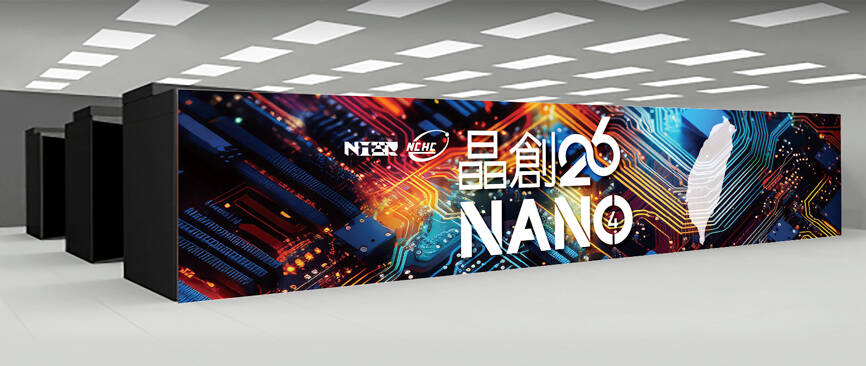
The nation’s fastest supercomputer, Nano 4 (晶創26), is scheduled to be launched in the third quarter, and would be used to train large language models in finance and national defense sectors, the National Center for High-Performance Computing (NCHC) said. The supercomputer, which would operate at about 86.05 petaflops, is being tested at a new cloud computing center in the Southern Taiwan Science Park in Tainan. The exterior of the server cabinet features chip circuitry patterns overlaid with a map of Taiwan, highlighting the nation’s central position in the semiconductor industry. The center also houses Taiwania 2, Taiwania 3, Forerunner 1 and

MORE POPULAR: Taiwan Pass sales increased by 59 percent during the first quarter compared with the same period last year, the Tourism Administration said The Tourism Administration yesterday said that it has streamlined the Taiwan Pass, with two versions available for purchase beginning today. The tourism agency has made the pass available to international tourists since 2024, allowing them to access the high-speed rail, Taiwan Railway Corp services, four MRT systems and four Taiwan Tourist Shuttles. Previously, five types of Taiwan Pass were available, but some tourists have said that the offerings were too complicated. The agency said only two types of Taiwan Pass would be available, starting from a three-day pass with the high-speed rail and a three-day pass with Taiwan Railway Corp. The former costs NT$2,800
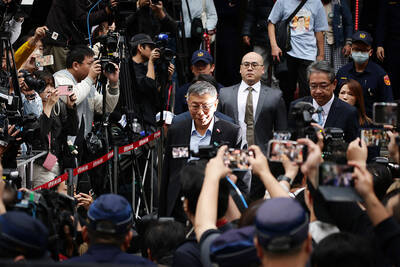
FIRST TRIAL: Ko’s lawyers sought reduced bail and other concessions, as did other defendants, but the bail judge denied their requests, citing the severity of the sentences Former Taipei mayor Ko Wen-je (柯文哲) was yesterday sentenced to 17 years in prison and had his civil rights suspended for six years over corruption, embezzlement and other charges. Taipei prosecutors in December last year asked the Taipei District Court for a combined 28-year, six-month sentence for the four cases against Ko, who founded the Taiwan People’s Party (TPP). The cases were linked to the Core Pacific City (京華城購物中心) redevelopment project and the mismanagement of political donations. Other defendants convicted on separate charges included Chinese Nationalist Party (KMT) Taipei City Councilor Angela Ying (應曉薇), who was handed a 15-year, six-month sentence; Core Pacific


 RSS
RSS