


Vietnam was to open its first oil refinery yesterday after more than a decade of delays, in what is being hailed as a significant moment in the country’s development and energy security.
Vietnamese Prime Minister Nguyen Tan Dung was expected to inaugurate the more than US$2.5 billion Dung Quat refinery yesterday evening live on nationwide television, an indication of its importance to the communist country.
Although Vietnam has considerable offshore oil reserves, it currently has to import all its petroleum products, costing the Southeast Asian nation hundreds of millions of dollars — a figure rising as energy consumption soars.
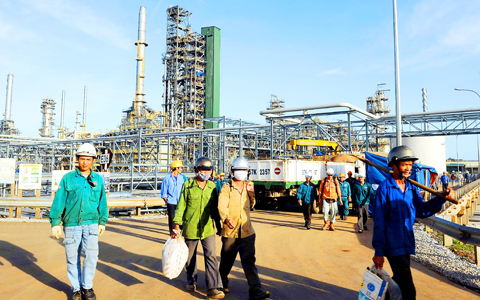
PHOTO: AFP
It spent US$10.88 billion importing refined products last year, official figures showed, while exporting US$10.45 billion crude oil.
State-owned PetroVietnam Group financed and will run the new facility, which is expected to churn out 6.5 million tonnes a year or 148,000 barrels per day — about 30 percent of the country’s needs.
PetroVietnam, which expects the refinery in the center of the country to be at full capacity from August, is designing another refinery in the north and has tentative plans for a third as Vietnam strives for energy autonomy.
“Dung Quat refinery is one of the most modern in the world,” said Dinh Van Ngoc, senior vice-president and chief executive of the arm of PetroVietnam that will run and manage the facility.
“It’s very meaningful for Vietnam, both practically and also spiritually — it can prove to the whole nation and Vietnamese people that Vietnam can build a refinery,” he said.
Dinh said the final figure for the cost of the refinery would be higher than US$2.5 billion but declined to be more specific.
The complex, built by an international consortium led by French oil services group Technip, has a long and checkered history.
When plans were first drawn up in the 1990s, the estimated cost was US$1.5 billion.
But several foreign backers pulled out, among them French giant Total, which baulked at the authorities’ insistence that the refinery be built in a mainly agricultural area with no tradition of heavy industry.
Critics and foreign investors argued that central Quang Ngai Province was too far from the offshore oil reserves in the south and from Ho Chi Minh City, Vietnam’s economically advanced commercial capital.
Experts said the government refused to have the first refinery anywhere else because it wanted to develop one of the poorest regions in the country.
The communist leaders also wanted to forge a new industrial area as a counterbalance to the capital Hanoi in the north and Ho Chi Minh City, formerly Saigon, in the south.
Authorities hoped the refinery and the industrial zone being built around it would create jobs for more than 20,000 people in the area, spurring the local economy.
New roads have been built in the zone and around the refinery, with a handful of new factories springing up, including at least one from South Korea.
Bruno Le Roy, the engineer managing the site for Technip, acknowledged it was “a political decision” to build the refinery in Quang Ngai Province, referring to the authorities’ determination to bring money to central Vietnam.
“I’ve seen in the last two years a big change in this area,” he said at the refinery, which covers 338 hectares of what was once farmland.
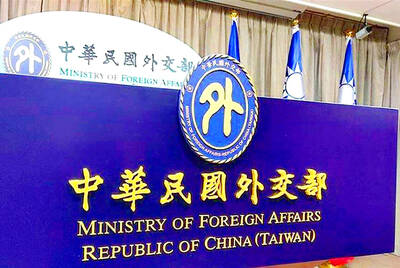
The Ministry of Foreign Affairs (MOFA) yesterday said it is closely monitoring developments in Venezuela, and would continue to cooperate with democratic allies and work together for regional and global security, stability, and prosperity. The remarks came after the US on Saturday launched a series of airstrikes in Venezuela and kidnapped Venezuelan President Nicolas Maduro, who was later flown to New York along with his wife. The pair face US charges related to drug trafficking and alleged cooperation with gangs designated as terrorist organizations. Maduro has denied the allegations. The ministry said that it is closely monitoring the political and economic situation
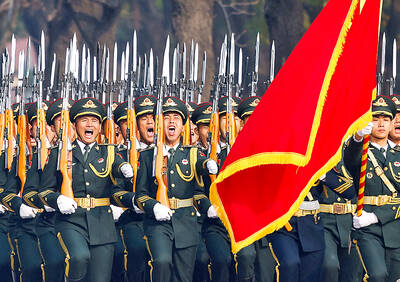
Conflict with Taiwan could leave China with “massive economic disruption, catastrophic military losses, significant social unrest, and devastating sanctions,” a US think tank said in a report released on Monday. The German Marshall Fund released a report titled If China Attacks Taiwan: The Consequences for China of “Minor Conflict” and “Major War” Scenarios. The report details the “massive” economic, military, social and international costs to China in the event of a minor conflict or major war with Taiwan, estimating that the Chinese People’s Liberation Army (PLA) could sustain losses of more than half of its active-duty ground forces, including 100,000 troops. Understanding Chinese

UNRELENTING: China attempted cyberattacks on Taiwan’s critical infrastructure 2.63 million times per day last year, up from 1.23 million in 2023, the NSB said China’s cyberarmy has long engaged in cyberattacks against Taiwan’s critical infrastructure, employing diverse and evolving tactics, the National Security Bureau (NSB) said yesterday, adding that cyberattacks on critical energy infrastructure last year increased 10-fold compared with the previous year. The NSB yesterday released a report titled Analysis on China’s Cyber Threats to Taiwan’s Critical Infrastructure in 2025, outlining the number of cyberattacks, major tactics and hacker groups. Taiwan’s national intelligence community identified a large number of cybersecurity incidents last year, the bureau said in a statement. China’s cyberarmy last year launched an average of 2.63 million intrusion attempts per day targeting Taiwan’s critical
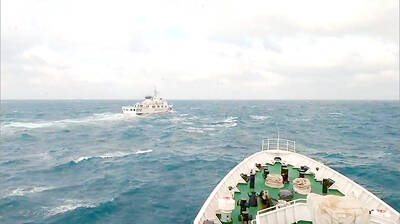
‘SLICING METHOD’: In the event of a blockade, the China Coast Guard would intercept Taiwanese ships while its navy would seek to deter foreign intervention China’s military drills around Taiwan this week signaled potential strategies to cut the nation off from energy supplies and foreign military assistance, a US think tank report said. The Chinese People’s Liberation Army (PLA) conducted what it called “Justice Mission 2025” exercises from Monday to Tuesday in five maritime zones and airspace around Taiwan, calling them a warning to “Taiwanese independence” forces. In a report released on Wednesday, the Institute for the Study of War said the exercises effectively simulated blocking shipping routes to major port cities, including Kaohsiung, Keelung and Hualien. Taiwan would be highly vulnerable under such a blockade, because it


 RSS
RSS