


China’s economy has slowed further this month, the nation’s top planner said yesterday, as he warned the government was being forced to act to avoid massive unemployment and social unrest.
Minister of National Development and Reform Commission Zhang Ping (張平) made the remarks at a briefing explaining recent measures to spur domestic consumption and lift economic growth.
“In November, a number of economic indicators are showing accelerated decline. The production at some enterprises has encountered difficulties, especially enterprises that focus on exports,” he said.
Zhang was speaking a day after China announced an interest rate cut of 108 basis points — the steepest in 11 years — and a few weeks after an unprecedented 4 trillion yuan (US$590 billion) stimulus package.
Zhang said the stimulus package announced on Nov. 9 should add about 1 percentage point to China’s economic growth rate. That was below the 2 percentage points increase that independent analysts have forecast.
With China’s economy headed toward what could become its biggest crisis in two decades, observers said Zhang’s remark was significant and a warning of bleak economic data this month, to be published in the coming weeks.
“Zhang certainly gets to see November figures earlier than the rest of us,” said Ma Qing (馬青), a Beijing-based analyst with consultancy CEB Monitor Group.
Last month’s figures were already far from stellar, demonstrating just how vulnerable China was to the global financial meltdown.
In one example, China’s industrial output grew by just 8.2 percent last month from a year earlier, a steep decline compared with the 17.9 percent growth year-on-year in October last year.
China’s economy, the world’s fourth-largest, expanded by 9 percent in the third quarter, the lowest level in more than five years.
The World Bank this week said it expected the Chinese economy to grow by 9.2 percent this year before hitting a 19-year low of 7.5 percent next year.
Amid the slowdown, Zhang warned there would be more job losses and potentially a rise in social unrest.
“Some companies have stopped all or part of their operations, and this will naturally have an impact on employment. In some areas we’re seeing rural workers returning back home to the countryside,” Zhang said.
He defended measures taken in the south of China to support struggling enterprises, with reports of local governments earmarking major funds aimed at keeping them in business.
“I think it’s necessary. If too many enterprises suspend business or stop production, it will result in large-scale unemployment, and it could trigger social instability,” he said.
Warnings have increased recently from senior Chinese policymakers about the impact the global economic crisis will have on the domestic economy.
Minister of Social Security Yin Weimin (尹蔚民) said last week that the employment situation was already “critical” and that the full fall-out from the crisis still remained to be seen. China needs about 24 million new jobs every year, but there is only capacity to create half that number, official estimates say.
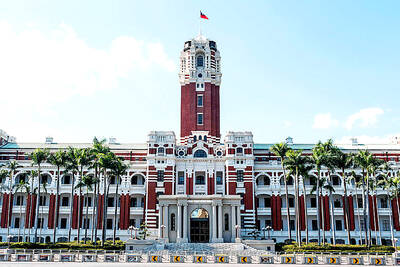
SECURITY: Taipei presses the US for arms supplies, saying the arms sales are not only a reflection of the US security commitment to Taiwan but also serve as a mutual deterrent against regional threats Taiwan is committed to preserving the cross-strait “status quo” and contributing to regional peace and stability, the Presidential Office said yesterday. “It is an undeniable fact that the Republic of China is a sovereign and independent democratic nation,” Presidential Office spokeswoman Karen Kuo (郭雅慧) reiterated, adding that Beijing has no right to claim sovereignty over Taiwan. The statements came after US President Donald Trump warned against Taiwanese independence. Trump wrapped up a state visit to Beijing on Friday, during which Chinese President Xi Jinping (習近平) had pressed him not to support Taiwan. Taiwan depends heavily on US security backing to deter China from carrying
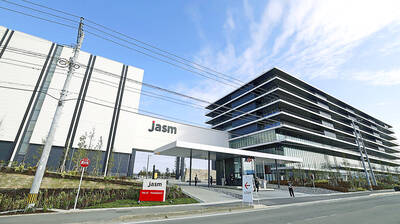
The subsidiary of Taiwan Semiconductor Manufacturing Co (TSMC, 台積電) in Kumamoto, Japan, turned a profit in the first quarter of this year, marking the first time the first fab of the unit has become profitable since mass production started at the end of 2024. According to the contract chipmaker’s financial statement released on Friday, Japan Advanced Semiconductor Manufacturing Inc (JASM), a joint venture running the fab in Kumamoto, posted NT$951 million (US$30.19 million) in profit in the January-to-March period, compared with a loss of NT$1.39 billion in the previous quarter, and a loss of NT$3.25 billion in the first quarter of
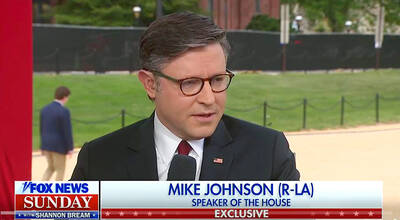
RESOLUTE BACKING: Two Republican senators are planning to introduce legislation that would impose immediate sanctions on China if it attempts to invade Taiwan US House of Representatives Speaker Mike Johnson on Sunday reaffirmed US congressional support for Taiwan, saying the US and “all freedom-loving people” have a stake in preventing China from seizing Taiwan by force. Johnson made the remarks in an interview with Fox News Sunday on US President Donald Trump’s summit with Chinese President Xi Jinping (習近平) last week. In an interview that aired on Friday on Fox News, just as Trump wrapped up a high-stakes visit to China, he said he has yet to green-light a new US$14 billion arms package to Taiwan and that it “depends on China.” “It’s a very good
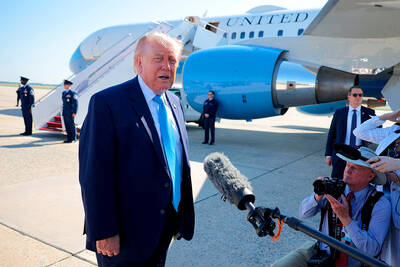
US President Donald Trump yesterday said he would speak to President William Lai (賴清德) as his administration considers whether to move ahead with a US$14 billion weapons sale to Taiwan — a potential arms deal that has drawn criticism from China. “Well, I’ll speak to him. I speak to everybody,” Trump told reporters yesterday when asked if he had any plans to call his counterpart, although he did not offer a time frame for when such a conversation could take place. Trump previously said he would speak to the person “that’s running Taiwan,” without specifying who he meant. “We have that situation very


 RSS
RSS