


Centuries before Captain James Cook claimed Australia for Britain in 1770, Muslim Makassan sailors from Indonesia regularly traveled thousands of kilometers across open sea to trade with Aboriginal people in Australia’s far north.
Now, a voyage in a specially constructed replica boat has rekindled ties between the Makassans from Sulawesi Island and the Yolngu community in northeast Arnhem Land, providing a powerful message about belonging for young Australian Muslims.
The project is the brainchild of the Abu Hanifa Institute, an organization promoting education, identity and inclusiveness for Muslims in Sydney.
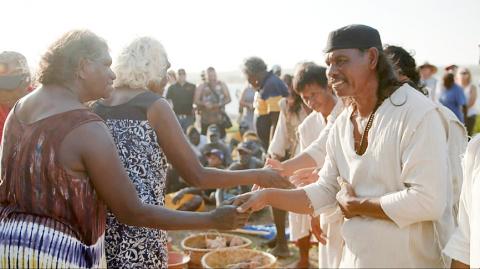
Screen grab from Abu Hanifa Institute video / via Reuters
“We ran a workshop with young people and we asked them what it meant to be an Australian and many people really could not identify with that concept,” Wesam Charkawi of Abu Hanifa said. “They felt that the discourse that they hear on a daily basis — ‘Go back to where you came from,’ ‘You don’t belong here,’ ‘Love it or leave it’ — that it alienated them.”
Muslims make up less than 3 percent of Australia’s population and many report experiencing prejudice or hostility regarding their faith.
The 60,000 year history of Australia’s “First Nations,” and their long and deep relationship with the Makassans resonated with many Muslim youth.
The two peoples traded sea cucumbers, exchanged ideas and language, intermarried and lived among each other from the 1500s or possibly earlier, historians have said.
The 15m vessel was built by Makassan artisans on a beach in Sulawesi using traditional methods and local timber.
Launching the boat was just one of many challenges the project had to overcome.
“On the day, we didn’t realize how we were going to get it [into the sea], then all of a sudden, hundreds of people turned up and they began pushing this thing, digging the sand with their own hands — not with shovels, but their own hands — to try and push this vessel into the sea,” Charkawi said. “Eventually, they made it happen.”
With no engine to rely on, the vessel and its 12 Makassan crew sailed for 25 days to make the nearly 2,000km journey to Darwin.
From there, the crew sailed to the Gove Peninsula, in northeast Arnhem Land, where it was met by hundreds of Yolngu and other Aborigines from the area, performing songs and ceremonies of welcome.
Muslim and Aboriginal leaders both wanted to share the history more widely, including getting the story of the Yolngu and Makassan relationship into school curriculums.
“This is a unique and very important thing,” said Aboriginal leader Timmy “Djawa” Burarrwanga, who shared the Makassan story with visiting young Muslims and helped spark the project.
“They are family. They are people that gave something to us — a special gift,” he said at the welcome ceremony.
Charkawi, whose institute is producing a documentary about the project to air later this year, said that the arrival was an emotional experience.
“The atmosphere was amazing. It was breathtaking,” he said. “They’d come out with their children, they’d come out with their elderly, with people who couldn’t walk, who were in wheelchairs, so the whole community had rallied behind this event.”

PHISHING: The con might appear convincing, as the scam e-mails can coincide with genuine messages from Apple saying you have run out of storage For a while you have been getting messages from Apple saying “your iCloud storage is full.” They say you have exceeded your storage plan, so documents are no longer being backed up, and photos you take are not being uploaded. You have been resisting Apple’s efforts to get you to pay a minimum of £0.99 (US$1.33) a month for more storage, but it seems that you cannot keep putting off the inevitable: You have received an e-mail which says your iCloud account has been blocked, and your photos and videos would be deleted very soon. To keep them you need
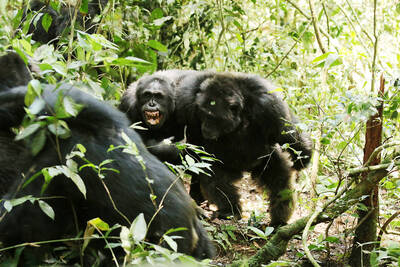
For two decades, researchers observed members of the Ngogo chimpanzee group of Kibale National Park in Uganda spend their days eating fruits and leaves, resting, traveling and grooming in their tropical rainforest abode, but this stable community then fractured and descended into years of deadly violence. The researchers are now describing the first clearly documented example of a group of wild chimpanzees splitting into two separate factions, with one launching a series of coordinated attacks against the other. Adult males and infants were targeted, with 28 deaths. “Biting, pounding the victim with their hands, dragging them, kicking them — mostly adult males,
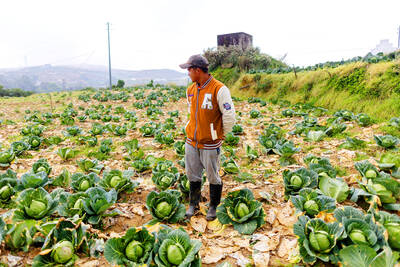
Filipino farmers like Romeo Wagayan have been left with little choice but to let their vegetables rot in the field rather than sell them at a loss, as rising oil prices linked to the Iran war drive up the cost of harvesting, labor and transport. “There’s nothing we can do,” said Wagayan, a 57-year old vegetable farmer in the northern Philippine province of Benguet. “If we harvest it, our losses only increase because of labor, transportation and packing costs. We don’t earn anything from it. That’s why we decided not to harvest at all,” he said. Soaring costs caused by the Middle East
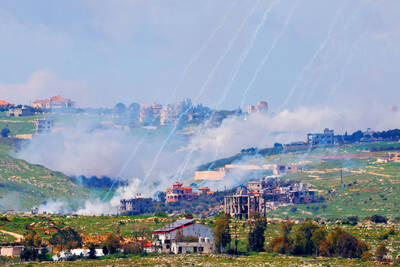
The Israeli military has demolished entire villages as part of its invasion of south Lebanon, rigging homes with explosives and razing them to the ground in massive remote detonations. The Guardian reviewed three videos posted by the Israeli military and on social media, which showed Israel carrying out mass detonations in the villages of Taybeh, Naqoura and Deir Seryan along the Israel-Lebanon border. Lebanese media has reported more mass detonations in other border villages, but satellite imagery was not readily available to verify these claims. The demolitions came after Israeli Minister of Defense Israel Katz called for the destruction of


 RSS
RSS