


About 40 young Tunisian volunteers gather on a bare hill in the central region of Siliana. Their weekend mission — revive a burned forest by planting Aleppo pine shoots.
Hamdi, from the eastern city of Sfax, gets straight to work after traveling 250km to the marginalized region. A camping and hiking enthusiast, he found out about the initiative on Facebook.
“It’s a chance to have fun and do something good together,” the student said.
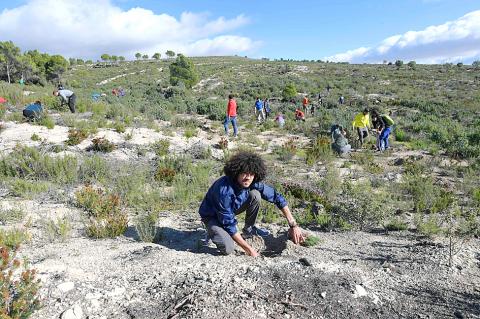
Photo: AFP
He is part of a network of nature lovers who have joined forces with Tunisian authorities for an ambitious venture: Plant 12 million trees across the country by the end of this year.
That target equates to one tree per Tunisian citizen.
“We can only get there together,” said Baya Khalfallah, one of the heads of the Soli&Green association, which launched the campaign in November last year.
“To reach our objective, we are counting on all the [community] organizations, our partnership with the government — and, obviously, on those who are environmentally conscious,” she added.
Most of the volunteers come from the large coastal cities of Tunis, Sfax and Sousse.
Amin Farhat, a young executive from Tunis who is also an activist for a recycling charity, said that they want to safeguard Tunisia’s natural beauty and resources.
“We’re doing it for the future,” he said.
Soli&Green, founded by a handful of environmental activists in their 30s, organizes planting weekends in winter and helps other organizations that want to do the same.
Since November, it has compiled a list of all the country’s reforestation initiatives and estimates that by the middle of this month, almost 1 million trees had been planted.
The state does most of the work. The regional commission for agricultural development (CRDA), a public body, provides volunteers with basic training, thousands of tree shoots and a watering truck.
“When we use laborers, we plant around 1,000 trees a day, but with volunteers, we can plant 4,000, even 5,000 a day,” said Nizar Khlif, a manager at the Siliana branch of the CRDA.
“There are a lot of them, they are effective and it is free, and there is a participatory approach — they involve the local population,” Khlif said.
The arrival of the city-dwelling, backpack-carrying volunteers has inspired Siliana residents.
In 2017, 40 hectares of forest went up in smoke.
A suspected arsonist said he had hoped the blaze would compel authorities to recruit forest rangers, and that he would be hired.
“It was as if we’d lost a family member,” said 14-year-old Khairi Jaied, from a nearby village. “I have many good memories of the forest. It’s good to see these people helping so that our region can rebuild its resources.”
“Before the fire, there was a dense forest here,” said 46-year-old Khlifa Jaidi, pointing at a rocky hill.
Reforestation is a crucial part of curbing erosion and fighting global warming — trees capture carbon dioxide, a greenhouse gas, and transform it into oxygen — but it is also a way of creating local revenue.
“People used to gather Aleppo pine seeds to make zgougou [a traditional dessert] and rosemary, sold for its essential oil,” said Jaidi, a local guide from the nearby town of Kesra.
Forest fires, deliberate and accidental, eat away at hundreds of hectares each year, but the state is increasingly joining forces with local residents and its reforestation strategies seem to be paying off. Forests and scrubland now cover more than 1.3 million hectares, or about 8.5 percent of the country, up from 7.4 percent in 2011, according to the Tunisian General Directorate of Forests.
The aim is to reach 10 percent by 2024.
Whether it is post-fire reforestation or fighting desertification in the south by planting palms and olive trees, the task is enormous.
Nessim Zouaoui, 26, said that he is sometimes discouraged.
“I spend most of my free time cleaning beaches and planting trees, but we just went to see a neighboring plot where we worked in March and we realized that we had completely planted a forest. That’s really motivating,” the young entrepreneur and activist said.
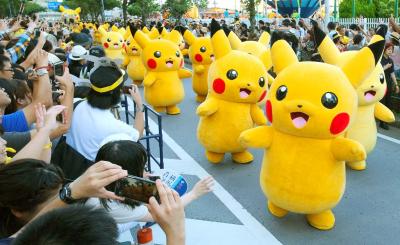
China’s military news agency yesterday warned that Japanese militarism is infiltrating society through series such as Pokemon and Detective Conan, after recent controversies involving events at sensitive sites. In recent days, anime conventions throughout China have reportedly banned participants from dressing as characters from Pokemon or Detective Conan and prohibited sales of related products. China Military Online yesterday posted an article titled “Their schemes — beware the infiltration of Japanese militarism in culture and sports.” The article referenced recent controversies around the popular anime series Pokemon, Detective Conan and My Hero Academia, saying that “the evil influence of Japanese militarism lives on in

ANTI-SEMITISM: Some newsletters promote hateful ideas such as white supremacy and Holocaust denial, with one describing Adolf Hitler as ‘one of the greatest men of all time’ The global publishing platform Substack is generating revenue from newsletters that promote virulent Nazi ideology, white supremacy and anti-Semitism, a Guardian investigation has found. The platform, which says it has about 50 million users worldwide, allows members of the public to self-publish articles and charge for premium content. Substack takes about 10 percent of the revenue the newsletters make. About 5 million people pay for access to newsletters on its platform. Among them are newsletters that openly promote racist ideology. One, called NatSocToday, which has 2,800 subscribers, charges US$80 for an annual subscription, although most of its posts are available
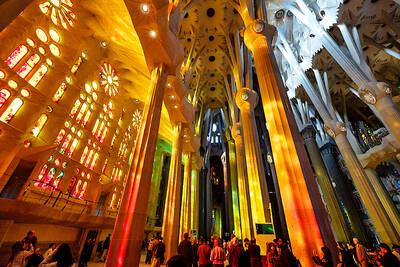
GLORY FACADE: Residents are fighting the church’s plan to build a large flight of steps and a square that would entail destroying up to two blocks of homes Barcelona’s eternally unfinished Basilica de la Sagrada Familia has grown to become the world’s tallest church, but a conflict with residents threatens to delay the finish date for the monument designed more than 140 years ago. Swathed in scaffolding on a platform 54m above the ground, an enormous stone slab is being prepared to complete the cross of the central Jesus Christ tower. A huge yellow crane is to bring it up to the summit, which will stand at 172.5m and has snatched the record as the world’s tallest church from Germany’s Ulm Minster. The basilica’s peak will deliberately fall short of the

Venezuelan Nobel peace laureate Maria Corina Machado yesterday said that armed men “kidnapped” a close ally shortly after his release by authorities, following former Venezuelan president Nicolas Maduro’s capture. The country’s Public Prosecutor’s Office confirmed later yesterday that former National Assembly vice president Juan Pablo Guanipa, 61, was again taken into custody and was to be put under house arrest, arguing that he violated the conditions of his release. Guanipa would be placed under house arrest “in order to safeguard the criminal process,” the office said in a statement. The conditions of Guanipa’s release have yet to be made public. Machado claimed that


 RSS
RSS