


Looking at page after page of childhood photographs, Xiaogunzhu was drawn to an image of a French-Irish boy with smiling dark blue eyes.
However, she was not admiring her lover’s family album, she was browsing a catalogue of potential sperm donors — the 39-year-old is one of an increasing number of affluent single women in China that are seeking a child, but not a husband.
Unmarried women in China are largely barred from accessing sperm banks and in-vitro fertilization (IVF) treatment, forcing them to seek options abroad.
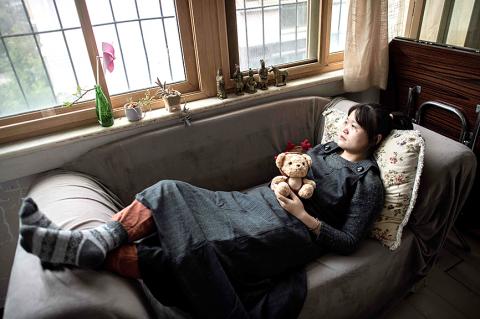
Photo: AFP
Her choice made — donor #14471 on the Web site of a Californian sperm bank — Xiaogunzhu flew to the US to begin the first rounds of treatment.
“There are many women who won’t get married, so they might not fulfil this fundamental biological mission,” Xiaogunzhu said, using the name she blogs under to avoid any negative attention.
“But I felt another path had opened up,” she added.
Her baby, now nine months old, is called Oscar after a character in a comic about the French revolution — a nod to the donor’s French ancestry.
The marriage rate in China has been in decline over the past five years. Last year, only 7.2 out of 1,000 people got married, according to official statistics.
PROFESSIONALS
Educated professional women face “discrimination” when seeking spouses, as their male partners have “difficulty accepting their higher educational or economic accomplishments,” sociologist Sandy To said.
However, many feel that struggling to find or simply not wanting a partner should not preclude them from motherhood.
Xiaogunzhu believes a father is not necessary — her own was controlling and often angry, dimming her view of the traditional family setup.
“Why does everyone think that children will ask: ‘Why don’t I have a father?’” she said.
Analysts predict that the total market in China for fertility services would reach US$1.5 billion in 2022 — more than double its 2016 value.
But demand for services overseas for Chinese nationals is also booming.
Danish sperm and egg bank Cryos International has created a Chinese Web site and added Chinese-speaking staff. US and European sperm banks said that they have increasing numbers of Chinese clients.
However, the journey is neither cheap nor easy.
China’s National Health Commission stipulates that the purpose of sperm banks is for “treating infertility and preventing genetic diseases.”
In practice, that prohibits non-married women from using them.
“We want to help these single women, but unfortunately we truly are politically restricted,” said Liu Jiaen, the director of a fertility hospital in Beijing.
Liu said the limitation is “a pity.”
Conceiving a child through a foreign sperm bank starts from 200,000 yuan (US$28,447).
Women must make several trips abroad for the medical procedures, as Chinese law bans importing human sperm.
Women also face discrimination; in Chinese culture, marriage is still considered essential to having a child.
“If sperm banks and related technology like egg-freezing are accessible to single women, it’s a way to safeguard your own reproduction ability,” said Alan Zhang, a 28-year-old reproductive rights activist in Beijing.
Zhang has written more than 60 letters to delegates of China’s parliamentary body asking them to overturn the restriction as part of her work with Diversity Family, the non-governmental organization she cofounded to advocate for non-traditional family structures.
“The state does not do this, so the people can only find their own way,” Zhang said.
MIXED-RACE BABIES
In China, sperm donors must remain anonymous.
However, international sperm banks offer women details like hair color, childhood photos and ethnic background.
“If you choose to use a sperm donor, sperm is essentially a commodity,” said Carrie, a 35-year-old single mother living in southwest China who also requested anonymity.
Carrie said that international sperm banks are more sophisticated than Chinese ones and “able to meet consumer demand.”
Cryos International chief executive officer Peter Reeslev said that given the extra choices, “Chinese women tend to choose Caucasian donors.”
Reeslev said one possible reason is that sperm banks outside of China have fewer Chinese donors — Cryos has only nine donors out of 900 who identify as Chinese.
US sperm bank California Cryobank has 70 available donors out of 500 who self-identify as Chinese.
However, experts say regardless of the availability of Chinese or Chinese-American donors, women are still chosing to have mixed-race children.
“Basically, the selected sperm donors are mostly white,” said Xi Hao, a clinical coordinator in Beijing who helps Chinese customers access a fertility clinic in California.
Zhan Yingying, a cofounder of the Diversity Family organization, said it was rare for her to come across a mother who chose a sperm donor of Chinese ethnicity.
Traits such as double eyelids and pale skin are often valued according to Chinese beauty standards.
“Before choosing the sperm donor I had not considered a particular race,” Carrie said, but after seeing the catalogue she realized she had a preference for foreign physical traits — and now has two half-Danish children.
For baby Oscar, Xiaogunzhu said personality was the major factor in her decision as the donor was listed as “full of joy.”
But on her Weibo blog, photos of Oscar with the hashtag #mixed-race baby draw admiration.
“I personally don’t care about the color of the skin,” she said. “I only care that the eyes are big and the features are good.”
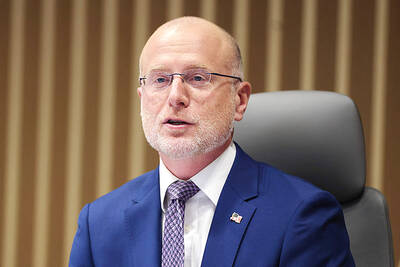
FAKE NEWS? ‘When the government demands the press become a state mouthpiece under the threat of punishment, something has gone very wrong,’ a civic group said The top US broadcast regulator on Saturday threatened media outlets over negative coverage of the Middle East war, after US President Donald Trump slammed critical headlines from the “Fake News Media.” The US president since his first term has derided mainstream media as “fake news” and has sued major outlets over what he sees as unfair coverage. Brendan Carr, head of the US Federal Communications Commission — which oversees the nation’s radio, television and Internet media — said broadcasters risked losing their licenses over news coverage. “The law is clear. Broadcasters must operate in the public interest, and they will
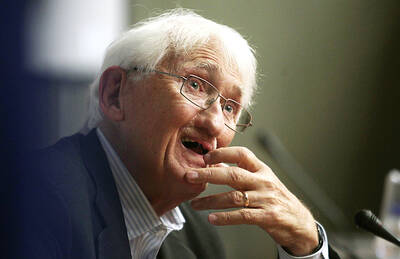
INFLUTENTIAL THEORIST: Habermas was particularly critical of the ‘limited interest’ shown by German politicians in ‘shaping a politically effective Europe Jurgen Habermas, whose work on communication, rationality and sociology made him one of the world’s most influential philosophers and a key intellectual figure in his native Germany, has died. He was 96. Habermas’ publisher, Suhrkamp, said he died on Saturday in Starnberg, near Munich. Habermas frequently weighed in on political matters over several decades. His extensive writing crossed the boundaries of academic and philosophical disciplines, providing a vision of modern society and social interaction. His best-known works included the two-volume Theory of Communicative Action. Habermas, who was 15 at the time of Nazi Germany’s defeat, later recalled the dawn of
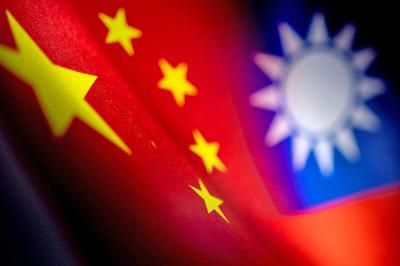
The Chinese public maintains relatively warm sentiments toward Taiwan and strongly prefers non-military paths to improving cross-strait relations, a recent survey conducted by the Atlanta, Georgia-based Carter Center and Emory University showed. The “China Pulse” research project, which polled 2,506 adults between Oct. 27 last year and Jan. 1 this year, found that 86 percent of respondents support strengthening cultural ties, while 81 percent favor deepening economic interaction. The report, co-authored by political scientists at Emory University and advisors at the Carter Center, indicates that the Chinese public views Taiwan’s importance through a lens of shared history and culture rather than geopolitical

Cannabis-based medicines have shown little evidence of effectiveness for treating most mental health and substance-use disorders, according to a large review of past studies published in a major medical journal on Monday. Medical use of cannabinoids has been expanding, including in the US, Canada and Australia, where many patients report using cannabis products to manage conditions such as anxiety, post-traumatic stress disorder and sleep problems. Researchers reviewed data from 54 randomized clinical trials conducted between 1980 and May last year involving 2,477 participants for their analysis published in The Lancet. The studies assessed cannabinoids as a primary treatment for mental disorders or substance-use


 RSS
RSS