


A cybersecurity company said it has found software that appears to install code for mining cryptocurrency and sends any mined coins to a server at a North Korean university, the latest sign that North Korea might be searching for new ways to infuse its economy with cash.
The application, which was created on Dec. 24, uses host computers to mine a cryptocurrency called Monero. It then sends any coins to Kim Il-sung University in Pyongyang, cybersecurity firm AlienVault said.
“Cryptocurrencies may provide a financial lifeline to a country hit hard by sanctions, and as a result, universities in Pyongyang have shown a clear interest,” the California-based security firm said in a release, adding that the software “may be the most recent product of their endeavors.”
The company added a caveat that a North Korean server used in the code does not appear to be connected to the wider Internet, which could mean its inclusion is meant to trick observers into making a North Korean connection.
Kim Il-sung University did not immediately respond to requests for comment. Government officials representing North Korea at the UN were not immediately available for comment.
Others have flagged increasing signs of North Korean interest in cryptocurrencies and their underlying blockchain technology.
“With economic sanctions in place, cryptocurrencies are currently the best way to earn foreign currency in North Korea’s situation. It is hard to trace and can be laundered several times,” ESTsecurity chief analyst Mun Chong-hyun said.
Cryptocurrency watchers say technical details of Monero, the 13th-largest crypto asset in the world, according to www.coinmarketcap.com, make it more appealing than bitcoin to those who value secrecy.
Monero funds go to an unlinkable, one-time address generated with random numbers every time a payment is issued. That makes it less traceable than bitcoin, for which transactions can be linked to specific private addresses, cybersecurity experts said.
Marshal Swatt, an expert in blockchain technology and financial exchange, said cryptocurrencies’ independence from government regulation — and sanctions — make them logical choices for covert transactions.
Cybersecurity firm FireEye in a November blog post cited a series of North Korean activities against South Korean cryptocurrency targets such as exchanges.
“It should be no surprise that cryptocurrencies, as an emerging asset class, are becoming a target of interest by a regime that operates in many ways like a criminal enterprise,” analyst Luke McNamara wrote.
In early November, Federico Tenga, the Italian cofounder of bitcoin start-up Chainside, posted on Twitter photographs and comments on his visit to the Western-funded Pyongyang University of Science and Technology to lecture on bitcoin and blockchain.
“The lectures were at a quite basic level to give a general understanding of blockchain technologies, which are also very relevant to trade, supply chains and other e-business,” a university spokesman said.
“We believe this teaching can give the next generation of North Korean professionals additional concepts that may be valuable as they seek to develop their country,” the spokesman added. “We’re acutely aware of issues around sanctions, which we keep under regular review and take care to avoid any sensitive or proscribed areas.”
AlienVault’s report said one North Korean IP address, 175.45.178.19, has been active on bitcoin trading sites.
That is the same address used to control compromised Web servers in the 2014-2015 cyberattacks on South Korean energy, traffic, telecom, broadcasting, financial and political institutions, security firm AhnLab said.
The report also said that North Korean IP addresses have downloaded several episodes of the automotive TV series Top Gear and documentaries by the show’s former presenter James May.
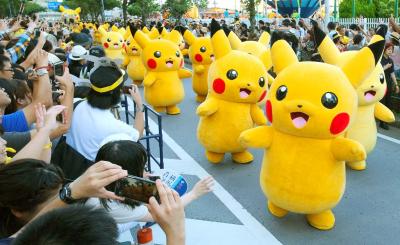
China’s military news agency yesterday warned that Japanese militarism is infiltrating society through series such as Pokemon and Detective Conan, after recent controversies involving events at sensitive sites. In recent days, anime conventions throughout China have reportedly banned participants from dressing as characters from Pokemon or Detective Conan and prohibited sales of related products. China Military Online yesterday posted an article titled “Their schemes — beware the infiltration of Japanese militarism in culture and sports.” The article referenced recent controversies around the popular anime series Pokemon, Detective Conan and My Hero Academia, saying that “the evil influence of Japanese militarism lives on in

ANTI-SEMITISM: Some newsletters promote hateful ideas such as white supremacy and Holocaust denial, with one describing Adolf Hitler as ‘one of the greatest men of all time’ The global publishing platform Substack is generating revenue from newsletters that promote virulent Nazi ideology, white supremacy and anti-Semitism, a Guardian investigation has found. The platform, which says it has about 50 million users worldwide, allows members of the public to self-publish articles and charge for premium content. Substack takes about 10 percent of the revenue the newsletters make. About 5 million people pay for access to newsletters on its platform. Among them are newsletters that openly promote racist ideology. One, called NatSocToday, which has 2,800 subscribers, charges US$80 for an annual subscription, although most of its posts are available

GLORY FACADE: Residents are fighting the church’s plan to build a large flight of steps and a square that would entail destroying up to two blocks of homes Barcelona’s eternally unfinished Basilica de la Sagrada Familia has grown to become the world’s tallest church, but a conflict with residents threatens to delay the finish date for the monument designed more than 140 years ago. Swathed in scaffolding on a platform 54m above the ground, an enormous stone slab is being prepared to complete the cross of the central Jesus Christ tower. A huge yellow crane is to bring it up to the summit, which will stand at 172.5m and has snatched the record as the world’s tallest church from Germany’s Ulm Minster. The basilica’s peak will deliberately fall short of the

Venezuelan Nobel peace laureate Maria Corina Machado yesterday said that armed men “kidnapped” a close ally shortly after his release by authorities, following former Venezuelan president Nicolas Maduro’s capture. The country’s Public Prosecutor’s Office confirmed later yesterday that former National Assembly vice president Juan Pablo Guanipa, 61, was again taken into custody and was to be put under house arrest, arguing that he violated the conditions of his release. Guanipa would be placed under house arrest “in order to safeguard the criminal process,” the office said in a statement. The conditions of Guanipa’s release have yet to be made public. Machado claimed that


 RSS
RSS