


A group of Australian high-school students have managed to recreate a life-saving drug that rose from US$13.50 to US$750 a tablet overnight after an unscrupulous price increase by former US hedge fund manager Martin Shkreli.
The Sydney Grammar students reproduced the drug, Daraprim, used to treat a rare, but deadly parasitic infection, in their high-school laboratory with support from the University of Sydney and global members of the Open Source Malaria consortium.
Alice Williamson, a post-doctoral teaching fellow with the University of Sydney’s school of chemistry, said she could not stop dwelling on the story of Shkreli, who acquired Daraprim last year through his company, Turing Pharmaceuticals, and almost immediately and exorbitantly raised the price.
The drug is used to treat malaria and to prevent toxoplasmosis infection in people with HIV.
The move made him a public villain, a label he embraced as he also became known as “Pharma Bro.”
“I couldn’t get this story out of my head, it just seemed so unfair, especially since the drug is so cheap to make and had been sold so cheaply for so long,” Williamson said. “I said: ‘Why don’t we get students to make Daraprim in the lab,’ because to me the route looked pretty simple. I thought if we could show that students could make it in the lab with no real training, we could really show how ridiculous this price hike was and that there was no way it could be justified.”
Sydney Grammar could afford to pay for the equipment and chemicals, and had the facilities. The group of year 11 students were talented and confident, Williamson said, and decided to give it a go.
The students made their work open to the Internet, and scientists anywhere in the world were able to view all the data generated and mentor the students to accelerate their progress. Williamson and university associate professor Matthew Todd also mentored the students.
Todd told the Guardian Australia that what the students had achieved was “a little Breaking Bad,” a television show about a struggling high-school chemistry teacher who works with one of his former students to produce and sell crystal meth.
“With the right guidance, they could do everything safely,” Todd said. “There were clues in literature already from patents around these molecules, but they had to change things as some reagents were nasty and dangerous, so some invention was needed on their part. The open source platform meant as they posted data in real time, Alice, myself and others could guide them.”
He said the open nature of the project demystified science and revealed the number of roadblocks the students had faced in coming up with the final product, which involved three complicated chemical steps.
“With science results you can be presented with a polished finished product that hides the false steps along the way,” he said.
“The students’ real-time diary highlights their whole process and is a very transparent way of doing things,” he added.
The students realized they had succeeded two weeks ago when their teacher, Malcolm Binns, took Todd and Williamson a sample.
“Alice did the analysis and looked at the screen, and said: ‘Oh my god, they’ve done it, and not only have they done it, it’s super pure. It’s A-grade.’ I couldn’t believe my eyes,” Todd said.
“That was the moment. I realized they had nailed it. The students were over the moon,” he said.
He said unfortunately the students would not be able to sell their drug to the US market.
While the drug can be bought in Australia for about A$13 (US$9.62) for a packet of 50, there are a number of complicated legal roadblocks in the way of producing and selling it in the US.
“Turing has the exclusive rights to sell it, even though the drug is no longer under patent,” Todd said.
“The ridiculousness of this legal loophole means if we wanted to launch it as a drug in the US we’d have to go through a whole new clinical trial because we would have to compare the Sydney Grammar stuff with the officially sanctioned stuff, and Turing would have to give us the drug to allow those comparisons to be made,” he said. “It’s not just a matter of going to the store and buying the Turing drug either, they would have to hand it over directly.”
In response to a question on Twitter about whether the students were competition, Shkreli simply tweeted: “No.”
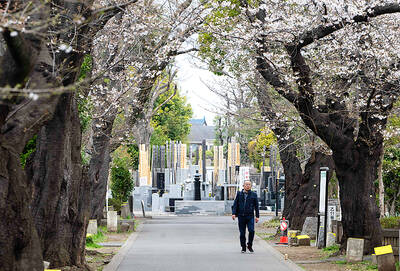
ROCKY RELATIONS: The figures on residents come as Chinese tourist numbers drop following Beijing’s warnings to avoid traveling to Japan The number of Chinese residents in Japan has continued to rise, even as ties between the two countries have become increasingly fractious, data released on Friday showed. As of the end of December last year, the number of Chinese residents had increased by 6.5 percent from the previous year to 930,428. Chinese people accounted for 22.6 percent of all foreign residents in Japan, making them by far the largest group, Japanese Ministry of Justice data showed. Beijing has criticized Tokyo in increasingly strident terms since Japanese Prime Minister Sanae Takaichi last year suggested that a military conflict around Taiwan could
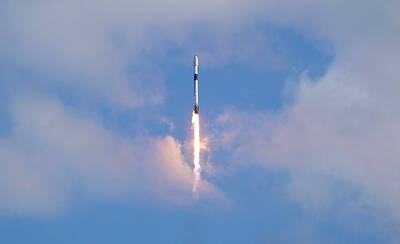
A retired US colonel behind a privately financed rocket launch site in the Dominican Republic sees the project as a response to China’s dominance of the space race in Latin America. Florida-based Launch on Demand is slated to begin building a US$600 million facility in a remote region near the border with Haiti late this year. The project is designed to meet surging demand for the heavy-lift rockets needed to put clusters of satellites into orbit. It is also an answer to China’s growing presence in the region, said CEO Burton Catledge, a former commander of the US Air Force’s 45th Operations
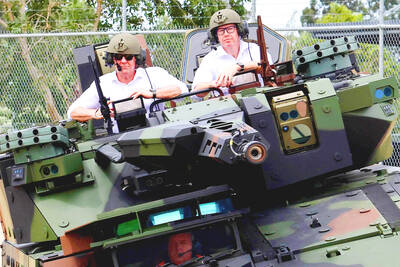
Germany is considering Australia’s Ghost Bat robot fighter as it looks to select a combat drone to modernize its air force, German Minister of Defense Boris Pistorius said yesterday. Germany has said it wants to field hundreds of uncrewed fighter jets by 2029, and would make a decision soon as it considers a range of German, European and US projects developing so-called “collaborative combat aircraft.” Australia has said it will integrate the Ghost Bat, jointly developed by Boeing Australia and the Royal Australian Air Force, into its military after a successful weapons test last year. After inspecting the Ghost Bat in Queensland yesterday,
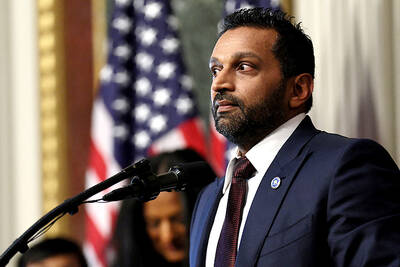
A pro-Iran hacking group claimed to breach FBI Director Kash Patel’s personal e-mail inbox and posted some of the contents online. The e-mails provided by the hacking group include travel details, correspondence with leasing agents in Washington and global entry, and loyalty account numbers. The e-mail address the hackers claim to have compromised has been previously tied to Patel’s personal details, and the leaked e-mails contain photos of Patel and others, in addition to correspondence with family members and colleagues. “The FBI is aware of malicious actors targeting Director Patel’s personal email information,” the agency said in a statement on


 RSS
RSS