


Venezuelan President Nicolas Maduro urged people to demonstrate against the Organization of American States (OAS) in Caracas yesterday over what he labels its meddling in Venezuela’s political crisis.
As part of an escalating war of words, Maduro on Tuesday told the head of the Washington-based organization to “shove it.”
The verbal barrage came after OAS Secretary-General Luis Almagro called for an urgent meeting on the Venezuelan crisis, warning democracy was at risk in the country.
Oil-rich Venezuela’s economy is in very dire straits and the opposition wants to remove the president through a referendum. There are increasing signs of social unrest, such as looting, with shortages of most basic consumer goods such as soap and toilet paper.
In a 132-page letter to the president of the OAS Permanent Council, Almagro requested a meeting of the organization’s 34 member states from Saturday next week to June 20.
“The institutional crisis in Venezuela demands immediate changes in the actions of the executive branch,” Almagro wrote, adding that the socialist nation is “at risk of falling immediately into a situation of illegitimacy.”
The opposition-controlled legislature had requested that Almagro invoke the Inter-American Democratic Charter — which regulates government behavior in members states — to assess whether the Maduro government violated standards.
“Mr Almagro, you can take your Democratic Charter ... put it in a skinny little tube and shove it wherever it fits,” Maduro fired back at a rally of thousands of his supporters in Caracas. “Venezuela must be respected. No one is going to apply any charter to Venezuela. I call for a national rebellion in the face of these international threats.”
Maduro also vowed to sue the congressional leadership for “treason” and “usurping” executive duties.
Later on Tuesday, appearing on TV, Maduro said: “Seeking to intervene in Venezuela is a crime. I call for mobilization against interventionism.”
He said he wanted “a big anti-imperialist and anti-Almagro march” by young Venezuelans who follow Maduro’s socialist agenda.
The leftist leader accuses the US and the OAS of conspiring against his government at the behest of the “fascist Venezuelan right,” which he blames for severe shortages of food and medicine gripping the recession-racked country.
He has decreed a state of emergency and recently held military exercises to counter the alleged foreign threat.
The OAS leader has repeatedly sparred with Maduro in recent months, calling him a “dictator.”
Under the OAS Charter, the Permanent Council may vote to suspend Venezuela’s membership with a two-thirds vote, on the grounds of preserving democracy.
Venezuela’s economy has plummeted along with global crude prices over the past two years.
The crisis has been aggravated by electricity shortages that have forced rolling blackouts, school closures and a dramatically shortened work week for public sector employees.
Polls indicate that nearly seven in 10 Venezuelans want Maduro to go.
Early last month, an opposition coalition turned in as many as 1.85 million signatures demanding a referendum to recall the unpopular president.
The leftist leader’s allies say the petitions are rife with fraud.
The opposition welcomed Almagro’s move and urged the international community to step up pressure on Maduro’s government.
“The international community, including the OAS, can’t turn a blind eye to the grave humanitarian crisis we’re in, not just [shortages of] medicine and food, but also human rights violations and a non-existent democracy,” Legislative Speaker Henry Ramos Allup said. “They can’t turn their heads, because an explosion in Venezuela will affect the entire region.”
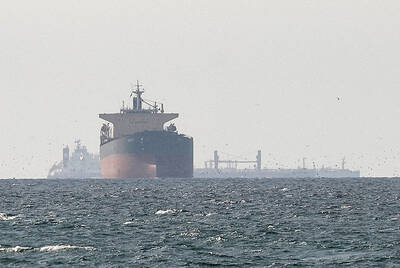
A ship that appears to be taking on the identity of a scrapped gas carrier exited the Strait of Hormuz on Friday, showing how strategies to get through the waterway are evolving as the Middle East war progresses. The vessel identifying as liquefied natural gas (LNG) carrier Jamal left the Strait on Friday morning, ship-tracking data show. However, the same tanker was also recorded as having beached at an Indian demolition yard in October last year, where it is being broken up, according to market participants and port agent’s reports. The ship claiming to be Jamal is likely a zombie vessel that

Cannabis-based medicines have shown little evidence of effectiveness for treating most mental health and substance-use disorders, according to a large review of past studies published in a major medical journal on Monday. Medical use of cannabinoids has been expanding, including in the US, Canada and Australia, where many patients report using cannabis products to manage conditions such as anxiety, post-traumatic stress disorder and sleep problems. Researchers reviewed data from 54 randomized clinical trials conducted between 1980 and May last year involving 2,477 participants for their analysis published in The Lancet. The studies assessed cannabinoids as a primary treatment for mental disorders or substance-use

NATIONWIDE BLACKOUT: US President Donald Trump cut off Venezuelan oil shipments to Cuba, strangling the Caribbean island’s already antiquated grid Cuba’s national electric grid collapsed on Monday, the nation’s grid operator said, leaving about 10 million people without power amid a US-imposed oil blockade that has crippled the already obsolete generation system. Grid operator UNE on social media said that it is investigating the causes of the blackout, the latest in a series of widespread outages that last for hours or days and that this weekend sparked a rare violent protest in the communist-run nation. Officials ruled out a major power plant failure, but had still not pinpointed the root cause of the grid collapse, suggesting a problem with transmission. Officials said that

‘HEALTH ISSUE’: More than 250 women are hospitalized every day due to complications from unsafe abortions, and about three die, a study showed Jane had been bleeding heavily for days before finally seeking help, not from a hospital, but from the man who sold her the pills meant to end her six-week pregnancy. Abortions are strictly outlawed in the mainly Catholic Philippines, forcing women to turn to a patchwork of providers operating in the online shadows. While rare in practice, Philippine law allows for prison terms of up to six years for abortion patients and providers, leaving thousands of Filipinas to search for solutions in online forums where unlicensed sellers promote abortifacients. “It was very painful, as if my abdomen was being twisted,” said Jane, whose


 RSS
RSS