


A defiant Venezuelan President Nicolas Maduro on Sunday urged supporters to launch a general strike and “rebellion” if the opposition succeeds in ousting him from office in a referendum.
Maduro’s fiery May Day speech came as Venezuela’s emboldened opposition prepared to present today more than 10 times the roughly 200,000 signatures needed to begin organizing a referendum to remove the unpopular president, blamed by many for the country’s deep economic crisis.
Maduro vowed to fight for his job, despite a deep crisis in the country that has seen riots and looting in the second city over four-hour daily blackouts introduced to save energy.
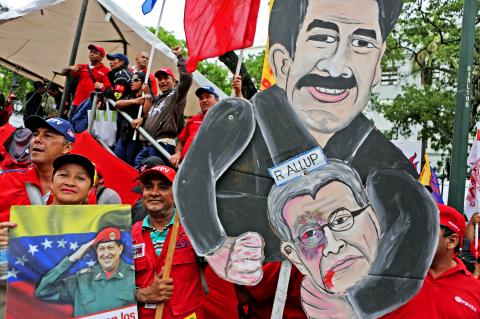
Photo: Reuters
“If the oligarchy some day does something against me and manages to take this palace, I order you to declare yourselves in rebellion and decree an indefinite general strike,” he told supporters massed outside the presidential palace.
Maduro told them the referendum “is an option, not an obligation. Here the only obligation is the presidential election and that will be in 2018.”
A recent poll found that more than two-thirds of Venezuelans want Maduro, elected president by a razor-thin margin in 2013, to leave office.
Venezuela, which has the world’s largest proven oil reserves, has plunged into economic chaos as global crude prices have collapsed. It has been in recession since 2013.
The import-dependent country faces acute shortages of food and basic goods such as toilet paper due to a lack of currency, more than 96 percent of which it gets from oil sales.
Maduro has vowed to press on with the socialist “revolution” launched in 1999 by his predecessor, Hugo Chavez, which has given Venezuela a government-led economy.
If the electoral board accepts the signatures collected by the opposition as valid — far from a sure bet, since opponents say the board is stacked with Maduro cronies — the opposition will then have to collect 4 million more for the board to organize the vote.
Opponents are racing to hold the referendum before the end of the year. According to Venezuela’s constitution, after January next year a successful recall vote would transfer power to Maduro’s vice president rather than trigger new elections.
Jesus Torrealba, spokesman for the Mesa de la Unidad (MUD) opposition coalition that controls Venezuela’s legislature, said the signatures — collected in “record time” — would be delivered to the electoral board today.
However, board official Tania D’amelio suggested on Twitter that the board might not start verifying the signatures until late this month.
Meanwhile, Venezuelans lost half an hour of sleep as their clocks were set forward on Sunday on Maduro’s orders to help save power. At 2:30am, Venezuela shifted its time ahead by 30 minutes — to four hours behind Greenwich Mean Time.
The move, announced in the middle of last month, is part of a package of measures the embattled president is pursuing to cope with a crippling electricity shortage.
In announcing the time change, the Maduro government said 30 extra minutes of daylight at the end of the day would curb the use of lights and air conditioning, especially draining for the power grid.
Maduro’s government has also instituted four-hour daily blackouts across most of the nation, reduced the public-sector workweek to two days and ordered schools closed on Fridays — adding to the woes of a nation already stuck in a crushing recession.
Maduro blames the power crunch on the El Nino weather phenomenon, which has unleashed the worst drought in 40 years, reducing the reservoirs at Venezuela’s hydroelectric dams, but the opposition says mismanagement is to blame for the power crisis as well as the recession and shortages.
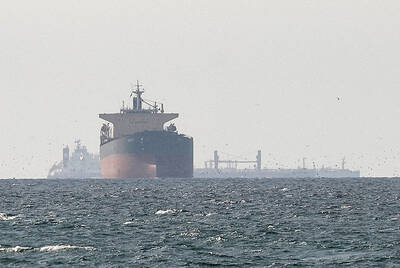
A ship that appears to be taking on the identity of a scrapped gas carrier exited the Strait of Hormuz on Friday, showing how strategies to get through the waterway are evolving as the Middle East war progresses. The vessel identifying as liquefied natural gas (LNG) carrier Jamal left the Strait on Friday morning, ship-tracking data show. However, the same tanker was also recorded as having beached at an Indian demolition yard in October last year, where it is being broken up, according to market participants and port agent’s reports. The ship claiming to be Jamal is likely a zombie vessel that

Cannabis-based medicines have shown little evidence of effectiveness for treating most mental health and substance-use disorders, according to a large review of past studies published in a major medical journal on Monday. Medical use of cannabinoids has been expanding, including in the US, Canada and Australia, where many patients report using cannabis products to manage conditions such as anxiety, post-traumatic stress disorder and sleep problems. Researchers reviewed data from 54 randomized clinical trials conducted between 1980 and May last year involving 2,477 participants for their analysis published in The Lancet. The studies assessed cannabinoids as a primary treatment for mental disorders or substance-use
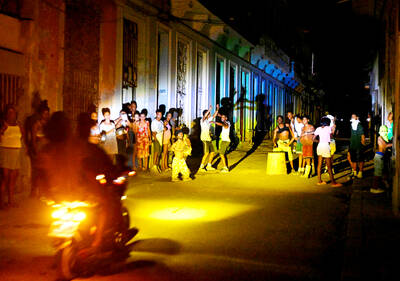
NATIONWIDE BLACKOUT: US President Donald Trump cut off Venezuelan oil shipments to Cuba, strangling the Caribbean island’s already antiquated grid Cuba’s national electric grid collapsed on Monday, the nation’s grid operator said, leaving about 10 million people without power amid a US-imposed oil blockade that has crippled the already obsolete generation system. Grid operator UNE on social media said that it is investigating the causes of the blackout, the latest in a series of widespread outages that last for hours or days and that this weekend sparked a rare violent protest in the communist-run nation. Officials ruled out a major power plant failure, but had still not pinpointed the root cause of the grid collapse, suggesting a problem with transmission. Officials said that

‘HEALTH ISSUE’: More than 250 women are hospitalized every day due to complications from unsafe abortions, and about three die, a study showed Jane had been bleeding heavily for days before finally seeking help, not from a hospital, but from the man who sold her the pills meant to end her six-week pregnancy. Abortions are strictly outlawed in the mainly Catholic Philippines, forcing women to turn to a patchwork of providers operating in the online shadows. While rare in practice, Philippine law allows for prison terms of up to six years for abortion patients and providers, leaving thousands of Filipinas to search for solutions in online forums where unlicensed sellers promote abortifacients. “It was very painful, as if my abdomen was being twisted,” said Jane, whose


 RSS
RSS