


The US military yesterday joined relief efforts in southern Japan for areas devastated by two powerful earthquakes as local rescuers combed through debris looking for 10 people still reported missing.
Authorities said at least 42 people had died and nearly 1,100 were injured in the two quakes that hit the region near Kumamoto City late on Thursday last week and early on Sunday.
Rescuers were redoubling search efforts on the southern island of Kyushu, where many areas were cut off by landslides and damage to roads and bridges. Forecasts of heavy rain, which would make land and collapsed buildings even more unstable, added to the urgency.
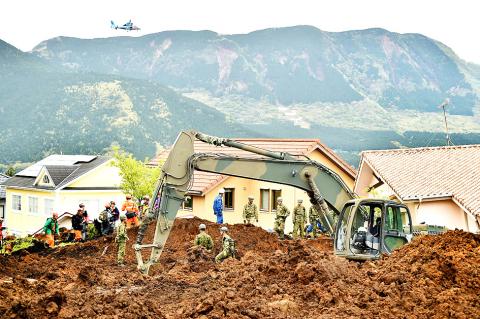
Photo: AFP
A US Army UC-35 aircraft yesterday landed at a Japanese military base near Kumamoto.
Nine people died in the first, magnitude 6.5, earthquake, while the second quake, which was revised from an initial reading of magnitude 7.3 to magnitude 7.1, killed at least 33 people.
“There are still missing people, so with the help of the US forces, we would like for the operations to go into effect as quickly and smoothly as possible,” said Colonel Masahiro Sugawara of the Joint Staff Council of Japan Self-Defense Forces.
The US side, whose Air Force, Navy and Marines bases are home to about 50,000 troops in Japan, was to provide aerial support from other regions in an effort to feed and care for tens of thousands of people seeking shelter. The US military played a large role in rescue and relief after a March 2011 earthquake and subsequent tsunami in northeastern Japan.
This time, Japan asked for help with airlifts into the area, said Jacqueline Hearne, a US Army public affairs officer.
“We are glad that we are able to support in any way the Japanese government needs us,” she said.
The disruptions caused by damage to buildings and roads, and by stoppages of electricity and water supplies, were reverberating beyond Kyushu, as manufacturers suspended output and transport links were snarled. Japan’s Nikkei 225 Stock Average fell 3.4 percent to 16,270.89, although for various reasons, including a surge in the value of the yen after weekend talks between major oil producers on freezing oil output ended without an agreement.
Japanese Prime Minister Shinzo Abe defended his government’s handling of the crisis, as some of the 180,000 evacuees complained of having only rice balls and bread to eat.
“We are doing our best,” Abe told lawmakers when challenged by the opposition over the government’s handling of the relief effort. “We are striving to improve living conditions for the people who have sought refuge.”
Many whose homes were not seriously damaged sought shelter as the area was rocked by more than 500 aftershocks.
“Without water and electricity, we cannot do anything. Without the TV on, we cannot even get information about disaster relief operations,” said Megumi Kudo, 51, standing in a line for water outside a community center in Aso. “We cannot take a bath, not even a shower.”
His house is intact, despite major roof damage, but like many, the family was sleeping in their cars.
Japanese media said most of those missing were in Minami-Aso, a mountain village southwest of the 1,592m-high Mount Aso, the largest active volcano in Japan. There, dozens of troops, police and other rescue workers were shoveling debris and searching through places where people might have been buried.
Stretchers were on hand in case anyone was found alive.

PHISHING: The con might appear convincing, as the scam e-mails can coincide with genuine messages from Apple saying you have run out of storage For a while you have been getting messages from Apple saying “your iCloud storage is full.” They say you have exceeded your storage plan, so documents are no longer being backed up, and photos you take are not being uploaded. You have been resisting Apple’s efforts to get you to pay a minimum of £0.99 (US$1.33) a month for more storage, but it seems that you cannot keep putting off the inevitable: You have received an e-mail which says your iCloud account has been blocked, and your photos and videos would be deleted very soon. To keep them you need

For two decades, researchers observed members of the Ngogo chimpanzee group of Kibale National Park in Uganda spend their days eating fruits and leaves, resting, traveling and grooming in their tropical rainforest abode, but this stable community then fractured and descended into years of deadly violence. The researchers are now describing the first clearly documented example of a group of wild chimpanzees splitting into two separate factions, with one launching a series of coordinated attacks against the other. Adult males and infants were targeted, with 28 deaths. “Biting, pounding the victim with their hands, dragging them, kicking them — mostly adult males,
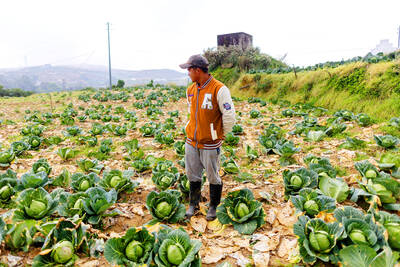
Filipino farmers like Romeo Wagayan have been left with little choice but to let their vegetables rot in the field rather than sell them at a loss, as rising oil prices linked to the Iran war drive up the cost of harvesting, labor and transport. “There’s nothing we can do,” said Wagayan, a 57-year old vegetable farmer in the northern Philippine province of Benguet. “If we harvest it, our losses only increase because of labor, transportation and packing costs. We don’t earn anything from it. That’s why we decided not to harvest at all,” he said. Soaring costs caused by the Middle East
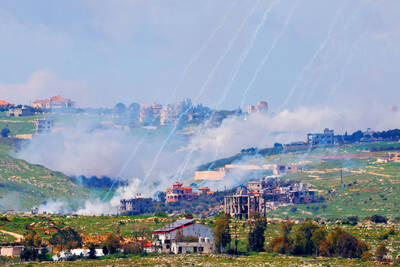
The Israeli military has demolished entire villages as part of its invasion of south Lebanon, rigging homes with explosives and razing them to the ground in massive remote detonations. The Guardian reviewed three videos posted by the Israeli military and on social media, which showed Israel carrying out mass detonations in the villages of Taybeh, Naqoura and Deir Seryan along the Israel-Lebanon border. Lebanese media has reported more mass detonations in other border villages, but satellite imagery was not readily available to verify these claims. The demolitions came after Israeli Minister of Defense Israel Katz called for the destruction of


 RSS
RSS