


World Heritage-listed forests whose origins pre-date the age of the dinosaurs are being destroyed by raging Australian bushfires, with conservationists increasingly fearful they could be lost forever.
Firefighters in Tasmania have been battling bushfires for 18 days, with 95,000 hectares of land burnt so far, authorities said on Friday.
While no properties have been destroyed and no one was hurt in the infernos — which are so numerous that firefighters from across Australia and New Zealand have been flown in to help — parts of western Tasmania’s famed wilderness have been destroyed by the flames.
“The fires in western Tasmania are occurring in basically an ecosystem which is a remnant from the geological past, so they are of immense significance scientifically,” said David Bowman, professor of environmental change biology at the University of Tasmania. “These systems were once more widespread and indeed grew on Antarctica billions of years ago, so they are living fossils... they go back to well before the age of the dinosaurs, they are a tangible connection to Gondwana.”
Gondwana was a land mass that included present-day Africa, South America and Australia and formed the southern part of an ancient supercontinent called Pangaea.
One of the last expanses of temperate wilderness in the world, the Tasmanian Wilderness was entered into the World Heritage list for its significant natural and cultural values in 1982 and covers nearly 20 percent of the island, or 1.4 million hectares.
It includes the Cradle Mountain-Lake Saint Clair National Park and the Walls of Jerusalem National Park, home to popular bushwalking tracks.
With the Tasmania Fire Service (TFS) battling more than 70 blazes and access to remote areas difficult, a spokesman said the agency was not able to gauge how much forest had been burnt, although most of the fires are in the west and encompass vast swathes of protected land.
Species under threat include the southern beech forests, also known as nothofagus, the pencil pine — a distant relative of American redwoods — and the king billy pine, Bowman said.
Some species are only found in Tasmania, leading to concerns that if the ancient, slow-growing trees are obliterated by the blazes, they could take many years to regrow, if at all.
Bowman said that despite the firefighting efforts, only soaking rain could end the emergency as the soil of western Tasmania was drying and turning into so-called “brown coals” that burn tree roots.
Light rain now falling on the island has failed to douse the flames, with lightning strikes sparking more blazes, the TFS told the Australian Broadcasting Corporation.
Lightning strikes were “insignificant sources of ignition” just a few decades ago, Bowman said. But three years ago, a major bushfire that destroyed more than 100 homes was also in part sparked by lightning.
Bowman said that from his assessment, the recent blazes in Tasmania, along with a trend of rising temperatures in Australia and across the world, reflected an increase in extreme fire situations that pointed to climate change.
However, all may not be lost.
James Wood, the Royal Tasmanian Botanical Gardens’ seed bank manager, said last year the organization had been able to collect thousands of montane conifer seeds.
“In these sort of circumstances, the seed bank’s take is that we may lose the ecology but we don’t necessarily have to lose the species so we can preserve them.”
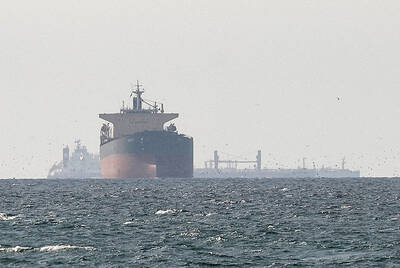
A ship that appears to be taking on the identity of a scrapped gas carrier exited the Strait of Hormuz on Friday, showing how strategies to get through the waterway are evolving as the Middle East war progresses. The vessel identifying as liquefied natural gas (LNG) carrier Jamal left the Strait on Friday morning, ship-tracking data show. However, the same tanker was also recorded as having beached at an Indian demolition yard in October last year, where it is being broken up, according to market participants and port agent’s reports. The ship claiming to be Jamal is likely a zombie vessel that

Cannabis-based medicines have shown little evidence of effectiveness for treating most mental health and substance-use disorders, according to a large review of past studies published in a major medical journal on Monday. Medical use of cannabinoids has been expanding, including in the US, Canada and Australia, where many patients report using cannabis products to manage conditions such as anxiety, post-traumatic stress disorder and sleep problems. Researchers reviewed data from 54 randomized clinical trials conducted between 1980 and May last year involving 2,477 participants for their analysis published in The Lancet. The studies assessed cannabinoids as a primary treatment for mental disorders or substance-use

NATIONWIDE BLACKOUT: US President Donald Trump cut off Venezuelan oil shipments to Cuba, strangling the Caribbean island’s already antiquated grid Cuba’s national electric grid collapsed on Monday, the nation’s grid operator said, leaving about 10 million people without power amid a US-imposed oil blockade that has crippled the already obsolete generation system. Grid operator UNE on social media said that it is investigating the causes of the blackout, the latest in a series of widespread outages that last for hours or days and that this weekend sparked a rare violent protest in the communist-run nation. Officials ruled out a major power plant failure, but had still not pinpointed the root cause of the grid collapse, suggesting a problem with transmission. Officials said that

CONSERVING FUEL: State institutions are to operate only four days a week starting tomorrow, with the measures also applying to schools and universities Sri Lanka on Monday announced a shorter working week to conserve its scarce fuel reserves as it prepares for a prolonged war in the Middle East. The Strait of Hormuz, a key waterway through which about 20 percent of global exports pass in peacetime, has been effectively closed by Iran in retaliation over the US and Israeli war against it, now in its third week. Sri Lankan Commissioner-General of Essential Services Prabath Chandrakeerthi said state institutions would operate only four days a week starting tomorrow. The new austerity measures would also apply to schools and universities, and would remain in place indefinitely. “We are


 RSS
RSS