


Concerns are growing among anguished families that the bodies of those who died in the sinking of a South Korean ferry may never be found, as search teams suspended work yesterday because of bad weather.
A looming storm and high tides put a temporary halt to operations to recover the remains of more than 100 people still missing more than a week after the huge ferry capsized.
“Over the weekend, strong wind and rain is expected in the Jindo area,” a coast guard spokesman told journalists.
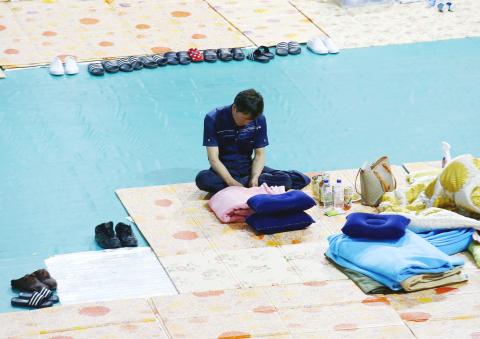
Photo: Reuters
“As efforts to find the missing people are becoming protracted, there are growing concerns among their families that bodies might be lost for good,” he said.
The confirmed death toll stood yesterday at 187, with 115 unaccounted for — many bodies are believed trapped in the ferry that capsized on April 16 with 476 people on board.
Making up the bulk of the passengers on the 6,825-tonne Sewol when it sank were 325 high-school students — about 250 of whom are either confirmed or presumed dead.
Although all hope of finding survivors has been extinguished, there is still anger and deep frustration among relatives of the missing about the pace of the recovery operation.
Frogmen have battled strong currents, poor visibility and blockages caused by floating furniture as they have tried to get inside the upturned vessel, which rests on a silty seabed.
They are coming across horrifying scenes in the murky water, including one dormitory room — that would normally have held about 31 people — packed with the bodies of 48 students wearing life jackets.
About a quarter of the 187 bodies recovered so far have been found in waters outside the sunken vessel, and there are fears that some of the missing may have drifted free from the wreck.
South Korean authorities — wary of the palpable anger among relatives — have mobilized eight trawlers and installed 13km nets anchored to the seabed across the Maenggol sea channel to prevent the dead being swept into the open ocean.
Also, the South Korean government on Friday conceded that some bodies have been misidentified and announced changes to prevent such mistakes from happening again.
There have been several reports in South Korean media this week of bodies going to the wrong families, with the error sometimes caught only after the remains were taken to a funeral home.
An “action plan” released by the government-wide emergency task force acknowledged that “there have been cases where the victims were wrongly transferred.”
Remains will be transferred to families when there is a match using DNA testing or fingerprint or dental records, the task force said. The transfer will be temporary when a body is matched though identification or physical description, and South Korean authorities will wait for more authoritative evidence before making the transfer permanent.
Furious families demanded a meeting with Korea Coast Guard Deputy Commissioner Choi Sang-hwan near the pier in Jindo Port, urging him to send the divers back into the water.
“We are waiting for the right moment, as conditions in the sea are not favorable,” Choi said.
Many relatives believe some of the victims may have survived for several days in trapped air pockets, but perished in the cold water after no rescue came.
As a result, some have asked for autopsies to be performed, to see if it would be possible to determine the precise cause and time of death.
Sewol captain Lee Joon-seok and 14 crew members have been arrested on charges ranging from criminal negligence to abandoning passengers.
As part of their widening investigation, prosecutors issued travel bans on Friday on eight current and former executives of the Korea Register of Shipping — the body responsible for issuing marine safety certificates.
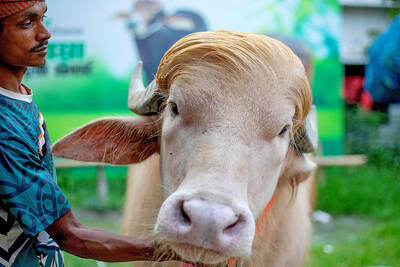
Crowds in Bangladesh are flocking to snap photographs with an unlikely social media star — an albino buffalo with flowing blond hair nicknamed “Donald Trump” that is due to be sacrificed within days. Owner Zia Uddin Mridha, 38, said his brother named the 700kg bull over its flowing helmet of hair resembling the signature look of the US president. “My younger brother picked this name because of the buffalo’s extraordinary hair,” he said at his farm in Narayanganj, just outside the capital, Dhaka. Mridha said that a constant stream of curious visitors — social media fans, onlookers and children — have come throughout

It began as a satirical online project. Now millions of young people in India are flocking to it as an outlet for their frustration. A parody political party called the Cockroach Janta Party, with the insect as its symbol, has exploded across India’s social media by turning absurdist humor into protest. Memes and short videos mocking corruption, joblessness and political dysfunction have flooded social media sites, where millions of users are embracing the cockroach — known for its ability to survive harsh conditions — as a tongue-in-cheek symbol of endurance. The online movement’s rise has been unusually rapid. The Cockroach Janta Party (CJP)
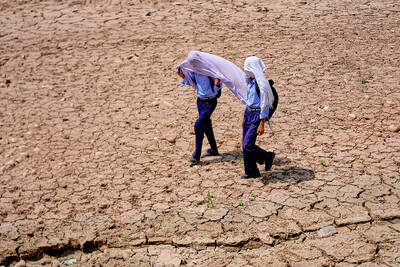
HOTTER: While Indians are accustomed to summer heat, climate change has caused northwestern India to warm faster than other parts of the country, an academic said Roads and markets have emptied during afternoons and some farmers have switched to nighttime work to avoid scorching temperatures as a heat wave grips large parts of India. The India Meteorological Department forecast maximum temperatures for yesterday of about 45°C in the capital, New Delhi, where authorities have opened temporary “cooling zones” to help people cope. The weather department warned that conditions would likely persist across several northern regions in the coming days, with temperatures staying well above seasonal averages. Authorities urged people to stay indoors during the hottest hours and take precautions against heat-related illnesses. India declares a heat wave whenever maximum temperatures
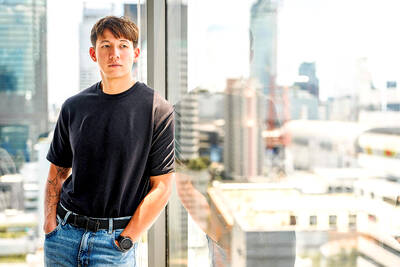
SPEAKING OUT: After Siranudh Scott’s allegations surfaced, celebrities and public figures took to social media to share their own experiences of sexual misconduct and abuse A high-profile alleged sexual abuse case within a wealthy Thai beer brewing family has prompted a wave of painful accounts from survivors of unconnected abuse in the conservative nation. Siranudh Scott, a member of the billionaire Thai family that founded the ubiquitous Singha beer brand, posted an emotional video this month accusing his elder brother Sunit of repeatedly abusing him when he was a teenager. Sunit, who is in his 30s, later denied the allegations in a video posted online, but Singha parent Boonrawd dismissed him from his executive role with the company on Tuesday last week. “I felt I needed to speak


 RSS
RSS