


The fallout from Europe’s horsemeat scandal has spread far outside the continent, with an imported lasagna brand pulled from shelves in Hong Kong and a new row over the treatment of horses farmed in the Americas.
A host of top players have been caught up in the spiralling scandal, including Nestle, the world’s biggest food company, top beef producer JBS of Brazil and British supermarket chain Tesco.
Hong Kong authorities ordered ParknShop, one of the biggest supermarket chains in the Chinese territory, to remove lasagna made by frozen food giant Findus, one of the firms at the center of the scandal.
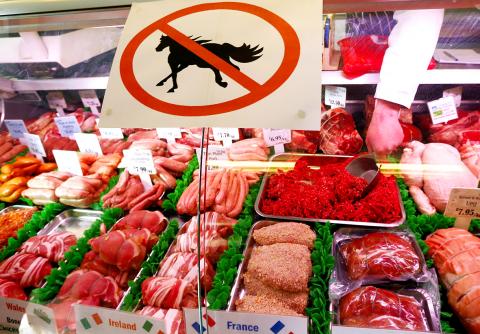
Photo: Reuters
The product was imported from Britain and made by French firm Comigel.
Hong Kong’s Centre for Food Safety said on Wednesday that the item “might be adulterated with horsemeat which has not undergone tests for veterinary drugs.”
The chain, owned by tycoon Li Ka-shing (李嘉誠), has about 280 stores in Hong Kong and the neighboring gaming hub of Macau.
In Europe, the Czech Republic became the latest country embroiled in the horsemeat affair, with food inspectors ordering Tesco to withdraw Nowaco brand frozen “beef” lasagna after detecting horsemeat.
The Czech Agriculture and Food Inspection Authority said it had found horse DNA in two samples of the Nowaco meals manufactured by the Tavola company in Luxembourg.
Croatian company Ledo, which imported beef lasagna containing horsemeat into Slovenia, on Wednesday also accused Tavola of being responsible.
Supermarkets in Belgium, Britain, Denmark, Ireland, Finland, France, Austria, Norway, the Netherlands, Germany, Italy, Spain, Portugal, Sweden and Slovenia have all removed meals from shelves.
The Czech authority said that horsemeat is sold for human consumption in the country, but that if not mentioned on the product label it was misleading to consumers and could lead to a fine of up to 3 million koruny (US$159,000).
Spanghero, the French firm that sparked the food alert by allegedly passing off 750 tonnes of horsemeat as beef, was on Monday allowed to resume production of minced meat, sausages and ready-to-eat meals.
However, the company, whose horsemeat found its way into 4.5 million “beef” products sold across Europe, will no longer be allowed to stock frozen meat.
The firm’s sanitary licence was suspended on Thursday last week after it was accused of passing off huge quantities of mislabeled meat over a period of six months.
Investigators on Wednesday conducted a second day of raids on Spanghero’s headquarters in Castelnaudary in southern France, a source close to the probe said, adding they had already seized several documents and copied computer records.
About 60 workers from French company Fraisnor, which produces fresh lasagna, demonstrated on Wednesday in the northern town of Feuchy for state financial aid, saying their sales had dived 70 percent after the scandal.
The company, which manufactures about 700 tonnes of fresh lasagna a month, is on the point of laying off some of its employees.
Most Swiss supermarkets on Wednesday withdrew horsemeat products from their shelves, not due to the spiraling fake labeling scandal, but over allegations of cruel conditions on farms where horses are bred for meat.
German discount chain Lidl said it had removed all horsemeat products from its shelves in Switzerland, while the country’s second-largest supermarket chain, Coop, said it had withdrawn about 20 horsemeat sausage products.
The move came amid outcry over an investigative consumer show that aired Tuesday evening on Swiss public television, featuring images taken by animal protection activists showing starving and visibly sick and suffering horses on farms in a number of countries that provide meat to Swiss stores.
The Zurich-based Animal Protection Association had sent investigators to large horsemeat producing countries Canada, the US, Mexico and Argentina to probe how the animals were kept, transported and slaughtered.
“Our investigators found that the horses were bred in conditions that did not meet any of the norms in place in Switzerland and the European Union,” project leader Sabrina Gurtner said.
Coop, however, said it would continue to sell fresh horsemeat, adding that it receives 70 percent of that meat from France and the remaining 30 percent from Poland.

JAN. 1 CLAUSE: As military service is voluntary, applications for permission to stay abroad for over three months for men up to age 45 must, in principle, be granted A little-noticed clause in sweeping changes to Germany’s military service policy has triggered an uproar after it emerged that the law requires men aged up to 45 to get permission from the armed forces before any significant stay abroad, even in peacetime. The legislation, which went into effect on Jan. 1 aims to bolster the military and demands all 18-year-old men fill out a questionnaire to gauge their suitability to serve in the armed forces, but stops short of conscription. If the “modernized” model fails to pull in enough recruits, parliament will be compelled to discuss the reintroduction of compulsory service, German
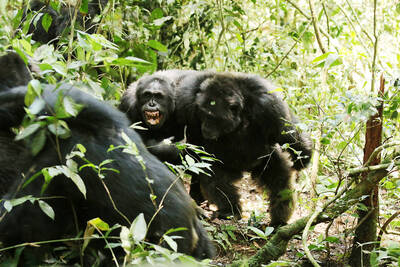
For two decades, researchers observed members of the Ngogo chimpanzee group of Kibale National Park in Uganda spend their days eating fruits and leaves, resting, traveling and grooming in their tropical rainforest abode, but this stable community then fractured and descended into years of deadly violence. The researchers are now describing the first clearly documented example of a group of wild chimpanzees splitting into two separate factions, with one launching a series of coordinated attacks against the other. Adult males and infants were targeted, with 28 deaths. “Biting, pounding the victim with their hands, dragging them, kicking them — mostly adult males,

PHISHING: The con might appear convincing, as the scam e-mails can coincide with genuine messages from Apple saying you have run out of storage For a while you have been getting messages from Apple saying “your iCloud storage is full.” They say you have exceeded your storage plan, so documents are no longer being backed up, and photos you take are not being uploaded. You have been resisting Apple’s efforts to get you to pay a minimum of £0.99 (US$1.33) a month for more storage, but it seems that you cannot keep putting off the inevitable: You have received an e-mail which says your iCloud account has been blocked, and your photos and videos would be deleted very soon. To keep them you need
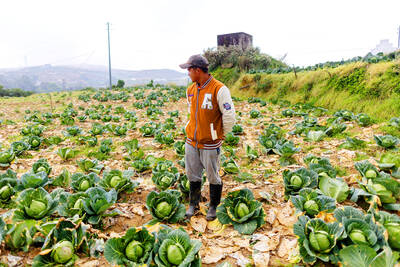
Filipino farmers like Romeo Wagayan have been left with little choice but to let their vegetables rot in the field rather than sell them at a loss, as rising oil prices linked to the Iran war drive up the cost of harvesting, labor and transport. “There’s nothing we can do,” said Wagayan, a 57-year old vegetable farmer in the northern Philippine province of Benguet. “If we harvest it, our losses only increase because of labor, transportation and packing costs. We don’t earn anything from it. That’s why we decided not to harvest at all,” he said. Soaring costs caused by the Middle East


 RSS
RSS