


The Vatican gendarmerie has been an intriguing protagonist in the cloak-and-dagger “Vatileaks” case, set to wrap up yesterday with a verdict in the trial of a Holy See computer technician.
The head of the 150-member police corps in the world’s smallest state, Domenico Giani, a former Italian secret agent and a divisive figure who has pushed for more powers for the force, was due to testify yesterday, joined by his deputy, Gianluca Gauzzi Broccoletti, as well as William Kloter, deputy commander of the Swiss Guards, the papacy’s traditional defense force, which has had sometimes tense ties with the gendarmes.
Claudio Sciarpelletti is being tried for aiding and abetting in a series of leaks of confidential documents orchestrated by Pope Benedict XVI’s former butler, Paolo Gabriele, who was convicted in a separate trial last month.

Photo: AFP
Sciarpelletti’s trial revolves around a suspicious envelope with an official Vatican stamp that was found in his desk after police launched an inquiry into a scandal that has been hugely embarrassing for the Holy See’s law enforcement agency.
The envelope contained documents with a series of allegations of shady dealings by the Vatican gendarmerie, which were included in a book by investigative journalist Gianluigi Nuzzi, who published Gabriele’s leaks.
Among the claims made in the book was that two gendarmes held stakes in private security companies in Italy in a possible conflict of interests.
The book also contains a mysterious story about a Vatican gendarmerie car found shot up near a restaurant where some gendarmes were eating in 2010.
The leaks scandal — dubbed “Vatileaks” in the Italian press — has shed light on tensions between the gendarmerie, which was established in its current form only in 1970, and the Swiss Guards, which date back to the 16th century.
Gendarmes have taken over powers from the Swiss Guards in recent years and in 2002 became the official law enforcement agency in the Vatican. It has also equipped itself with modern uniforms and increasingly sophisticated technology.
Gabriele was fascinated by conspiracy theories on Italian historical events and intelligence matters, according to his interrogations.
The gendarmes who searched his apartment said they found documents on the murder of Vatican-linked banker Roberto Calvi in 1982 and the disappearance of the teenage daughter of a Vatican employee in 1983.
They also said Gabriele had information on spying techniques, such as how to film people and record conversations surreptitiously.
One of the gendarmes, Giuseppe Pesce, testified at Gabriele’s trial that the butler had shown a “morbid” interest in the gendarmerie.
A report in I.Media, a news agency specializing in Vatican affairs, said the butler’s questions may have been more than just idle curiosity.
“Paolo Gabriele started out collecting information on the Vatican gendarmerie,” a well-informed source is quoted as saying in the report.
Gabriele told the source that the gendarmerie had amassed “too much power.”
I.Media said Gabriele was particularly shocked by the treatment of gendarmerie chaplain Giulio Viviani, who was sent away from the Vatican in 2010 after defending some of the gendarmes against their commander, Giani.
The report said Gabriele may also have wrongly interpreted casual conversations with his superior, the pope’s secretary Georg Gaenswein, about the gendarmerie as a go-ahead to carry out an investigation into the corps.
Tensions were exacerbated in the first days after his arrest on May 23, when the butler said that he was held in a cramped cell at the gendarmerie headquarters in the Vatican in which the light was left on day and night.
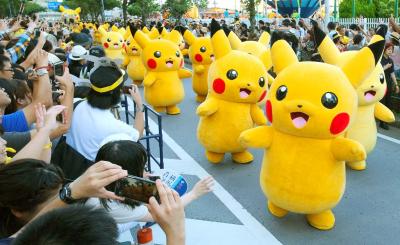
China’s military news agency yesterday warned that Japanese militarism is infiltrating society through series such as Pokemon and Detective Conan, after recent controversies involving events at sensitive sites. In recent days, anime conventions throughout China have reportedly banned participants from dressing as characters from Pokemon or Detective Conan and prohibited sales of related products. China Military Online yesterday posted an article titled “Their schemes — beware the infiltration of Japanese militarism in culture and sports.” The article referenced recent controversies around the popular anime series Pokemon, Detective Conan and My Hero Academia, saying that “the evil influence of Japanese militarism lives on in

ANTI-SEMITISM: Some newsletters promote hateful ideas such as white supremacy and Holocaust denial, with one describing Adolf Hitler as ‘one of the greatest men of all time’ The global publishing platform Substack is generating revenue from newsletters that promote virulent Nazi ideology, white supremacy and anti-Semitism, a Guardian investigation has found. The platform, which says it has about 50 million users worldwide, allows members of the public to self-publish articles and charge for premium content. Substack takes about 10 percent of the revenue the newsletters make. About 5 million people pay for access to newsletters on its platform. Among them are newsletters that openly promote racist ideology. One, called NatSocToday, which has 2,800 subscribers, charges US$80 for an annual subscription, although most of its posts are available
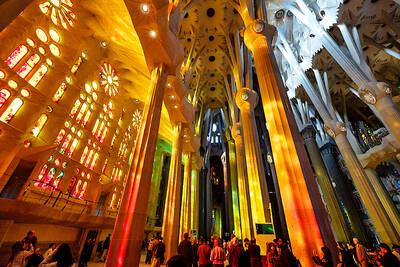
GLORY FACADE: Residents are fighting the church’s plan to build a large flight of steps and a square that would entail destroying up to two blocks of homes Barcelona’s eternally unfinished Basilica de la Sagrada Familia has grown to become the world’s tallest church, but a conflict with residents threatens to delay the finish date for the monument designed more than 140 years ago. Swathed in scaffolding on a platform 54m above the ground, an enormous stone slab is being prepared to complete the cross of the central Jesus Christ tower. A huge yellow crane is to bring it up to the summit, which will stand at 172.5m and has snatched the record as the world’s tallest church from Germany’s Ulm Minster. The basilica’s peak will deliberately fall short of the

Venezuelan Nobel peace laureate Maria Corina Machado yesterday said that armed men “kidnapped” a close ally shortly after his release by authorities, following former Venezuelan president Nicolas Maduro’s capture. The country’s Public Prosecutor’s Office confirmed later yesterday that former National Assembly vice president Juan Pablo Guanipa, 61, was again taken into custody and was to be put under house arrest, arguing that he violated the conditions of his release. Guanipa would be placed under house arrest “in order to safeguard the criminal process,” the office said in a statement. The conditions of Guanipa’s release have yet to be made public. Machado claimed that


 RSS
RSS