


A national unity government was sworn in on Saturday in Yemen as part of a deal for the country’s embattled president to step down after nearly a year of protests against his rule and a crackdown that has killed hundreds.
The new 35-member administration is made up of an almost equal number of opposition and loyalist ministers, among them nine who served in the previous Cabinet. The new government’s first main task will be to push through a law shielding Yemeni President Ali Abdullah Saleh from prosecution for alleged corruption and for the violence against protesters — a key condition under the deal for him to relinquish power after 33 years ruling over the Arab world’s poorest nation.
Many protesters have rejected the deal, which was brokered by Gulf Arab nations and supported by the US, because they want to see Saleh brought to trial and because the agreement does not include far-reaching political changes. Many of those activists have continued protesting.
The UN estimates that hundreds of unarmed protesters have been killed and thousands wounded since the anti-Saleh protests began 10 months ago. Protesters also want tanks and soldiers pulled back from the streets.
Speaking at the swearing-in ceremony, Yemeni Vice President Abed Rabbo Mansour called for the nation to come together.
“Your first task is to create an appropriate atmosphere to realize that national reconciliation starts from here, your Cabinet of ministers,” Mansour said, according to state news agency SABA.
Under the deal, Saleh has until Dec. 23 to pass power to his vice president. If he does, he would be the fourth Arab leader forced out by the protests sweeping the region. The others were in Tunisia, Egypt and Libya.
Presidential elections are to be held 60 days later, well ahead of the original date in 2013.
The new Cabinet will serve for two years and will oversee the writing of a new constitution.
The defense, foreign affairs and oil ministries remain in the hands of Saleh’s loyalists. The opposition is now in control of the finance, information and interior ministries.
The government’s crackdown triggered widespread defections earlier this year by soldiers and officers who joined the protest movement. Powerful tribes and their armed fighters also turned against Saleh and waged battles against his forces.
Yemen is also home to al-Qaeda in the Arabian Peninsula, which the US considers the terrorist network’s most active and dangerous offshoot. Islamic militants with links to the group have taken advantage of the country’s turmoil to seize control of several towns in southern Yemen.
On Saturday, al-Qaeda-linked militants attacked a military barracks in one of those towns, setting off battles that killed two soldiers and 11 militants, a military official said.
Another 36 soldiers were injured at the base in Zinjibar, the capital of Abyan province, in fighting that began on Friday night and continued into Saturday morning, the official said. He spoke on condition of anonymity because he was not authorized to speak to the media.
Militants and the army have fought for control of Zinjibar since May.

JAN. 1 CLAUSE: As military service is voluntary, applications for permission to stay abroad for over three months for men up to age 45 must, in principle, be granted A little-noticed clause in sweeping changes to Germany’s military service policy has triggered an uproar after it emerged that the law requires men aged up to 45 to get permission from the armed forces before any significant stay abroad, even in peacetime. The legislation, which went into effect on Jan. 1 aims to bolster the military and demands all 18-year-old men fill out a questionnaire to gauge their suitability to serve in the armed forces, but stops short of conscription. If the “modernized” model fails to pull in enough recruits, parliament will be compelled to discuss the reintroduction of compulsory service, German

For two decades, researchers observed members of the Ngogo chimpanzee group of Kibale National Park in Uganda spend their days eating fruits and leaves, resting, traveling and grooming in their tropical rainforest abode, but this stable community then fractured and descended into years of deadly violence. The researchers are now describing the first clearly documented example of a group of wild chimpanzees splitting into two separate factions, with one launching a series of coordinated attacks against the other. Adult males and infants were targeted, with 28 deaths. “Biting, pounding the victim with their hands, dragging them, kicking them — mostly adult males,
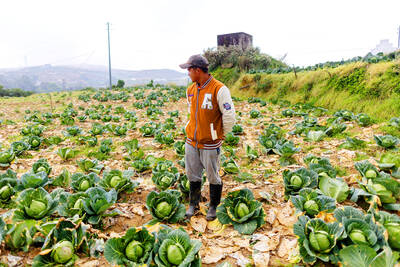
Filipino farmers like Romeo Wagayan have been left with little choice but to let their vegetables rot in the field rather than sell them at a loss, as rising oil prices linked to the Iran war drive up the cost of harvesting, labor and transport. “There’s nothing we can do,” said Wagayan, a 57-year old vegetable farmer in the northern Philippine province of Benguet. “If we harvest it, our losses only increase because of labor, transportation and packing costs. We don’t earn anything from it. That’s why we decided not to harvest at all,” he said. Soaring costs caused by the Middle East

Hungarian Prime Minister Viktor Orban’s officially declared wealth is fairly modest: some savings and a jointly owned villa in Budapest. However, voters in what Transparency International deems the EU’s most corrupt country believe otherwise — and they might make Orban pay in a general election this Sunday that could spell an end to his 16-year rule. The wealth amassed by Orban’s inner circle is fueling the increasingly palpable frustration of a population grappling with sluggish growth, high inflation and worsening public services. “The government’s communication machine worked well as long as our economic situation remained relatively good,” said Zoltan Ranschburg, a political analyst


 RSS
RSS