


US Secretary of Defense Leon Panetta said on Thursday he has ordered a review into the mistreatment of US war dead and whether whistleblowers who balked at the mishandling of the remains were retaliated against.
Seeking to allay concerns over revelations of mismanagement at the Dover Air Force Base mortuary, Panetta said US Air Force Secretary Michael Donley has been asked to examine whether sufficient punishment had been meted out to the three supervisors held responsible, who were penalized for the abuses, but not sacked.
“I want to make certain that we have taken all appropriate disciplinary action here and for that reason, that’s why I’ve asked the secretary to review that,” Panetta told reporters.
He also said he wanted the air force to look into allegations that employees who alerted authorities of the sloppy handling of remains at Dover were targeted with reprisals from managers.
A government investigative agency, the US Office of Special Counsel (OSC), was looking into the allegations and once it completed its work, the air force secretary was expected to review the findings, Panetta said.
“This is a serious issue,” he said.
Panetta said he had “directed Secretary Donley to report back to me, once the OSC investigation is complete, to ensure that all appropriate action has been taken in light of that report.”
The secretary of defense said the Pentagon had to be held “fully accountable.”
Panetta faced tough questions two days after the air force acknowledged “gross mismanagement” at the Dover mortuary, with body parts missing in two cases and other remains mishandled.
All US service members killed in combat abroad are transported to the Dover base, where they are identified and prepared for transfer to their families. Since 2003, the mortuary has received the remains of more than 6,300 dead troops, mostly from the Iraq and Afghanistan wars.
US Air Force Chief of Staff General Norton Schwartz told lawmakers earlier on Thursday that remains left over from the embalming process at Dover were cremated and placed in a landfill until the air force halted the practice in 2008. Human remains are now buried at sea, but the news has further angered some military families.
Panetta said he was first briefed on the problems at Dover when took office in July, when the air force was still investigating the case and he said the families involved deserved an apology.
“Listen, absolutely we should apologize. If we haven’t handled those remains properly, then it is our responsibility and we do owe those families an apology,” he said.
However, Panetta appeared confused about some details of the case, saying he was unaware that families were not informed of the problem until last weekend.
The OSC has sharply criticized the air force for failing to notify families months ago and that top air force officials generally failed to “acknowledge culpability.”
The return of troops killed on foreign battlefields carries special symbolism in a country where less than 1 percent of the population serves in the all-volunteer force, which has been stretched to the limit in 10 years of war.
“None of us will be satisfied until we have proven to the families of our fallen heroes that we have taken every step possible to protect the honor and dignity that their loved ones richly deserve,” Panetta said.

JAN. 1 CLAUSE: As military service is voluntary, applications for permission to stay abroad for over three months for men up to age 45 must, in principle, be granted A little-noticed clause in sweeping changes to Germany’s military service policy has triggered an uproar after it emerged that the law requires men aged up to 45 to get permission from the armed forces before any significant stay abroad, even in peacetime. The legislation, which went into effect on Jan. 1 aims to bolster the military and demands all 18-year-old men fill out a questionnaire to gauge their suitability to serve in the armed forces, but stops short of conscription. If the “modernized” model fails to pull in enough recruits, parliament will be compelled to discuss the reintroduction of compulsory service, German

For two decades, researchers observed members of the Ngogo chimpanzee group of Kibale National Park in Uganda spend their days eating fruits and leaves, resting, traveling and grooming in their tropical rainforest abode, but this stable community then fractured and descended into years of deadly violence. The researchers are now describing the first clearly documented example of a group of wild chimpanzees splitting into two separate factions, with one launching a series of coordinated attacks against the other. Adult males and infants were targeted, with 28 deaths. “Biting, pounding the victim with their hands, dragging them, kicking them — mostly adult males,
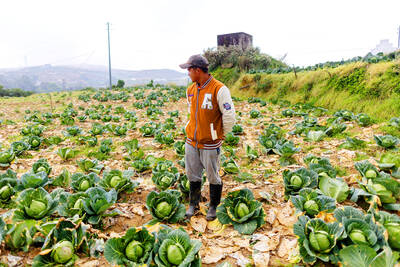
Filipino farmers like Romeo Wagayan have been left with little choice but to let their vegetables rot in the field rather than sell them at a loss, as rising oil prices linked to the Iran war drive up the cost of harvesting, labor and transport. “There’s nothing we can do,” said Wagayan, a 57-year old vegetable farmer in the northern Philippine province of Benguet. “If we harvest it, our losses only increase because of labor, transportation and packing costs. We don’t earn anything from it. That’s why we decided not to harvest at all,” he said. Soaring costs caused by the Middle East

Hungarian Prime Minister Viktor Orban’s officially declared wealth is fairly modest: some savings and a jointly owned villa in Budapest. However, voters in what Transparency International deems the EU’s most corrupt country believe otherwise — and they might make Orban pay in a general election this Sunday that could spell an end to his 16-year rule. The wealth amassed by Orban’s inner circle is fueling the increasingly palpable frustration of a population grappling with sluggish growth, high inflation and worsening public services. “The government’s communication machine worked well as long as our economic situation remained relatively good,” said Zoltan Ranschburg, a political analyst


 RSS
RSS