


Defying long odds and opposition from China, the US business community and the White House, the US Senate was determined to press ahead yesterday with a measure to punish Beijing for its alleged currency manipulation.
The bill, which calls for retaliatory tariffs on Chinese goods if the yuan is found to be unfairly “misaligned,” faced a critical procedural vote set for 10:30am in which it needed support from 60 senators to survive.
However, even then it would need a final ballot in the Democratic-led Senate — and would face an uphill fight in the Republican-held House of Representatives, where Speaker John Boehner has signaled the “dangerous” legislation will die.
Aides say it could return to life if China’s currency somehow became a core dispute as US President Barack Obama faces off with his as-yet undetermined Republican foe ahead of next year’s elections.
That contest is sure to turn on deep voter anger at the sour economy’s sluggish recovery from the global meltdown of 2007 and 2008, with stubbornly high unemployment of more than 9 percent a drag on Obama’s bid for a second term.
Known to oppose the bill in private, the White House on Wednesday said it was lobbying Congress to address “concerns” that the legislation could violate US obligations under international trade rules.
However, spokesman Jay Carney said that the White House shared the view that China’s currency needed to appreciate to what Washington says is a fairer value and agreed US workers needed a “level playing field.”
Few in Washington challenge the charge that China keeps the yuan unfairly low against the dollar, giving its goods as much as a 30 percent edge over comparable US products, widening the US trade deficit and costing US jobs, but the measure’s opponents say it risks sparking a trade war with China, and say a rise in the yuan will boost manufacturing and therefore jobs in countries like Vietnam or Malaysia — not in the US.
The People’s Daily slammed US lawmakers on Wednesday for touting the bill as a cure-all for economic troubles they have failed to address.
“Faced with the discontent of the American people, some US lawmakers are using the Chinese currency to pass the buck over their political incompetence,” the newspaper said, echoing angry denunciations from Chinese officials all week.
Those attacks drew a scathing response Wednesday from Democratic Senator Sherrod Brown, the legislation’s top champion, who compared decision-makers in Beijing to a “pack of dogs” yelping in anger at the bill.
“Where I come from, they say when you throw a rock at a pack of dogs, the one that yelps is the one you hit,” he said in a speech on the Senate floor. “Of course the Chinese are going to yelp because they don’t like this.”
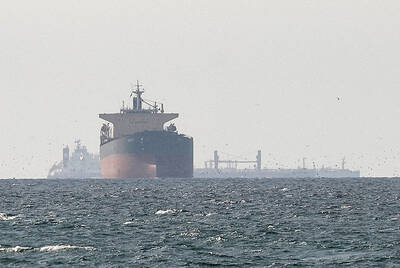
A ship that appears to be taking on the identity of a scrapped gas carrier exited the Strait of Hormuz on Friday, showing how strategies to get through the waterway are evolving as the Middle East war progresses. The vessel identifying as liquefied natural gas (LNG) carrier Jamal left the Strait on Friday morning, ship-tracking data show. However, the same tanker was also recorded as having beached at an Indian demolition yard in October last year, where it is being broken up, according to market participants and port agent’s reports. The ship claiming to be Jamal is likely a zombie vessel that

Cannabis-based medicines have shown little evidence of effectiveness for treating most mental health and substance-use disorders, according to a large review of past studies published in a major medical journal on Monday. Medical use of cannabinoids has been expanding, including in the US, Canada and Australia, where many patients report using cannabis products to manage conditions such as anxiety, post-traumatic stress disorder and sleep problems. Researchers reviewed data from 54 randomized clinical trials conducted between 1980 and May last year involving 2,477 participants for their analysis published in The Lancet. The studies assessed cannabinoids as a primary treatment for mental disorders or substance-use

NATIONWIDE BLACKOUT: US President Donald Trump cut off Venezuelan oil shipments to Cuba, strangling the Caribbean island’s already antiquated grid Cuba’s national electric grid collapsed on Monday, the nation’s grid operator said, leaving about 10 million people without power amid a US-imposed oil blockade that has crippled the already obsolete generation system. Grid operator UNE on social media said that it is investigating the causes of the blackout, the latest in a series of widespread outages that last for hours or days and that this weekend sparked a rare violent protest in the communist-run nation. Officials ruled out a major power plant failure, but had still not pinpointed the root cause of the grid collapse, suggesting a problem with transmission. Officials said that

‘HEALTH ISSUE’: More than 250 women are hospitalized every day due to complications from unsafe abortions, and about three die, a study showed Jane had been bleeding heavily for days before finally seeking help, not from a hospital, but from the man who sold her the pills meant to end her six-week pregnancy. Abortions are strictly outlawed in the mainly Catholic Philippines, forcing women to turn to a patchwork of providers operating in the online shadows. While rare in practice, Philippine law allows for prison terms of up to six years for abortion patients and providers, leaving thousands of Filipinas to search for solutions in online forums where unlicensed sellers promote abortifacients. “It was very painful, as if my abdomen was being twisted,” said Jane, whose


 RSS
RSS