


US scientists will again sweep the majority of Nobel prizes at this week’s award announcements in Sweden, analysts have predicted. However, they have also said this dominance might soon come to end.
David Pendlebury, a citation analyst who has correctly predicted 10 Nobel winners since 2002, believes that the countries of the east, particularly China, will soon start to rule the awards for science’s greatest prize.
“In the first half of the 20th century, the UK, Germany, and France dominated the sciences. The US emerged as the world leader after World War II. Now, I believe we will begin to see as many Nobel Prize winners from Asia as we do from the US and Europe.” Pendlebury, who works for Thomson Reuters, was speaking on the eve of the announcement of this year’s awards.
The prize for medicine will be revealed today; physics tomorrow and chemistry on Wednesday. The peace prize will be announced on Friday; economics next Monday; and literature later this month. A maximum of three individuals will be allowed to share a Nobel, with each prize being worth about £1 million (US$1.5 million).
During the past 10 years, 31 out of the 76 individuals who won science Nobels were US-based, while 16 out of the 21 economics winners were from the US. By contrast, the UK — a nation with a fair Nobel reputation — won eight physiology prizes, one for physics and one for economics. However, these overall figures are open to wide interpretation. Many winners hold joint nationalities and are often claimed by both their country of origin and their country of affiliation.
Nevertheless, the figures do give a general indication of the gulf that separates the US from the rest of the world, one that is likely to continue this year, Pendlebury said. He has tipped a number of US teams as possible winners, including Robert Langer and Joseph Vacanti, both based in Boston, for their work on tissue engineering; Sajeev John (Toronto, Canada) and Eli Yablonovitch (Berkeley, California) for work on photonics; and Allen Bard (Austin, Texas) for his work on scanning electrochemical microscopy.
However, Pendlebury cautioned against betting on his predictions.
“If you only consider the top 0.1 percent of the most cited scientists in the world, that includes more than 1,000 researchers,” Pendlebury said. “You can narrow it down, but it gets harder and harder to differentiate their contributions. In the end, it rests with the individual preferences of Nobel committee members. Nobels are currently dominated by US scientists. However, US investment in the physical sciences is no longer as robust as its investment in biological and medical sciences, so I think in the next decade or so we will begin to see as many more Nobel Prize winners from Asia.”
As to his own hopes for this week’s prizes, Pendlebury admitted to a couple of favorites. One is Sir Alec Jeffreys, the Leicester University biochemist who, in 1984, developed the techniques of DNA fingerprinting and profiling that have transformed forensic science.
“Nobels are usually given for theoretical work. However, prizes have been given for applied work, such as fiber optics, and I would really like to see Jeffreys rewarded for a discovery that has had an enormous impact on society,” Pendlebury said.
Pendlebury also champions the cause of Jacques Miller, the 80-year-old French-Australian researcher who revealed the key role of the thymus in controlling the body’s immune system, a discovery of immense medical importance.
“It was a critical discovery, though Miller made it 50 years ago. He is still doing research and it would [be] great if he could get a Nobel,” Pendlebury said.

Kouri Richins, a Utah mother who published a children’s book about grief after the death of her husband is to serve a life sentence for his murder without the possibility of parole, a judge ruled on Wednesday. Richins was convicted in March of aggravated murder for lacing a cocktail given to her husband, Eric Richins, with five times the lethal dose of fentanyl at their home near Park City in 2022. A jury also found her guilty of four other felonies, including insurance fraud, forgery and attempted murder for trying to poison her husband weeks earlier on Feb. 14, 2022, with a
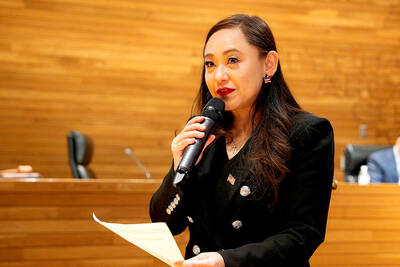
‘PERSONAL MISTAKES’: Eileen Wang has agreed to plead guilty to the felony, which comes with a maximum sentence of 10 years in federal prison A southern California mayor has agreed to plead guilty to acting as an illegal agent for the Chinese government and has resigned from her city position, officials said on Monday. Eileen Wang (王愛琳), mayor of Arcadia, was charged last month with one count of acting in the US as an illegal agent of a foreign government. She was accused of doing the bidding of Chinese officials, such as sharing articles favorable to Beijing, without prior notification to the US government as required by law. The 58-year-old was elected in November 2022 to a five-person city council, from which the mayor is selected
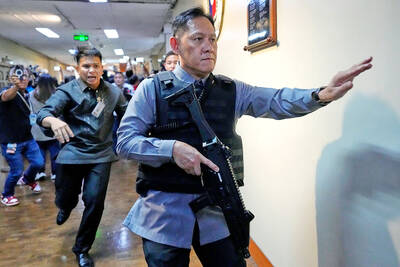
DELA ROSA CASE: The whereabouts of the senator, who is wanted by the ICC, was unclear, while President Marcos faces a political test over the senate situation Philippine authorities yesterday were seeking confirmation of reports that a top politician wanted by the International Criminal Court (ICC) had fled, a day after gunfire rang out at the Philippine Senate where he had taken refuge fearing his arrest. Senator Ronald “Bato” dela Rosa, the former national police chief and top enforcer of former Philippine president Rodrigo Duterte’s “war on drugs,” has been under Senate protection and is wanted for crimes against humanity, the same charges Duterte is accused of. “Several sources confirmed that the senator, Senator Bato, is no longer in the Senate premises, but we are still getting confirmation,” Presidential
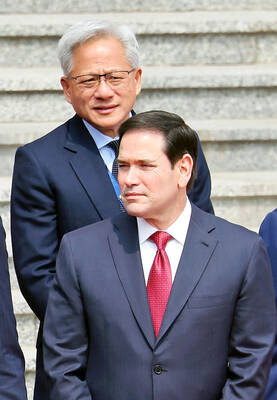
HELP DENIED? The US Department of State said that the Cuban leadership refuses to allow the US to provide aid to Cubans, ‘who are in desperate need of assistance’ US Secretary of State Marco Rubio on Wednesday said that Cuba’s leadership must change, as Washington renewed an offer of US$100 million in aid if the communist nation agrees to cooperate. Cuba has been suffering severe economic tumult led by an energy shortage that plunged 65 percent of the country into darkness on Tuesday. Cuba’s leaders have blamed US sanctions, but Rubio, a Cuban American and critic of the government established by Fidel Castro, said the system was to blame, including corruption by the military. “It’s a broken, nonfunctional economy, and it’s impossible to change it. I wish it were different,” he told


 RSS
RSS