


A hacker group was brazenly ramping up its antics as waves of cyber attacks targeting even the US spy agency to expose how poorly defended many networks are against Internet marauders.
“It’s becoming a big problem, because at the end of the day these guys are doing whatever they want,” Panda computer security labs technical director Luis Corrons said. “This is showing us that we have a long way to go to protect our systems and our information.”
The public Web site of the US CIA on Wednesday joined a growing list of hacker targets that has included Sony, the IMF and Citibank.
The CIA said it was looking into reports that cia.gov was knocked offline temporarily by a hacker group calling itself Lulz Security.
Lulz has claimed in recent weeks to have cracked into Sony, Nintendo, the US Senate, the Public Broadcasting System news organization and an Infragard company that works with the FBI.
The group is flaunting its notoriety with a telephone hotline for people to call and suggest targets for cyber attacks.
“Our number literally has anywhere between five and 20 people ringing it every single second,” members of the group said in a message on their @LulzSec Twitter account.
“We can forward it anywhere in the world,” they continued in a string of “tweets” that suggested they were using the flood of calls to jam phone lines of companies in telephone versions of Internet “denial of service” attacks.
Videogame companies appear to be favored targets for the group, prompting some in the computer security industry to believe its members are young people up to antics rather than cyber crooks out for loot.
The hotline number spelled out “LULZSEC” and had an area code in the US state of Ohio.
A recorded greeting featured a man speaking with an exaggerated French accent explaining that “Pierre Dubois and Francois Deluxe” were unavailable because they were up to mischief on the Internet.
Setting up a telephone hotline was “kind of eccentric” given that the hackers could have easily created an online forum asking for targets, Corrons said.
“These guys are upsetting a lot of people,” Corrons said. “They think they will never be caught and that could be their biggest mistake.”
Lulz has seized the spotlight amid unrelenting reports of cyber attacks with apparent motivations ranging from spying and profit to glory and activism.
“As we get more connected more of the time, the number of potential attackers is growing because anyone can do it from anywhere in the world,” Corrons said. “As the number of potential attackers grows, the number of successful attacks grows.”
Hacker group Anonymous, from which Lulz is believed to have formed, gained notoriety with cyber attacks in support of controversial Web site WikiLeaks.
Unlike cyber criminals who amass armies of “zombie” computers by stealthily infecting machines with viruses, people volunteered to install software in support of Anonymous -campaigns, according to Corrons.
“Anonymous has been out there for years,” Corrons said, adding the group had launched attacks on music or movie firms taking people to task for pirated songs or films.
“When the WikiLeaks case came, they reacted fast and gained a lot of popularity,” he said.
Anonymous used a tried and true distributed-denial-of-service attack that overwhelms Web sites with simultaneous requests for pages or other bits of content.
At times about 5,000 computers, each firing off about 10 requests per second, took aim at Web sites for Anonymous, according to Spain-based PandaLabs.
“There are not so many people now as there were a few months ago; I see fewer people connected,” Corrons said of Anonymous. “Maybe people are realizing that you can protest, but this is not the best way.”
Lulz may be related to Anonymous, but its tactics are more sophisticated.
Lulz cracks computer system defenses instead of simply flooding Web sites with page requests.
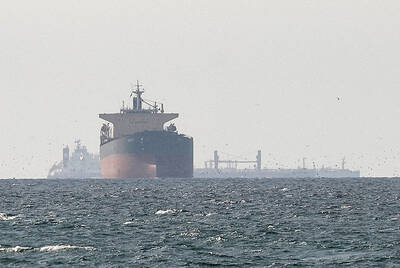
A ship that appears to be taking on the identity of a scrapped gas carrier exited the Strait of Hormuz on Friday, showing how strategies to get through the waterway are evolving as the Middle East war progresses. The vessel identifying as liquefied natural gas (LNG) carrier Jamal left the Strait on Friday morning, ship-tracking data show. However, the same tanker was also recorded as having beached at an Indian demolition yard in October last year, where it is being broken up, according to market participants and port agent’s reports. The ship claiming to be Jamal is likely a zombie vessel that

Cannabis-based medicines have shown little evidence of effectiveness for treating most mental health and substance-use disorders, according to a large review of past studies published in a major medical journal on Monday. Medical use of cannabinoids has been expanding, including in the US, Canada and Australia, where many patients report using cannabis products to manage conditions such as anxiety, post-traumatic stress disorder and sleep problems. Researchers reviewed data from 54 randomized clinical trials conducted between 1980 and May last year involving 2,477 participants for their analysis published in The Lancet. The studies assessed cannabinoids as a primary treatment for mental disorders or substance-use

NATIONWIDE BLACKOUT: US President Donald Trump cut off Venezuelan oil shipments to Cuba, strangling the Caribbean island’s already antiquated grid Cuba’s national electric grid collapsed on Monday, the nation’s grid operator said, leaving about 10 million people without power amid a US-imposed oil blockade that has crippled the already obsolete generation system. Grid operator UNE on social media said that it is investigating the causes of the blackout, the latest in a series of widespread outages that last for hours or days and that this weekend sparked a rare violent protest in the communist-run nation. Officials ruled out a major power plant failure, but had still not pinpointed the root cause of the grid collapse, suggesting a problem with transmission. Officials said that

CONSERVING FUEL: State institutions are to operate only four days a week starting tomorrow, with the measures also applying to schools and universities Sri Lanka on Monday announced a shorter working week to conserve its scarce fuel reserves as it prepares for a prolonged war in the Middle East. The Strait of Hormuz, a key waterway through which about 20 percent of global exports pass in peacetime, has been effectively closed by Iran in retaliation over the US and Israeli war against it, now in its third week. Sri Lankan Commissioner-General of Essential Services Prabath Chandrakeerthi said state institutions would operate only four days a week starting tomorrow. The new austerity measures would also apply to schools and universities, and would remain in place indefinitely. “We are


 RSS
RSS