


A five-minute screening test could help detect autism in babies at 12 months of age, giving parents and doctors far more time to intervene, US researchers said yesterday.
The study is the first to show that a simple screening tool could be used to detect autism in infants, said Lisa Gilotty, who heads the autism program at the National Institute of Mental Health, which funded the study.
“The benefit of this study is children get into treatment much earlier than they would otherwise,” Karen Pierce of the University of California, San Diego, whose study appears in the Journal of Pediatrics, said in a telephone interview.
Autism, a brain disorder, strikes one in 110 children in the US and affects four times as many boys as girls. The disorder is characterized by difficulties in social interaction, communication and understanding other people’s emotions and behavior.
It is usually first diagnosed in early childhood, around the age of three, and recent studies have shown that the earlier that children are diagnosed and treated, the better they do.
“There is extensive evidence that early therapy can have a positive impact on the developing brain,” Pierce said in a statement. “The opportunity to diagnose and thus begin treatment for autism around a child’s first birthday has enormous potential to change outcomes for children affected with the disorder.”
For the study, Pierce and colleagues put together a network of 137 pediatricians in the San Diego area, who systematically started screening all babies at their one-year check-up.
As part of the screening program, parents answered a survey, rating their babies on questions such as, “When your child plays with toys, does he/she look at you to see if you are watching?” or “Does your child smile or laugh while looking at you?”
Any baby who failed the screening was referred to the university’s autism center for more testing. These children were re-tested every six months until age three, when they were likely to show signs of autism.
Of the more than 10,000 infants, 184 failed the initial screening, and 75 percent of these children ended up with some problem. Of the total, 32 of the children have received an autism diagnosis, 56 had a language delay, nine were developmentally delayed and 36 were categorized as having some other issue.
After the screening program, all toddlers diagnosed with autism or developmental delay, and 89 percent of those with language delay were referred for behavioral therapy around the age 17 months. On average, these children began receiving treatment at 19 months.
“Those kids were getting treatment who otherwise may not have been seen for treatment until age three or later,” Gilotty said in a telephone interview.
Gilotty said the screening test still needs to be confirmed through other studies, but it proves that it is possible to systematically screen babies for autism in a way that does not put too much of a burden on pediatricians.

JAN. 1 CLAUSE: As military service is voluntary, applications for permission to stay abroad for over three months for men up to age 45 must, in principle, be granted A little-noticed clause in sweeping changes to Germany’s military service policy has triggered an uproar after it emerged that the law requires men aged up to 45 to get permission from the armed forces before any significant stay abroad, even in peacetime. The legislation, which went into effect on Jan. 1 aims to bolster the military and demands all 18-year-old men fill out a questionnaire to gauge their suitability to serve in the armed forces, but stops short of conscription. If the “modernized” model fails to pull in enough recruits, parliament will be compelled to discuss the reintroduction of compulsory service, German

For two decades, researchers observed members of the Ngogo chimpanzee group of Kibale National Park in Uganda spend their days eating fruits and leaves, resting, traveling and grooming in their tropical rainforest abode, but this stable community then fractured and descended into years of deadly violence. The researchers are now describing the first clearly documented example of a group of wild chimpanzees splitting into two separate factions, with one launching a series of coordinated attacks against the other. Adult males and infants were targeted, with 28 deaths. “Biting, pounding the victim with their hands, dragging them, kicking them — mostly adult males,

PHISHING: The con might appear convincing, as the scam e-mails can coincide with genuine messages from Apple saying you have run out of storage For a while you have been getting messages from Apple saying “your iCloud storage is full.” They say you have exceeded your storage plan, so documents are no longer being backed up, and photos you take are not being uploaded. You have been resisting Apple’s efforts to get you to pay a minimum of £0.99 (US$1.33) a month for more storage, but it seems that you cannot keep putting off the inevitable: You have received an e-mail which says your iCloud account has been blocked, and your photos and videos would be deleted very soon. To keep them you need
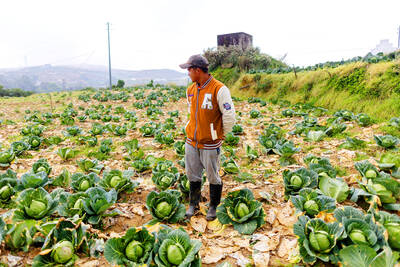
Filipino farmers like Romeo Wagayan have been left with little choice but to let their vegetables rot in the field rather than sell them at a loss, as rising oil prices linked to the Iran war drive up the cost of harvesting, labor and transport. “There’s nothing we can do,” said Wagayan, a 57-year old vegetable farmer in the northern Philippine province of Benguet. “If we harvest it, our losses only increase because of labor, transportation and packing costs. We don’t earn anything from it. That’s why we decided not to harvest at all,” he said. Soaring costs caused by the Middle East


 RSS
RSS