


A supreme court judge dismissed three arrest warrants for former Honduran president Manuel Zelaya on Friday, allowing him to return without detention to the country where he was deposed in a June 2009 coup.
Justice Oscar Chinchilla’s ruling did not dismiss corruption charges that were levied against Zelaya, who was whisked to Costa Rica in his pajamas by the military after he ignored court orders to drop a referendum on changing the Constitution.
Zelaya’s attorney Anahim Orrellana said that although his client could return and remain free, he is not happy with the ruling because it let stand charges that Zelaya calls political.
“We want the charges to be dropped,” Orrellana said in a press conference. He has three days to consider an appeal.
Zelaya, who was in Guatemala on Friday for a meeting of the Central American Parliament, an organization of former presidents, could not be reached for comment about the court ruling. However, earlier in the day, he said he still couldn’t return to Honduras because of “remnants of the coup and because I have legal issues to resolve.”
The warrants were issued a month after Zelaya was deposed. The former president faced seven charges, including abuse of power and treason, five of which were dropped when Congress passed an amnesty covering certain acts leading up to the coup in January last year.
The remaining charges involve fraud and falsifying documents to withdraw about US$3 million dollars in cash.
His defense argued that Zelaya should not be prosecuted because his right to due process was violated when he was physically removed from from the country.
Zelaya sneaked back into Honduras in September 2009, only to be holed up for the rest of the year in the Brazilian embassy, where the Honduran authorities shut off lights and water for a time and soldiers waited to arrest him.
Honduran President Porfirio Lobo won a previously scheduled presidential election later in 2009 and allowed Zelaya to leave the country upon taking office in January last year, when Zelaya’s term expired. Even without the coup, Zelaya could not have run for re-election.
Zelaya, who refuses to recognize Lobo’s government, has vowed to return to Honduras this year. Lobo has also said he wants a legal solution that would allow Zelaya to return.
In an e-mail on Friday Zelaya said that the Honduran authorities are trying to destroy his social movement. He appeared to refer to the almost daily clashes between police and teachers, university students and other supporters of his National Popular Resistance Front that run for the last three weeks.
“Never before in our country have we seen a plan so brutal using such treachery to sustain the privileges of the voracious and vicious elite,” he wrote.
Supporters of the coup said Zelaya was pushing a constitutional referendum to hold onto power by lifting a ban on presidential re-election, as his ally Venezuelan President Hugo Chavez did.
Zelaya denied that, countering that he only wanted to give more voice to Honduras’ many poor and shake up a stagnant political system dominated by a few wealthy families.
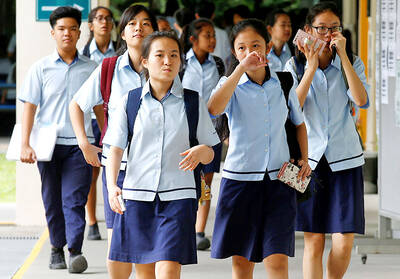
School bullies in Singapore are to face caning under new guidelines, but the education minister on Tuesday said it would be meted out only as a last resort with strict safeguards. Human rights groups regularly criticize Singapore for the use of corporal punishment, which remains part of the school and criminal justice systems, but authorities have defended it as a deterrent to crime and serious misconduct. Caning was discussed in the parliament after legislators asked how it would be used in relation to bullying in schools. The debate followed stricter guidelines on serious student misconduct, including bullying, unveiled by the Singaporean Ministry of
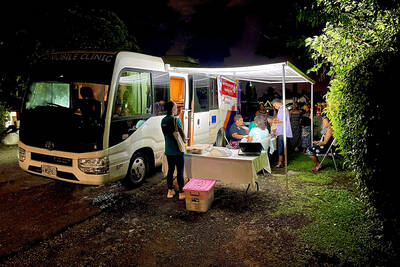
As evening falls in Fiji’s capital, a steady stream of people approaches a makeshift clinic that is a first line of defense against one of the world’s fastest-growing HIV epidemics. In the South Pacific nation — a popular tourist destination of just under a million people — more than 2,000 new HIV cases were recorded last year, a 26 percent increase from 2024. The government has declared an HIV outbreak and described it as a national crisis. “It’s spreading like wildfire,” said Siteri Dinawai, 46, who came to be tested. The Moonlight Clinic, a converted minibus parked in a suburban cul-de-sac in Suva, is
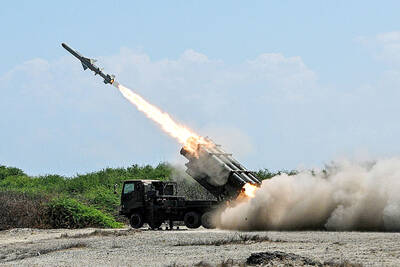
A MESSAGE: Japan’s participation in the Balikatan drills is a clear deterrence signal to China not to attack Taiwan while the US is busy in the Middle East, an analyst said The Japan Self-Defense Forces yesterday fired a Type 88 anti-ship missile during a joint maritime exercise with US, Australian and Philippine forces, hitting a decommissioned Philippine Navy ship in waters facing the disputed South China Sea, in drills that underscore Tokyo’s rising willingness to project military power on China’s doorstep. The drill took place as Manila and Tokyo began talks on a potential defense equipment transfer, made possible by Japan’s decision to scrap restrictions on military exports. The discussions include the possible early transfer of Abukuma-class destroyers and TC-90 aircraft to the Philippines, Japanese Minister of Defense Shinjiro Koizumi said. Philippine Secretary of
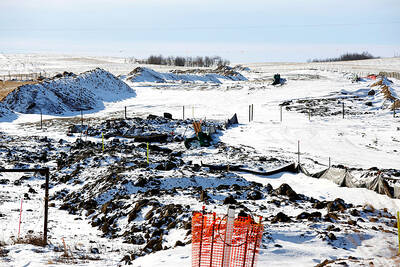
Separatists in Alberta are preparing to submit a petition tomorrow that they said has enough signatures to force a referendum on independence for the oil-rich Canadian province. Polls indicate the pro-independence camp remains a minority among Alberta’s 5 million people, but has hit a historic high of roughly 30 percent. Alberta separatists are also closer than ever to forcing a referendum, riding momentum fueled by intensifying grievances over Ottawa’s control of the provincial oil industry. They have also undeniably gotten a boost from the return to power of US President Donald Trump. After launching a petition in January, Stay Free Alberta, the group


 RSS
RSS