


The UN’s former top nuclear watchdog said on Wednesday his cautious language in reports about Iran’s nuclear program was part of a deliberate policy to keep a lid on tensions and avert a rush to war.
Mohamed ElBaradei, who was director-general of the International Atomic Energy Agency (IAEA) for 12 years before stepping down in November, pleaded with the international community to “learn the lessons” of the Iraq invasion and prevent further conflict in the Middle East.
In an interview, he said that despite its technical status, the IAEA’s work was deeply politicized.
“We are a technical organization totally embedded in a political setting,” ElBaradei said, “and we have to be aware of the background and political implications of our work.”
ElBaradei, who was jointly awarded the Nobel peace prize in 2005 along with the IAEA, has been criticized by some for allegedly toning down agency reports on the threat posed by Iran.
A report earlier this year — the first under the stewardship of ElBaradei’s successor, Yukiya Amano — was noted for its blunter language concerning Iran’s nuclear program, prompting some to accuse ElBaradei of concealing facts.
“It is now clear that ... ElBaradei was engaged in what may well prove to be the most lethal cover-up in human history,” a Forbes magazine columnist said following the report’s publication.
ElBaradei denied any cover-up had taken place, but acknowledged he believed he had a duty to frame agency reports in a way that could not be exploited by those seeking war. “When I was working at the agency we would literally go through 30 drafts or so of each report before it was ready, because I knew every word could be used politically and in a very subjective way,” he said. “Every word was weighed to make sure that it was immune from being abused and I always wanted to make sure that we were not overstating or understating, but rather just stating the facts.”
He rejected suggestions this amounted to undue political interference in the agency’s work.
“I think the tone was set by me, that’s true,” he said. “But all the facts were in every report, unvarnished.”
His cautious reports are in contrast to the title of his memoirs, Crawling Away From Armageddon, to be published later this year.
The book is expected to reveal details of ElBaradei’s private conversations with US officials, with whom he fought in vain to avoid a US-led invasion of Iraq.
“I would hope that the lessons of Iraq, both in London and in the US have started to sink in,” he said. “Sure there are dictators, but are you ready every time you want to get rid of a dictator to sacrifice a million innocent civilians?”
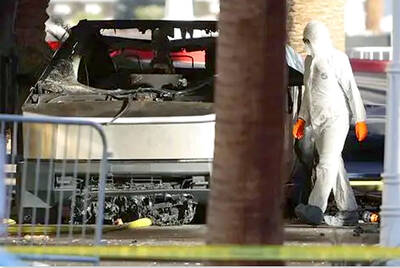
ACTIONABLE ADVICE: The majority of chatbots tested provided guidance on weapons, tactics and target selections, with Perplexity and Meta AI deemed to be the least safe From school shootings to synagogue bombings, leading artificial intelligence (AI) chatbots helped researchers plot violent attacks, according to a study published on Wednesday that highlighted the technology’s potential for real-world harm. Researchers from the nonprofit watchdog Center for Countering Digital Hate and CNN posed as 13-year-old boys in the US and Ireland to test 10 chatbots, including ChatGPT, Google Gemini, Perplexity, Deepseek and Meta AI. Eight of the chatbots assisted the make-believe attackers in more than half the responses, providing advice on “locations to target” and “weapons to use” in an attack, the study said. The chatbots had become a “powerful accelerant for
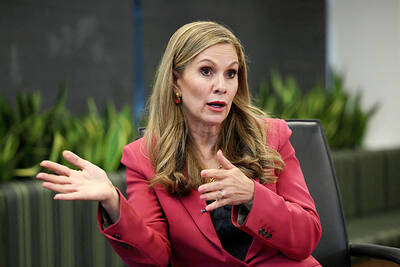
Australians were downloading virtual private networks (VPNs) in droves, while one of the world’s largest porn distributors said it was blocking users from its platforms as the country yesterday rolled out sweeping online age restriction. Australia in December became the first country to impose a nationwide ban on teenagers using social media. A separate law now requires artificial intelligence (AI)-powered chatbot services to keep certain content — including pornography, extreme violence and self-harm and eating disorder material — from minors or face fines of up to A$49.5 million (US$34.6 million). The country also joined Britain, France and dozens of US states requiring
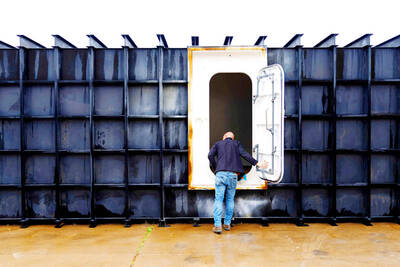
Since the war in the Middle East began nearly two weeks ago, the telephone at Ron Hubbard’s bomb shelter company in Texas has not stopped ringing. Foreign and US clients are rushing to buy his bunkers, seeking refuge in case of air raids, nuclear fallout or apocalypse. With the US and Israel pounding Iran, and Tehran retaliating with strikes across the region, Hubbard has seen demand for his product soar, mostly from Gulf nation customers in Bahrain, Qatar, Kuwait and the United Arab Emirates. “You can imagine how many people are thinking: ‘I wish I had a bomb shelter,’” Hubbard, 63, said in
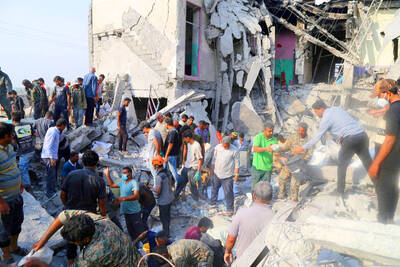
STILL IN POWER: US intelligence reports showed that the Iranian regime is not in danger of collapse and retains control of the public, casting doubt on Trump’s exit Nearly every US Senate Democrat on Wednesday signed a letter sent to US Secretary of Defense Pete Hegseth requesting a “swift investigation” of airstrikes on a girls’ school in Iran that killed scores of children and any other potential US military actions causing civilian harm. Reuters reported on Thursday last week that US military investigators believe it is likely that US forces were responsible for the Feb. 28 strike on the school, as US and Israeli forces launched attacks on Iran. “The results of this school attack are horrific. The majority of those killed in the strikes were girls between the ages


 RSS
RSS