


Nineteenth-century Russian novelist Nikolai Gogol once said his country has two problems: roads and fools. And roads, a new study claimed on Tuesday, cost many times more to build in Moscow than in US and European cities because of corruption.
Opposition figure Boris Nemtsov compiled facts and figures from open sources to shed light on the 17-year tenure of Moscow Mayor Yuri Luzhkov.
“We’ll never solve the problem of traffic under Luzhkov, no matter how much money is allocated for road construction,” Nemtsov told journalists. “The exorbitant prices are directly linked to corruption and ties between road builders and authorities. Traffic jams are about corruption.”
Luzhkov, who has overseen a construction boom in the capital, has often been accused of corruption and of helping advance the business interests of his wife, Yelena Baturina. A major property developer, Baturina is ranked by Forbes as Russia’s wealthiest woman.
Luzhkov has persistently denied allegations of wrongdoing and has successfully sued many accusers for libel.
A nationwide poll last year by the Public Opinion Foundation showed that Moscow was regarded as the most corrupt city in Russia, with 42 percent of Moscow residents polled admitting they had given bribes to public officials.
The anti-corruption watchdog Transparency International ranks Russia 147th out of 180 in its global corruption index.
Russian President Dmitry Medvedev announced a drive against corruption earlier this year — but with little visible result.
Clogged roads are a major problem in Moscow, home to at least 10 million people with another 10 million traveling into the city each day.
Road construction proceeds slowly because the price is exorbitant compared with other countries, Nemtsov said.
Construction of Moscow’s new, fourth ring road is expected to cost 7.4 billion rubles (US$237 million) per kilometer, his study showed.
Road construction in China, the US and Europe hovers between US$3 million and US$6 million per kilometer, the report said.
The average cost of road construction in Washington, for comparison, was US$6.1 million per kilometer in 2002, Washington’s transportation department said.
City hall attributed the high costs to the demolition of residential housing in areas adjacent to the new ring road. The city has budgeted 13 billion rubles for the demolition, with 25.5 billion rubles to be spent on the construction proper. This, however, still puts the cost at an exorbitant US$209 million per kilometer.
Nemtsov blamed a lack of competition.
“We should hold tenders open to all road companies from around the globe,” he said. “The lack of competition leads to price hikes.”
In the 1990s, Nemtsov served as governor of one of Russia’s largest regions and then deputy prime minister under Russia’s first post-Soviet president, Boris Yeltsin. He has since become a prominent opposition figure.
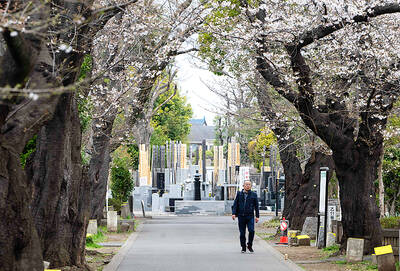
ROCKY RELATIONS: The figures on residents come as Chinese tourist numbers drop following Beijing’s warnings to avoid traveling to Japan The number of Chinese residents in Japan has continued to rise, even as ties between the two countries have become increasingly fractious, data released on Friday showed. As of the end of December last year, the number of Chinese residents had increased by 6.5 percent from the previous year to 930,428. Chinese people accounted for 22.6 percent of all foreign residents in Japan, making them by far the largest group, Japanese Ministry of Justice data showed. Beijing has criticized Tokyo in increasingly strident terms since Japanese Prime Minister Sanae Takaichi last year suggested that a military conflict around Taiwan could
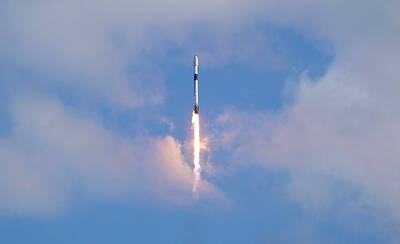
A retired US colonel behind a privately financed rocket launch site in the Dominican Republic sees the project as a response to China’s dominance of the space race in Latin America. Florida-based Launch on Demand is slated to begin building a US$600 million facility in a remote region near the border with Haiti late this year. The project is designed to meet surging demand for the heavy-lift rockets needed to put clusters of satellites into orbit. It is also an answer to China’s growing presence in the region, said CEO Burton Catledge, a former commander of the US Air Force’s 45th Operations

Germany is considering Australia’s Ghost Bat robot fighter as it looks to select a combat drone to modernize its air force, German Minister of Defense Boris Pistorius said yesterday. Germany has said it wants to field hundreds of uncrewed fighter jets by 2029, and would make a decision soon as it considers a range of German, European and US projects developing so-called “collaborative combat aircraft.” Australia has said it will integrate the Ghost Bat, jointly developed by Boeing Australia and the Royal Australian Air Force, into its military after a successful weapons test last year. After inspecting the Ghost Bat in Queensland yesterday,
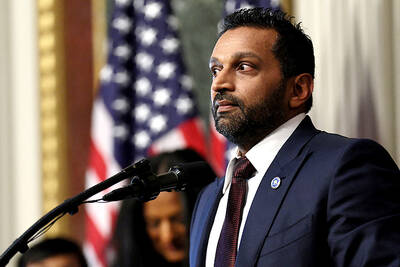
A pro-Iran hacking group claimed to breach FBI Director Kash Patel’s personal e-mail inbox and posted some of the contents online. The e-mails provided by the hacking group include travel details, correspondence with leasing agents in Washington and global entry, and loyalty account numbers. The e-mail address the hackers claim to have compromised has been previously tied to Patel’s personal details, and the leaked e-mails contain photos of Patel and others, in addition to correspondence with family members and colleagues. “The FBI is aware of malicious actors targeting Director Patel’s personal email information,” the agency said in a statement on


 RSS
RSS