


Sensitive files detailing the extra-marital affairs, drug taking and use of prostitutes by very senior officers in the Royal Air Force (RAF) have been stolen, raising fears within the UK’s Ministry of Defence (MOD) that personnel could be vulnerable to blackmail.
Up to 500 people in the service could be affected by the theft. They have been interviewed individually about the possible consequences to them and to their families.
The potentially damaging information was stored on three computer hard drives that went missing from RAF Innsworth, Gloucestershire, last September. The files were not encrypted, so could be opened easily.
The RAF disclosed the loss of the hard drives two weeks after they went missing, revealing only that the bank details and home addresses of 50,000 servicemen and women were on the computers.
It kept secret the fact that the “vetting” information about 500 staff had also disappeared. The UK’s defense secretary at the time, Des Browne, was not told, nor was Sir Richard Thomas, then information commissioner. The details were also withheld from parliament.
But the seriousness of the potential loss, and the nature of the information, were outlined in an internal MOD memo, which was obtained under Freedom of Information legislation.
It said: “This information included details of criminal convictions, investigations, precise details of debt, medical conditions, drug abuse, use of prostitutes, extra-marital affairs including the names of third parties.”
“The data is not routine vetting information, but relates to those cases that have been referred to RAF ... because the individuals have serious vulnerabilities that affect their suitability to obtain/retain a security clearance. This data provides an excellent target list for foreign intelligence services, investigative journalists and blackmailers. Moreover, if the information relating to the private lives of RAF personnel, especially of some very senior officers, enters the public domain, the reputation of the service will be tarnished,” it said.
“The vetting information would be likely to generate further interest and, due to the profile of some individuals, would likely grab front page status,” it said.
Details of the ministry’s internal memo will be revealed in the BBC TV program Who’s Watching You, which was to be broadcast at 9pm last night.
The program was to include an interview with an unnamed former serviceman who put the Freedom of Information and Data Protection Acts request to the ministry.
The requests revealed internal concern about the loss from an RAF wing commander. The source, now retired, handled top secret and highly sensitive information, including data on aircraft and ship maneuvers in Iraq.
At the time of the theft, on Sept. 11 last year, the MOD took more than two weeks to publicly disclose the loss of the 50,000 files.
The drives were kept in a secure area of the base at Innsworth, which was regularly patrolled, and they were not encrypted. They were due to be transferred to the RAF’s air command headquarters at High Wycombe, Buckinghamshire.
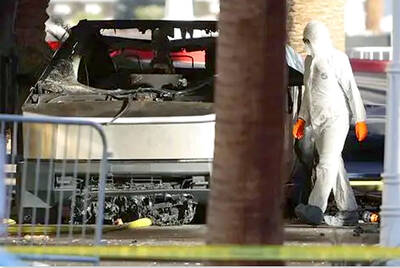
ACTIONABLE ADVICE: The majority of chatbots tested provided guidance on weapons, tactics and target selections, with Perplexity and Meta AI deemed to be the least safe From school shootings to synagogue bombings, leading artificial intelligence (AI) chatbots helped researchers plot violent attacks, according to a study published on Wednesday that highlighted the technology’s potential for real-world harm. Researchers from the nonprofit watchdog Center for Countering Digital Hate and CNN posed as 13-year-old boys in the US and Ireland to test 10 chatbots, including ChatGPT, Google Gemini, Perplexity, Deepseek and Meta AI. Eight of the chatbots assisted the make-believe attackers in more than half the responses, providing advice on “locations to target” and “weapons to use” in an attack, the study said. The chatbots had become a “powerful accelerant for

Australians were downloading virtual private networks (VPNs) in droves, while one of the world’s largest porn distributors said it was blocking users from its platforms as the country yesterday rolled out sweeping online age restriction. Australia in December became the first country to impose a nationwide ban on teenagers using social media. A separate law now requires artificial intelligence (AI)-powered chatbot services to keep certain content — including pornography, extreme violence and self-harm and eating disorder material — from minors or face fines of up to A$49.5 million (US$34.6 million). The country also joined Britain, France and dozens of US states requiring
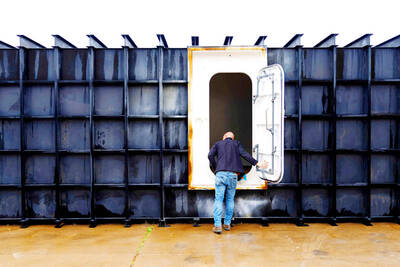
Since the war in the Middle East began nearly two weeks ago, the telephone at Ron Hubbard’s bomb shelter company in Texas has not stopped ringing. Foreign and US clients are rushing to buy his bunkers, seeking refuge in case of air raids, nuclear fallout or apocalypse. With the US and Israel pounding Iran, and Tehran retaliating with strikes across the region, Hubbard has seen demand for his product soar, mostly from Gulf nation customers in Bahrain, Qatar, Kuwait and the United Arab Emirates. “You can imagine how many people are thinking: ‘I wish I had a bomb shelter,’” Hubbard, 63, said in
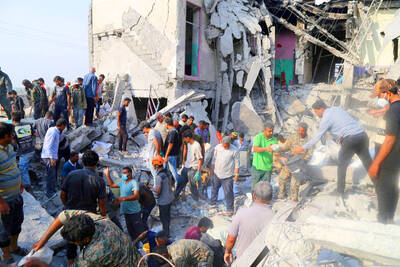
STILL IN POWER: US intelligence reports showed that the Iranian regime is not in danger of collapse and retains control of the public, casting doubt on Trump’s exit Nearly every US Senate Democrat on Wednesday signed a letter sent to US Secretary of Defense Pete Hegseth requesting a “swift investigation” of airstrikes on a girls’ school in Iran that killed scores of children and any other potential US military actions causing civilian harm. Reuters reported on Thursday last week that US military investigators believe it is likely that US forces were responsible for the Feb. 28 strike on the school, as US and Israeli forces launched attacks on Iran. “The results of this school attack are horrific. The majority of those killed in the strikes were girls between the ages


 RSS
RSS