


Japan will extend by a year economic sanctions against North Korea, including a ban on imports, and tighten oversight of fund transfers to its secretive neighbor after a rocket launch, the government said yesterday.
Pyongyang said it had put a satellite into orbit but Tokyo, Seoul and Washington consider last Sunday’s launch a thinly disguised test of a long-range missile designed to carry a warhead as far as Alaska.
The US military has said no object entered orbit.
In a largely symbolic measure, Japan will extend existing sanctions for a year and require more money sent to the cash-strapped communist country to be reported to authorities.
Sanctions previously set for six months have been extended four times since they began in 2006, with Japan citing lack of progress in talks to denuclearize North Korea and to investigate Pyongyang’s past abduction of Japanese citizens.
“We have not seen a sincere response from North Korea on the issues of abductions, nuclear programs and missiles,” Chief Cabinet Secretary Takeo Kawamura told a news conference. “We decided that additional measures were also needed, taking into consideration the overall situation after the missile launch.”
Japan’s unpopular government is under pressure to take a tough stance against North Korea after its rocket soared over Japan during its 3,200km flight.
Japan has called for a new, legally binding resolution by the UN Security Council to declare North Korea in violation of a previous resolution banning the firing of ballistic missiles.
But Russia and China, permanent veto-wielding council members, have opposed the move, unconvinced the rocket launch was a violation.
Japanese Foreign Minister Hirofumi Nakasone told reporters he and US Secretary of State Hillary Clinton had agreed by telephone earlier yesterday to work together to seek a new Security Council resolution.
But UN diplomats said Washington has indicated it might be willing to accept a non-binding statement rather than a resolution, which the US fears could take too long, if one can be agreed at all.
A non-binding statement would likely be seen as diplomatic failure for Japan at home, where Japanese Prime Minister Taro Aso is struggling with low voter support ahead of an election this year.
Aso was to leave yesterday for a summit of 16 Asian countries in Thailand, where diplomats say Japan will push for leaders to issue a statement about North Korea’s rocket launch.
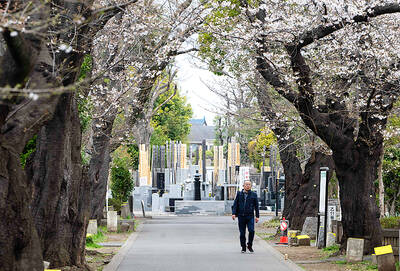
ROCKY RELATIONS: The figures on residents come as Chinese tourist numbers drop following Beijing’s warnings to avoid traveling to Japan The number of Chinese residents in Japan has continued to rise, even as ties between the two countries have become increasingly fractious, data released on Friday showed. As of the end of December last year, the number of Chinese residents had increased by 6.5 percent from the previous year to 930,428. Chinese people accounted for 22.6 percent of all foreign residents in Japan, making them by far the largest group, Japanese Ministry of Justice data showed. Beijing has criticized Tokyo in increasingly strident terms since Japanese Prime Minister Sanae Takaichi last year suggested that a military conflict around Taiwan could
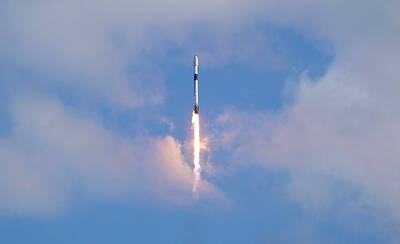
A retired US colonel behind a privately financed rocket launch site in the Dominican Republic sees the project as a response to China’s dominance of the space race in Latin America. Florida-based Launch on Demand is slated to begin building a US$600 million facility in a remote region near the border with Haiti late this year. The project is designed to meet surging demand for the heavy-lift rockets needed to put clusters of satellites into orbit. It is also an answer to China’s growing presence in the region, said CEO Burton Catledge, a former commander of the US Air Force’s 45th Operations

Germany is considering Australia’s Ghost Bat robot fighter as it looks to select a combat drone to modernize its air force, German Minister of Defense Boris Pistorius said yesterday. Germany has said it wants to field hundreds of uncrewed fighter jets by 2029, and would make a decision soon as it considers a range of German, European and US projects developing so-called “collaborative combat aircraft.” Australia has said it will integrate the Ghost Bat, jointly developed by Boeing Australia and the Royal Australian Air Force, into its military after a successful weapons test last year. After inspecting the Ghost Bat in Queensland yesterday,

A pro-Iran hacking group claimed to breach FBI Director Kash Patel’s personal e-mail inbox and posted some of the contents online. The e-mails provided by the hacking group include travel details, correspondence with leasing agents in Washington and global entry, and loyalty account numbers. The e-mail address the hackers claim to have compromised has been previously tied to Patel’s personal details, and the leaked e-mails contain photos of Patel and others, in addition to correspondence with family members and colleagues. “The FBI is aware of malicious actors targeting Director Patel’s personal email information,” the agency said in a statement on


 RSS
RSS