


A Shanghai court has sentenced a man to 10 months in prison, reports said yesterday, as the government cracks down on a flood of fake Chinese currency good enough to trick some anti-counterfeiting machines.
Mo Qinsong (莫欽松) was convicted and sentenced for buying and passing on about 550 counterfeit 100 yuan (US$14.50) notes that he bought in southern China and brought with him to Shanghai, the state-run newspaper Shanghai Daily reported.
Mo was also fined 15,000 yuan.
A court official, who would not give his name because he was not allowed to speak to media, confirmed the sentence but would not discuss any details.
Mo paid only 10 yuan for each 100 yuan note he bought, the Shanghai Daily said. It said he was caught while trying to flee from a jewelry shop after he tried to buy a gold necklace using mostly fake bills.
Authorities have been struggling to catch up with a flood of such fake currency in many Chinese cities. The notes are good enough to pass through older counterfeit-cash detectors, and many in Shanghai and other cities have gotten them when making withdrawals from bank ATMs.
Last summer, a factory worker reportedly testified that he bombed a bus in the southern Chinese city of Guangzhou because he was angry about, among other indignities, finding that 500 yuan of the 600 yuan he had withdrawn from an automatic teller machine was fake.
Police have nabbed counterfeiting ring suspects in several cities, the Shanghai Daily and other reports said, adding that some of the cash was being sold online.
Chinese newspapers published yesterday carried advice on how to spot the fakes, which usually have a serial number beginning with HD90. Among the pointers, they said that metal strips on the fake bills were often broken rather than whole.
Shanghai finished upgrading counterfeit note detectors at its local commercial banks in October, said the reports, which advised businesses to do the same.
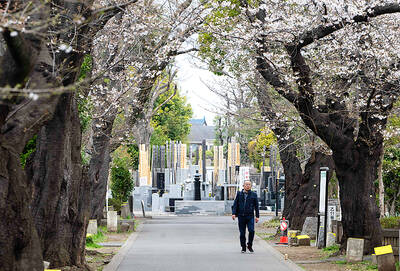
ROCKY RELATIONS: The figures on residents come as Chinese tourist numbers drop following Beijing’s warnings to avoid traveling to Japan The number of Chinese residents in Japan has continued to rise, even as ties between the two countries have become increasingly fractious, data released on Friday showed. As of the end of December last year, the number of Chinese residents had increased by 6.5 percent from the previous year to 930,428. Chinese people accounted for 22.6 percent of all foreign residents in Japan, making them by far the largest group, Japanese Ministry of Justice data showed. Beijing has criticized Tokyo in increasingly strident terms since Japanese Prime Minister Sanae Takaichi last year suggested that a military conflict around Taiwan could

A retired US colonel behind a privately financed rocket launch site in the Dominican Republic sees the project as a response to China’s dominance of the space race in Latin America. Florida-based Launch on Demand is slated to begin building a US$600 million facility in a remote region near the border with Haiti late this year. The project is designed to meet surging demand for the heavy-lift rockets needed to put clusters of satellites into orbit. It is also an answer to China’s growing presence in the region, said CEO Burton Catledge, a former commander of the US Air Force’s 45th Operations

Germany is considering Australia’s Ghost Bat robot fighter as it looks to select a combat drone to modernize its air force, German Minister of Defense Boris Pistorius said yesterday. Germany has said it wants to field hundreds of uncrewed fighter jets by 2029, and would make a decision soon as it considers a range of German, European and US projects developing so-called “collaborative combat aircraft.” Australia has said it will integrate the Ghost Bat, jointly developed by Boeing Australia and the Royal Australian Air Force, into its military after a successful weapons test last year. After inspecting the Ghost Bat in Queensland yesterday,
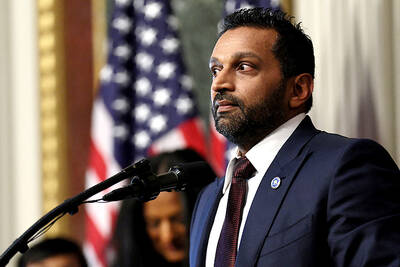
A pro-Iran hacking group claimed to breach FBI Director Kash Patel’s personal e-mail inbox and posted some of the contents online. The e-mails provided by the hacking group include travel details, correspondence with leasing agents in Washington and global entry, and loyalty account numbers. The e-mail address the hackers claim to have compromised has been previously tied to Patel’s personal details, and the leaked e-mails contain photos of Patel and others, in addition to correspondence with family members and colleagues. “The FBI is aware of malicious actors targeting Director Patel’s personal email information,” the agency said in a statement on


 RSS
RSS