


Iraq’s prime minister said on Friday the country’s most influential Shiite cleric will leave the decision on the future of US troops to the government and parliament — a step that could remove a major obstacle to the deal.
Tension rose in the Iraqi capital on Friday as a car bomb killed 13 people in a Shiite enclave and thousands of Shiites marched to mourn the assassination of a Shiite lawmaker that their leaders blamed on the US.
Iraqi Prime Minister Nouri al-Maliki, a Shiite, journeyed on Friday to the Shiite holy city of Najaf to brief Grand Ayatollah Ali al-Sistani about the progress in talks with the US on a security agreement governing operations of US forces starting next year.
After a two-and-a-half hour meeting, al-Maliki told reporters that the aged Iranian-born cleric would not oppose the security deal if it’s approved by the country’s democratic institutions, including parliament, which must ratify the pact.
“He does not want anything forced or imposed on the Iraqi people,” al-Maliki said. “Rather he wants it to be done through the institutions. If the government and the parliament approve this, then [al-Sistani] will be convinced that is what the Iraqi people have decided.”
Al-Sistani’s office had no comment.
However, it would be politically untenable for al-Maliki to accept a deal and send it to parliament for ratification if al-Sistani spoke out publicly against it.
Al-Sistani’s insistence that only elected officials draft Iraq’s first constitution after the 2003 fall of former Iraqi president Saddam Hussein forced the US to change its blueprint for the country’s transition to democratic rule.
Al-Sistani also pressured the US to agree to the first post-Saddam elections in January 2005, even though many US officials believed the country was too unstable for a meaningful balloting.
US and Iraqi officials have said they are close to an agreement that would replace the UN mandate for US forces in Iraq that expires on Dec. 31. But the most contentious issue — legal jurisdiction and immunity for US troops under Iraqi law — remains unresolved.
Al-Maliki said the US had made major concessions, including agreeing to pull US forces back to their bases by the end of June and to a full withdrawal by Dec. 31, 2011.
US President George W. Bush had refused for years to set a timetable for a troop withdrawal, saying that should depend on security conditions on the ground. Iraqi politicians say they cannot sell the deal to their war-weary public without a timeline for the end of the US presence.
However, one senior US official, close to the talks, confirmed on Friday that the US had agreed to the June and 2011 dates.
The official, who requested anonymity because the talks are ongoing, said the US still believes that security conditions should determine the withdrawal schedule but that Washington can live with the language in the draft deal.
Iran strongly opposes the agreement, fearing it would leave open the possibility of a US military presence on its western border. Iraqi officials have said the US departure could be delayed if the government asked the US to stay.
US officials accuse Iran of arming and training Iraqi Shiite extremists, who could use violence to pressure the government against the deal. Iran denies links to extremists.
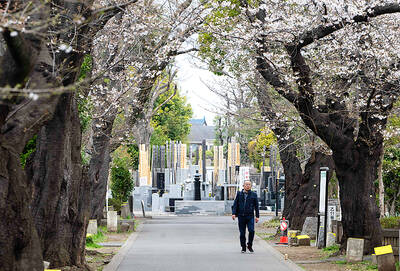
ROCKY RELATIONS: The figures on residents come as Chinese tourist numbers drop following Beijing’s warnings to avoid traveling to Japan The number of Chinese residents in Japan has continued to rise, even as ties between the two countries have become increasingly fractious, data released on Friday showed. As of the end of December last year, the number of Chinese residents had increased by 6.5 percent from the previous year to 930,428. Chinese people accounted for 22.6 percent of all foreign residents in Japan, making them by far the largest group, Japanese Ministry of Justice data showed. Beijing has criticized Tokyo in increasingly strident terms since Japanese Prime Minister Sanae Takaichi last year suggested that a military conflict around Taiwan could

A retired US colonel behind a privately financed rocket launch site in the Dominican Republic sees the project as a response to China’s dominance of the space race in Latin America. Florida-based Launch on Demand is slated to begin building a US$600 million facility in a remote region near the border with Haiti late this year. The project is designed to meet surging demand for the heavy-lift rockets needed to put clusters of satellites into orbit. It is also an answer to China’s growing presence in the region, said CEO Burton Catledge, a former commander of the US Air Force’s 45th Operations

Germany is considering Australia’s Ghost Bat robot fighter as it looks to select a combat drone to modernize its air force, German Minister of Defense Boris Pistorius said yesterday. Germany has said it wants to field hundreds of uncrewed fighter jets by 2029, and would make a decision soon as it considers a range of German, European and US projects developing so-called “collaborative combat aircraft.” Australia has said it will integrate the Ghost Bat, jointly developed by Boeing Australia and the Royal Australian Air Force, into its military after a successful weapons test last year. After inspecting the Ghost Bat in Queensland yesterday,
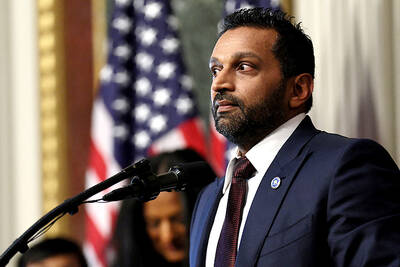
A pro-Iran hacking group claimed to breach FBI Director Kash Patel’s personal e-mail inbox and posted some of the contents online. The e-mails provided by the hacking group include travel details, correspondence with leasing agents in Washington and global entry, and loyalty account numbers. The e-mail address the hackers claim to have compromised has been previously tied to Patel’s personal details, and the leaked e-mails contain photos of Patel and others, in addition to correspondence with family members and colleagues. “The FBI is aware of malicious actors targeting Director Patel’s personal email information,” the agency said in a statement on


 RSS
RSS