


A Georgian policeman was killed on Sunday in a shootout near the Abkhazia rebel region, as the head of an EU observer mission seeking to calm tensions arrived in the country.
The flare-up, the second killing of a Georgian policeman on the de facto Abkhaz border in just over a week, highlighted instability in Georgia after the EU brokered a peace plan between Tbilisi and Moscow following last month’s conflict.
SNIPER
“One Georgian policeman was killed and two were wounded in Khurcha as a result of sniper fire from positions controlled by Abkhaz separatists,” said interior ministry spokesman Shota Utiashvili, referring to a village in the coastal district of Zugdidi near Abkhazia.
“The Georgian side briefly returned fire from automatic weapons as one of our policemen had been killed ... The shootout with automatic weapons between Abkhaz militia and Georgian police lasted several minutes,” he said.
The announcement was denied by an official for the adjoining Abkhaz district, Russia’s Interfax news agency reported.
“There was no firing and couldn’t have been” by Abhkaz forces, said the official, Ruslan Kishmariya.
HARD TO SAY
“There are Abkhaz border guard and Russian peacekeeping posts opposite Khurcha village. At these posts firing was heard right within the village but what’s happening there is hard to say,” he said.
Located on the Black Sea coast, Abkhazia is one of two Georgian rebel regions backed by Russia.
Last month Russia and Georgia fought a brief war centred on the other rebel region, South Ossetia.
Hostilities also took place around Abkhazia. Moscow has since recognized both rebel regions as independent, drawing Western condemnation.
Russian forces remain posted on either side of the de facto Abkhaz border.
A Georgian policeman was fatally shot from an Abkhaz checkpoint on Sept. 13, the day Russian forces made a partial pull-back from positions deeper inside Georgia.
Under the EU-brokered peace plan, Russian forces are due by the middle of next month to make a further pull-back to the positions they held prior to the outbreak of last month’s hostilities.
On Saturday the head of an EU observer mission arrived in Georgia to prepare the ground for at least 200 EU observers that are to be deployed by Oct. 1 — a condition of the Russian pullback.
The mission head, German diplomat Hansjoerg Haber, was expected to meet Georgian Prime Minister Lado Gurgenidze yesterday, with substantial numbers of observers set to arrive early in the week, officials said.
Most of the EU’s 27 member states are expected to contribute personnel to the mission, which has an initial duration of 12 months.
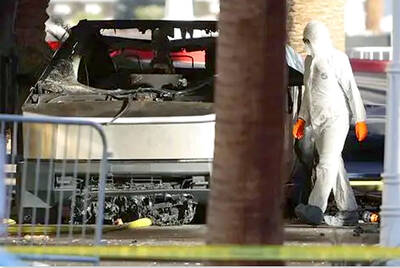
ACTIONABLE ADVICE: The majority of chatbots tested provided guidance on weapons, tactics and target selections, with Perplexity and Meta AI deemed to be the least safe From school shootings to synagogue bombings, leading artificial intelligence (AI) chatbots helped researchers plot violent attacks, according to a study published on Wednesday that highlighted the technology’s potential for real-world harm. Researchers from the nonprofit watchdog Center for Countering Digital Hate and CNN posed as 13-year-old boys in the US and Ireland to test 10 chatbots, including ChatGPT, Google Gemini, Perplexity, Deepseek and Meta AI. Eight of the chatbots assisted the make-believe attackers in more than half the responses, providing advice on “locations to target” and “weapons to use” in an attack, the study said. The chatbots had become a “powerful accelerant for

Australians were downloading virtual private networks (VPNs) in droves, while one of the world’s largest porn distributors said it was blocking users from its platforms as the country yesterday rolled out sweeping online age restriction. Australia in December became the first country to impose a nationwide ban on teenagers using social media. A separate law now requires artificial intelligence (AI)-powered chatbot services to keep certain content — including pornography, extreme violence and self-harm and eating disorder material — from minors or face fines of up to A$49.5 million (US$34.6 million). The country also joined Britain, France and dozens of US states requiring
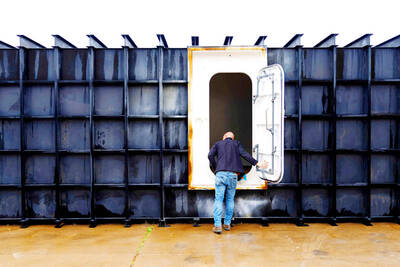
Since the war in the Middle East began nearly two weeks ago, the telephone at Ron Hubbard’s bomb shelter company in Texas has not stopped ringing. Foreign and US clients are rushing to buy his bunkers, seeking refuge in case of air raids, nuclear fallout or apocalypse. With the US and Israel pounding Iran, and Tehran retaliating with strikes across the region, Hubbard has seen demand for his product soar, mostly from Gulf nation customers in Bahrain, Qatar, Kuwait and the United Arab Emirates. “You can imagine how many people are thinking: ‘I wish I had a bomb shelter,’” Hubbard, 63, said in
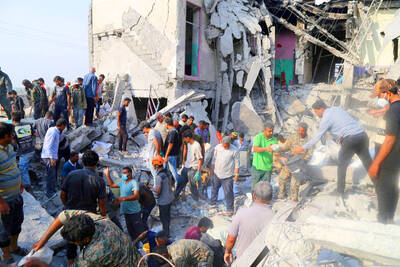
STILL IN POWER: US intelligence reports showed that the Iranian regime is not in danger of collapse and retains control of the public, casting doubt on Trump’s exit Nearly every US Senate Democrat on Wednesday signed a letter sent to US Secretary of Defense Pete Hegseth requesting a “swift investigation” of airstrikes on a girls’ school in Iran that killed scores of children and any other potential US military actions causing civilian harm. Reuters reported on Thursday last week that US military investigators believe it is likely that US forces were responsible for the Feb. 28 strike on the school, as US and Israeli forces launched attacks on Iran. “The results of this school attack are horrific. The majority of those killed in the strikes were girls between the ages


 RSS
RSS