


Australia’s gay capital, Sydney, came under attack from a rebel city councilor yesterday over its plans to create “homophobia-free zones” in the heart of its bar and nightclub precinct.
The City of Sydney Council this month voted five-to-four for the special designation for parts of the city favored by gays and lesbians to deter violence, abuse and harassment against homosexuals.
The plan, which stemmed from consultation with members of the gay and lesbian community, could encourage local businesses to use stickers and other signs to declare their support for the gay community, the Australian newspaper said.
The council could also consider revoking late-night trading privileges for venues whose patrons commit homophobic attacks, it said.
But rebel councilors believe the plan could backfire and lead to more attacks on homosexuals.
“The young men who come in from outer suburbs to drink alcohol and assault gay people are not going to be deterred by a sticker in a window,” Councillor Shayne Mallard said.
“Because they already have homophobic and violent tendencies, it’s more likely to be a provocation,” he told the Australian. “Lots of people in the gay and lesbian community fear it will provoke more violence ... we’ve had enough of these PR stunts.”
Lord Mayor Clover Moore, who backed the proposal, said while all areas of Sydney were technically homophobia-free zones, the new strategy recognized the importance and strength of the city’s gay, lesbian and bisexual community.
“If people get away with homophobic abuse, there is a strong risk that they move on to physical abuse and violence,” she said in a statement. “We must stop it before it gets to that stage.”
A council spokesman said the city had already placed CCTV cameras along Oxford Street, the focus of the annual gay and lesbian Mardi Gras and a noted bar and nightclub strip, and offered self-defense classes to locals.
The AIDS Council of New South Wales, which will help the council develop the idea, said no final decisions had been taken on how to implement the strategy.

JAN. 1 CLAUSE: As military service is voluntary, applications for permission to stay abroad for over three months for men up to age 45 must, in principle, be granted A little-noticed clause in sweeping changes to Germany’s military service policy has triggered an uproar after it emerged that the law requires men aged up to 45 to get permission from the armed forces before any significant stay abroad, even in peacetime. The legislation, which went into effect on Jan. 1 aims to bolster the military and demands all 18-year-old men fill out a questionnaire to gauge their suitability to serve in the armed forces, but stops short of conscription. If the “modernized” model fails to pull in enough recruits, parliament will be compelled to discuss the reintroduction of compulsory service, German

For two decades, researchers observed members of the Ngogo chimpanzee group of Kibale National Park in Uganda spend their days eating fruits and leaves, resting, traveling and grooming in their tropical rainforest abode, but this stable community then fractured and descended into years of deadly violence. The researchers are now describing the first clearly documented example of a group of wild chimpanzees splitting into two separate factions, with one launching a series of coordinated attacks against the other. Adult males and infants were targeted, with 28 deaths. “Biting, pounding the victim with their hands, dragging them, kicking them — mostly adult males,
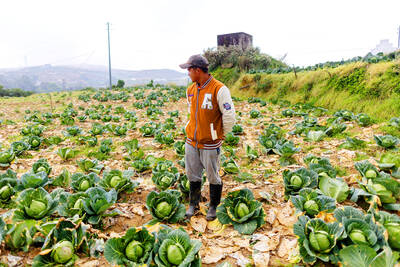
Filipino farmers like Romeo Wagayan have been left with little choice but to let their vegetables rot in the field rather than sell them at a loss, as rising oil prices linked to the Iran war drive up the cost of harvesting, labor and transport. “There’s nothing we can do,” said Wagayan, a 57-year old vegetable farmer in the northern Philippine province of Benguet. “If we harvest it, our losses only increase because of labor, transportation and packing costs. We don’t earn anything from it. That’s why we decided not to harvest at all,” he said. Soaring costs caused by the Middle East

Hungarian Prime Minister Viktor Orban’s officially declared wealth is fairly modest: some savings and a jointly owned villa in Budapest. However, voters in what Transparency International deems the EU’s most corrupt country believe otherwise — and they might make Orban pay in a general election this Sunday that could spell an end to his 16-year rule. The wealth amassed by Orban’s inner circle is fueling the increasingly palpable frustration of a population grappling with sluggish growth, high inflation and worsening public services. “The government’s communication machine worked well as long as our economic situation remained relatively good,” said Zoltan Ranschburg, a political analyst


 RSS
RSS