


Visiting slums that few Brazilians dare to enter, Brazilian President Luiz Inacio Lula da Silva launched a program on Friday to inject huge amounts of government money to lift poor residents out of misery in hopes of ousting the drug gangs that control the shantytowns.
The nearly US$1 billion public works project will fund basic services like running water and underground sewage pipes, while creating thousands of jobs and an official government presence in three of the largest of squatter settlements that cover many of Rio's hillsides.
The money will also build schools, widen roads that few cars can navigate and even give slum dwellers their first real addresses, as well as the ability to apply for government-sponsored credit so they can improve ramshackle homes that frequently collapse or sustain heavy damage in tropical rainstorms.

PHOTO: EPA
Silva, Brazil's first working class president, was protected by heavily armed police who secured the entrances and exits of the Alemao slum where he spoke before heading to two other shantytowns.
Underscoring the danger of the slums, police killed six criminal suspects before dawn in two other Rio slums just hours before Silva spoke.
Stray bullets from shootouts between police and gang members kill or injure an innocent person every other day in Rio on average.
"I'm tired of seeing Rio on the front page of newspapers as if the city is a symbol of violence and stray bullets, when 99 percent of the people here are honest," Silva told a cheering crowd.
He also said that police have a responsibility to improve life in Rio's 600 slums, saying they must start treating residents with respect.
Residents of the shantytowns have long complained that police officers consider the neighborhoods as enemy territory, entering with automatic weapons and shooting before asking questions.
"Citizens who are bandits don't have to be treated with rose petals, but the police before coming here have to know that men, women and children also live here," Silva said.
Last year, the Alemao slum complex -- home to some 150,000 people -- gained infamy for a months-long battle between drug gangs and police that claimed at least 38 lives.
Police are still stationed behind sandbags outside the slum's main entrances, and drug gang members with automatic weapons roam Alemao's mazelike alleyways.
Hundreds of residents, many waving white flags, descended from exposed brick hovels, down narrow alleyways, to hear Silva speak on a makeshift stage.
Samba percussionists played and a video showed an artist's rendering of the sprawling shantytown transformed into a utopian hillside community filled with wide avenues and an overhead cable car system to carry residents up and down steep hillsides from the commuter train station.
"Here we vote and then we never see the politicians. It's unprecedented for the president to come to Alemao. This day will go down in history," said 29-year-old Roni Charles, who works with the AfroReggae community group that tries to steer young people away from violence.
In the Alemao slum alone, Silva promised that 2,000 homes would be replaced and 4,000 would get renovations.
The program will also build new schools, job training centers, a health clinic and post office while creating some 2,000 jobs.
"I really hope this will improve things. We really need peace and we really need jobs, let's hope we get a little of both from Lula, after all that's why we voted for him," said Roseangela Coutinho, a 31-year-old housewife, referring to the president by his nickname.
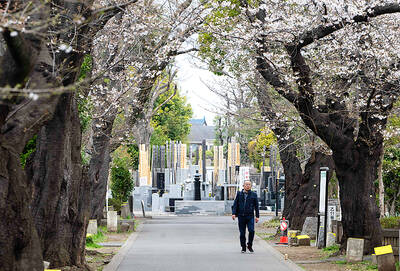
ROCKY RELATIONS: The figures on residents come as Chinese tourist numbers drop following Beijing’s warnings to avoid traveling to Japan The number of Chinese residents in Japan has continued to rise, even as ties between the two countries have become increasingly fractious, data released on Friday showed. As of the end of December last year, the number of Chinese residents had increased by 6.5 percent from the previous year to 930,428. Chinese people accounted for 22.6 percent of all foreign residents in Japan, making them by far the largest group, Japanese Ministry of Justice data showed. Beijing has criticized Tokyo in increasingly strident terms since Japanese Prime Minister Sanae Takaichi last year suggested that a military conflict around Taiwan could

A retired US colonel behind a privately financed rocket launch site in the Dominican Republic sees the project as a response to China’s dominance of the space race in Latin America. Florida-based Launch on Demand is slated to begin building a US$600 million facility in a remote region near the border with Haiti late this year. The project is designed to meet surging demand for the heavy-lift rockets needed to put clusters of satellites into orbit. It is also an answer to China’s growing presence in the region, said CEO Burton Catledge, a former commander of the US Air Force’s 45th Operations

Germany is considering Australia’s Ghost Bat robot fighter as it looks to select a combat drone to modernize its air force, German Minister of Defense Boris Pistorius said yesterday. Germany has said it wants to field hundreds of uncrewed fighter jets by 2029, and would make a decision soon as it considers a range of German, European and US projects developing so-called “collaborative combat aircraft.” Australia has said it will integrate the Ghost Bat, jointly developed by Boeing Australia and the Royal Australian Air Force, into its military after a successful weapons test last year. After inspecting the Ghost Bat in Queensland yesterday,
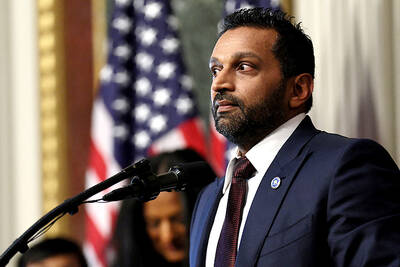
A pro-Iran hacking group claimed to breach FBI Director Kash Patel’s personal e-mail inbox and posted some of the contents online. The e-mails provided by the hacking group include travel details, correspondence with leasing agents in Washington and global entry, and loyalty account numbers. The e-mail address the hackers claim to have compromised has been previously tied to Patel’s personal details, and the leaked e-mails contain photos of Patel and others, in addition to correspondence with family members and colleagues. “The FBI is aware of malicious actors targeting Director Patel’s personal email information,” the agency said in a statement on


 RSS
RSS