


The US military's reliance on unmanned aircraft that can watch, hunt and sometimes kill insurgents has soared to more than 500,000 hours in the air, largely in Iraq.
And new Department of Defense figures show that the Air Force more than doubled its monthly use of drones between January and October, forcing it to take pilots out of the air and shift them to remote flying duty to meet part of the demand.
The dramatic increase in the development and use of drones across the armed services reflects what will be an even more aggressive effort over the next 25 years, the new report said.
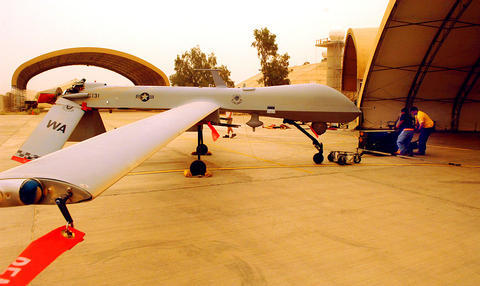
PHOTO: AP
The jump in Iraq coincided with the buildup of US forces last summer as the military swelled its ranks to quell the violence in Baghdad. But Pentagon officials said that even as troops begin to slowly come home this year, the use of Predators, Global Hawks, Shadows and Ravens is unlikely slow down.
"I think right now the demand for the capability that the unmanned system provides is only increasing," said Army Colonel Bob Quackenbush, deputy director for Army Aviation. "Even as the surge ends, I suspect the deployment of the unmanned systems will not go down, particularly for larger systems."
For some Air Force pilots, that means climbing out of the cockpit and heading to places such as Nellis Air Force Base in Nevada, where they can remotely fly the Predators, one of the larger and more sophisticated unmanned aircraft.
About 120 Air Force pilots were recently transferred to staff the drones to keep pace with demands, the Air Force said.
Some National Guard members were also called up to staff the flights. And more will be doing that in the coming months, as the Air Force adds bases where pilots can remotely fly the aircraft. Locations include North Dakota, Texas, Arizona and California and some are already operating.
One key reason for the increase is that US forces in Iraq grew from 15 combat brigades to 20 over the spring and early summer, boosting troop totals from roughly 135,000 to more than 165,000. Slowly over the next six months, five brigades are being pulled out of Iraq that will not be replaced, as part of a drawdown announced by the administration, which began last month.
The increased military operations all across Iraq last summer triggered greater use of the drones and an escalating call for more of the systems -- from the Pentagon's key hunter-killer, the Predator, to the surveillance Global Hawks and the smaller, cheaper Ravens.
In one recent example of what they can do, a Predator caught sight of three militants firing mortars at US forces in November in Balad, Iraq. The drone fired an air-to-ground missile, killing the three.
Air Force officials said that Predator flights increased last year, from about 2,000 hours in January to more than 4,300 hours in October. They are expected to continue to escalate when hours are calculated for November and last month.

ACTIONABLE ADVICE: The majority of chatbots tested provided guidance on weapons, tactics and target selections, with Perplexity and Meta AI deemed to be the least safe From school shootings to synagogue bombings, leading artificial intelligence (AI) chatbots helped researchers plot violent attacks, according to a study published on Wednesday that highlighted the technology’s potential for real-world harm. Researchers from the nonprofit watchdog Center for Countering Digital Hate and CNN posed as 13-year-old boys in the US and Ireland to test 10 chatbots, including ChatGPT, Google Gemini, Perplexity, Deepseek and Meta AI. Eight of the chatbots assisted the make-believe attackers in more than half the responses, providing advice on “locations to target” and “weapons to use” in an attack, the study said. The chatbots had become a “powerful accelerant for

Australians were downloading virtual private networks (VPNs) in droves, while one of the world’s largest porn distributors said it was blocking users from its platforms as the country yesterday rolled out sweeping online age restriction. Australia in December became the first country to impose a nationwide ban on teenagers using social media. A separate law now requires artificial intelligence (AI)-powered chatbot services to keep certain content — including pornography, extreme violence and self-harm and eating disorder material — from minors or face fines of up to A$49.5 million (US$34.6 million). The country also joined Britain, France and dozens of US states requiring
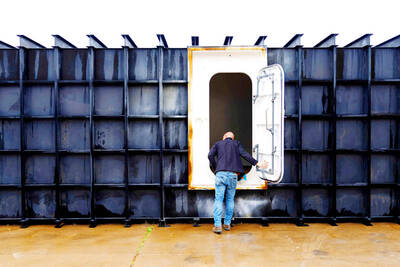
Since the war in the Middle East began nearly two weeks ago, the telephone at Ron Hubbard’s bomb shelter company in Texas has not stopped ringing. Foreign and US clients are rushing to buy his bunkers, seeking refuge in case of air raids, nuclear fallout or apocalypse. With the US and Israel pounding Iran, and Tehran retaliating with strikes across the region, Hubbard has seen demand for his product soar, mostly from Gulf nation customers in Bahrain, Qatar, Kuwait and the United Arab Emirates. “You can imagine how many people are thinking: ‘I wish I had a bomb shelter,’” Hubbard, 63, said in
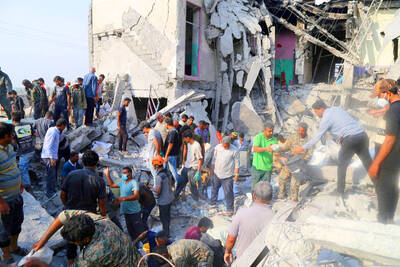
STILL IN POWER: US intelligence reports showed that the Iranian regime is not in danger of collapse and retains control of the public, casting doubt on Trump’s exit Nearly every US Senate Democrat on Wednesday signed a letter sent to US Secretary of Defense Pete Hegseth requesting a “swift investigation” of airstrikes on a girls’ school in Iran that killed scores of children and any other potential US military actions causing civilian harm. Reuters reported on Thursday last week that US military investigators believe it is likely that US forces were responsible for the Feb. 28 strike on the school, as US and Israeli forces launched attacks on Iran. “The results of this school attack are horrific. The majority of those killed in the strikes were girls between the ages


 RSS
RSS