


UN Secretary-General Ban Ki-moon said on Wednesday he was worried that Lebanese militias were arming to prepare for a "constitutional void" if parliament cannot agree on a new president.
The presidential election was delayed for the second time until Nov. 12 to allow time to find a compromise candidate to succeed pro-Syrian President Emile Lahoud, whose term expires on Nov. 23.
Agreement on a new president is seen as vital to resolving Lebanon's most serious political crisis since the 1975 to 1990 civil war. It pits the Western-backed, anti-Syrian government against the opposition, led by pro-Syrian Hezbollah. If no president is elected before Lahoud's term expires, there are fears that the country could end up with two rival governments and even slide back into armed conflict.
"There must not be a constitutional void at the level of the presidency, nor two rivaling governments," Ban said in a report for the UN Security Council distributed on Wednesday, urging Lebanese leaders to engage in dialogue on a president.
Many Lebanese lawmakers have been holed up in a Beirut hotel for weeks for fear of joining a growing list of anti-Syrian parliamentarians assassinated in the past two years.
Ban said Lebanese security forces reported that militias, including Hezbollah, were conducting military training around the country, and handing out weapons to their supporters.
"The re-emergence of militias is certainly one of the most disturbing developments over the past six months," Ban said.
Meanwhile, Lebanese troops opened fire yesterday on Israeli warplanes flying low over southern Lebanon, but no hits were reported, Lebanese officials said.
A security official said a total of 150 rounds were fired as soldiers opened up at two planes that flew by just east of Marjayoun town.
A senior military officer said the army "confronted" the planes.

JAN. 1 CLAUSE: As military service is voluntary, applications for permission to stay abroad for over three months for men up to age 45 must, in principle, be granted A little-noticed clause in sweeping changes to Germany’s military service policy has triggered an uproar after it emerged that the law requires men aged up to 45 to get permission from the armed forces before any significant stay abroad, even in peacetime. The legislation, which went into effect on Jan. 1 aims to bolster the military and demands all 18-year-old men fill out a questionnaire to gauge their suitability to serve in the armed forces, but stops short of conscription. If the “modernized” model fails to pull in enough recruits, parliament will be compelled to discuss the reintroduction of compulsory service, German

For two decades, researchers observed members of the Ngogo chimpanzee group of Kibale National Park in Uganda spend their days eating fruits and leaves, resting, traveling and grooming in their tropical rainforest abode, but this stable community then fractured and descended into years of deadly violence. The researchers are now describing the first clearly documented example of a group of wild chimpanzees splitting into two separate factions, with one launching a series of coordinated attacks against the other. Adult males and infants were targeted, with 28 deaths. “Biting, pounding the victim with their hands, dragging them, kicking them — mostly adult males,
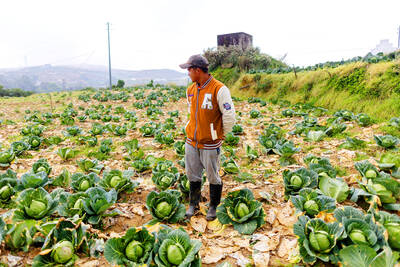
Filipino farmers like Romeo Wagayan have been left with little choice but to let their vegetables rot in the field rather than sell them at a loss, as rising oil prices linked to the Iran war drive up the cost of harvesting, labor and transport. “There’s nothing we can do,” said Wagayan, a 57-year old vegetable farmer in the northern Philippine province of Benguet. “If we harvest it, our losses only increase because of labor, transportation and packing costs. We don’t earn anything from it. That’s why we decided not to harvest at all,” he said. Soaring costs caused by the Middle East

Hungarian Prime Minister Viktor Orban’s officially declared wealth is fairly modest: some savings and a jointly owned villa in Budapest. However, voters in what Transparency International deems the EU’s most corrupt country believe otherwise — and they might make Orban pay in a general election this Sunday that could spell an end to his 16-year rule. The wealth amassed by Orban’s inner circle is fueling the increasingly palpable frustration of a population grappling with sluggish growth, high inflation and worsening public services. “The government’s communication machine worked well as long as our economic situation remained relatively good,” said Zoltan Ranschburg, a political analyst


 RSS
RSS