


The Abu Ghraib case has effectively ended, and criminal responsibility for the detainee pictures that drew world outrage ended up rising no higher on the US chain of command than staff sergeant.
The only officer charged, Lieutenant Colonel Steven Jordan, was acquitted on Tuesday of failing to control lower-ranking soldiers who abused and sexually humiliated detainees at the prison near Baghdad in the fall of 2003. A military jury found that his only crime was disobeying a general's order not to discuss the subsequent investigation.
The jury was set to resume deliberations yesterday on Jordan's punishment. The count carries a maximum five-year prison sentence, but prosecutors recommended that Jordan be reprimanded and fined one month's pay -- about US$7,400.
The allegations at the US-run prison became known with the release of pictures of US soldiers smiling while detainees, some of them naked, were held on leashes or in painful and humiliating positions at the prison. Jordan, 51, was accused of fostering a climate conducive to abuse.
Eleven enlisted soldiers were convicted. The highest-ranking was Staff Sergeant Ivan Frederick, a military police reservist who is serving an eight-year sentence.
Hina Shamsi, deputy director of New York-based Human Rights First, said an "accountability gap" remains between the convicted soldiers and high-ranking military and civilian officials who okayed harsh interrogation techniques.
"None of the cases brought to date has given the systemic accounting the nation needs of what happened, why and how far up the chain of command responsibility lies," Shamsi said. "It cries out for the kind of oversight and investigations that Congress can do."
John Sifton, a counterterrorism researcher with Washington-based Human Rights Watch, called Jordan's prosecution "amateurish and half-baked" and said the military lacked the will to get to the bottom of the abuse.
Jordan was head of the prison's interrogation center from mid-September until mid-November 2003. He was the senior officer inside one of the cellblock's on Nov. 24, 2003, during at least part of an episode that included a strip-search of Iraqi correctional officers for weapons and ended with a dog being brought in to intimidate a detainee during questioning in his cell.
The jury found Jordan not guilty of three counts related to the soldiers' behavior: Cruelty and maltreatment for subjecting detainees to forced nudity and intimidation by dogs; dereliction of a duty to properly train and supervise soldiers in humane interrogation rules; and failing to obey a lawful general order by ordering dogs used for interrogations without higher approval.
He was convicted of disobeying retired Major General George Fay's order not to discuss the general's investigation into the abuse.

ACTIONABLE ADVICE: The majority of chatbots tested provided guidance on weapons, tactics and target selections, with Perplexity and Meta AI deemed to be the least safe From school shootings to synagogue bombings, leading artificial intelligence (AI) chatbots helped researchers plot violent attacks, according to a study published on Wednesday that highlighted the technology’s potential for real-world harm. Researchers from the nonprofit watchdog Center for Countering Digital Hate and CNN posed as 13-year-old boys in the US and Ireland to test 10 chatbots, including ChatGPT, Google Gemini, Perplexity, Deepseek and Meta AI. Eight of the chatbots assisted the make-believe attackers in more than half the responses, providing advice on “locations to target” and “weapons to use” in an attack, the study said. The chatbots had become a “powerful accelerant for

Australians were downloading virtual private networks (VPNs) in droves, while one of the world’s largest porn distributors said it was blocking users from its platforms as the country yesterday rolled out sweeping online age restriction. Australia in December became the first country to impose a nationwide ban on teenagers using social media. A separate law now requires artificial intelligence (AI)-powered chatbot services to keep certain content — including pornography, extreme violence and self-harm and eating disorder material — from minors or face fines of up to A$49.5 million (US$34.6 million). The country also joined Britain, France and dozens of US states requiring
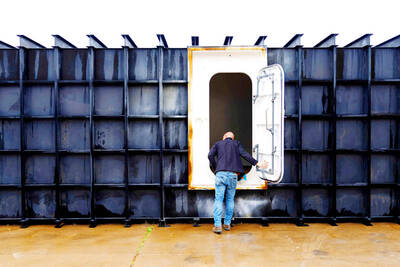
Since the war in the Middle East began nearly two weeks ago, the telephone at Ron Hubbard’s bomb shelter company in Texas has not stopped ringing. Foreign and US clients are rushing to buy his bunkers, seeking refuge in case of air raids, nuclear fallout or apocalypse. With the US and Israel pounding Iran, and Tehran retaliating with strikes across the region, Hubbard has seen demand for his product soar, mostly from Gulf nation customers in Bahrain, Qatar, Kuwait and the United Arab Emirates. “You can imagine how many people are thinking: ‘I wish I had a bomb shelter,’” Hubbard, 63, said in
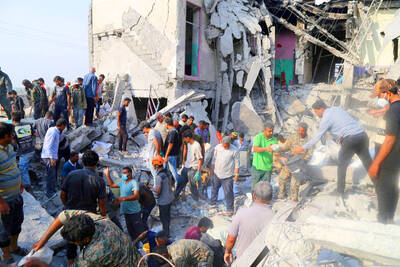
STILL IN POWER: US intelligence reports showed that the Iranian regime is not in danger of collapse and retains control of the public, casting doubt on Trump’s exit Nearly every US Senate Democrat on Wednesday signed a letter sent to US Secretary of Defense Pete Hegseth requesting a “swift investigation” of airstrikes on a girls’ school in Iran that killed scores of children and any other potential US military actions causing civilian harm. Reuters reported on Thursday last week that US military investigators believe it is likely that US forces were responsible for the Feb. 28 strike on the school, as US and Israeli forces launched attacks on Iran. “The results of this school attack are horrific. The majority of those killed in the strikes were girls between the ages


 RSS
RSS