


Russian prosecutors are investigating a video posted on several ultranationalist Web sites that appears to show the brutal execution of two men from Central Asia and the Caucasus -- and the beheading of one of them.
The video, which was posted on the Web site of a Russian organization calling itself National Socialism/White Power along with other more common Web sites, shows two men kneeling on the ground with their arms and legs tied up.
"We were arrested by Russian national socialists," they say in barely audible voices.
A subtitle on the video identifies the two as "colonists from Tajikistan and Dagestan." A Nazi flag stands in the background while two men in masks and camouflaged clothing give Nazi salutes.
Then, a man with a knife or saw beheads one of the abducted men as heavy metal music plays in the background.
The video then cuts to the other man on his knees with his hands taped behind his back and his mouth taped shut. A hand can be seen firing a gun into the man's head and the body falls forward into what appears to be a freshly dug grave. Heavy metal music continues to play.
There was no way to independently confirm the content of the video, but Russian prosecutors told news agencies on Monday that they had opened a criminal investigation into its content.
Later on Monday, the video appeared to have been taken down from several of the sites, including the popular blogging Web site LiveJournal and a message on the National Socialism/White Power Web site indicated the site had been overwhelmed with views.
Alexander Verkhovsky, an activist with the SOVA center, which monitors hate crimes in Russia, said after watching the video that he had never heard of the organization.
He also said he had seen many hate-crime videos in his work, but most of those that purported to depict murders appeared to have been staged or fake. This one, he said, appeared very genuine.
"I've never seen anything that blatant," he said.
Russia has seen a marked rise in xenophobia and racism in recent years, with numerous attacks on foreigners -- many of them from the former Soviet republics in Central Asia and the Caucasus.

Crowds in Bangladesh are flocking to snap photographs with an unlikely social media star — an albino buffalo with flowing blond hair nicknamed “Donald Trump” that is due to be sacrificed within days. Owner Zia Uddin Mridha, 38, said his brother named the 700kg bull over its flowing helmet of hair resembling the signature look of the US president. “My younger brother picked this name because of the buffalo’s extraordinary hair,” he said at his farm in Narayanganj, just outside the capital, Dhaka. Mridha said that a constant stream of curious visitors — social media fans, onlookers and children — have come throughout
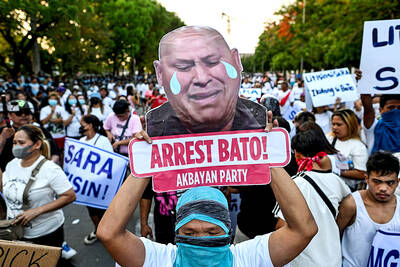
The Philippines said it has asked the country’s Supreme Court to allow it to arrest former Philippine president Rodrigo Duterte’s chief drug war enforcer to stand trial in an international tribunal. The International Criminal Court (ICC) last week unsealed an arrest warrant against Philippine Senator Ronald dela Rosa, accusing him along with Duterte and other “coperpetrators” of the “crime against humanity of murder.” Dela Rosa briefly sought refuge in the Philippine Senate last week while asking the Philippine Supreme Court to stop an ongoing attempt by government agents to arrest him. “By his own conduct, he has placed himself outside the protection of

It began as a satirical online project. Now millions of young people in India are flocking to it as an outlet for their frustration. A parody political party called the Cockroach Janta Party, with the insect as its symbol, has exploded across India’s social media by turning absurdist humor into protest. Memes and short videos mocking corruption, joblessness and political dysfunction have flooded social media sites, where millions of users are embracing the cockroach — known for its ability to survive harsh conditions — as a tongue-in-cheek symbol of endurance. The online movement’s rise has been unusually rapid. The Cockroach Janta Party (CJP)

The researchers in Ireland looked at their computer screen, marveling at a medieval book tracked down in a Roman library. They flipped through its digitized pages and found their sought-after treasure: the oldest surviving English poem. “We were extremely surprised. We were speechless. We couldn’t believe our eyes when we first saw that,” said Elisabetta Magnanti, a visiting research fellow at Trinity College Dublin’s school of English. The poem was also within the main body of Latin text, she said, calling it “extraordinary.” Composed in Old English by a Northumbrian agricultural worker in the 7th century, Caedmon’s Hymn appears within some copies of


 RSS
RSS