


A black box emitting a high pitched pulsing sound designed to deter loitering teenagers is being used in thousands of sites around Britain just a year after its launch, prompting warnings from civil liberties campaigners that it is a "sonic weapon" that could be illegal.
The Mosquito device, whose high-frequency shriek is audible only to those under around 25, has been bought by police, local councils, shops, and even private home owners, to tackle concerns over groups of young people congregating and causing disruption.
Less than 18 months after the device, produced by Wales-based firm Compound Security, went into production, 3,300 have been sold -- 70 percent of them in the UK.
So great has been demand that the company is now working on a more powerful, 50m-range model designed to be used in larger areas such as cemeteries and hazardous building sites and is drawing up plans for a higher volume hand grenade version requested by the US prison service to help tackle riots.
However, while some local authorities and police forces are highly enthusiastic about the Mosquito, civil liberties campaigners Liberty are raising concerns about both the machine's legality and its effectiveness in addressing antisocial behavior.
A survey by the organization has identified the device being used in every region of England except the north east. In the north west of England police have mounted it on a car to drive to trouble spots.
Liberty director Shami Chakrabarti said: "At worst, the Mosquito is a low-level sonic weapon; at best, a dog-whistle for kids. Either way it has no place in a civilized society that values its children and young people and seeks to imbue them with values of dignity and respect."
"Degrading young people instead of providing opportunities for them is a tragic option whose long-term effect is frightening to imagine."
Liberty argues that the device is inappropriate, partly because it is indiscriminate, causing discomfort to and potentially driving away all teenagers in an area rather than specifically targeting those who may be causing trouble.
Alex Gask, one of the campaign group's lawyers, said: "Our objection is that this device is clearly designed as a way of getting rid of young people as a problem and about seeing them as a problem rather than identifying specific behavior they are engaged in and getting rid of that."
Liberty suggests the device may fall foul of article eight of the European convention on human rights, conferring the right to a private life, or article 14 on the grounds that it is discriminatory on grounds of age. The organization also believes it may contravene environmental health legislation -- a suggestion dismissed by inventor Howard Stapleton on the ground that many devices, including cars, are louder.
However, Liberty cannot attempt to bring a legal case itself, and must wait until a young person seeks to pursue the issue through the courts.
Meanwhile, the government has refused to give a view on the device. Last November, home secretary John Reid -- responding to his Liberal Democrat opposite number, Nick Clegg -- said his department had not discussed the Mosquito with its manufacturers or with the police. He said local agencies were encouraged to "consider the full range of innovations ... to reduce crime" and were then free to decide on the "most appropriate interventions."
Stapleton said he had sought the advice of a senior audiologist, who had judged that even prolonged exposure to the device would not damage hearing.
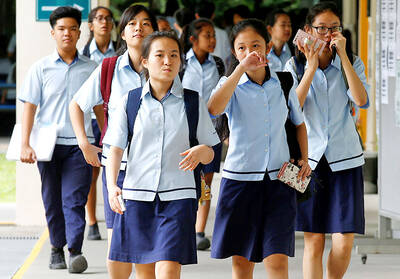
School bullies in Singapore are to face caning under new guidelines, but the education minister on Tuesday said it would be meted out only as a last resort with strict safeguards. Human rights groups regularly criticize Singapore for the use of corporal punishment, which remains part of the school and criminal justice systems, but authorities have defended it as a deterrent to crime and serious misconduct. Caning was discussed in the parliament after legislators asked how it would be used in relation to bullying in schools. The debate followed stricter guidelines on serious student misconduct, including bullying, unveiled by the Singaporean Ministry of

As evening falls in Fiji’s capital, a steady stream of people approaches a makeshift clinic that is a first line of defense against one of the world’s fastest-growing HIV epidemics. In the South Pacific nation — a popular tourist destination of just under a million people — more than 2,000 new HIV cases were recorded last year, a 26 percent increase from 2024. The government has declared an HIV outbreak and described it as a national crisis. “It’s spreading like wildfire,” said Siteri Dinawai, 46, who came to be tested. The Moonlight Clinic, a converted minibus parked in a suburban cul-de-sac in Suva, is
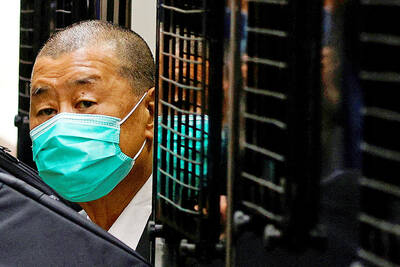
Jailed media entrepreneur Jimmy Lai (黎智英) has been awarded Deutsche Welle’s (DW) freedom of speech award for his contribution to Hong Kong’s pro-democracy movement. The German public broadcaster on Thursday said Lai would be presented in absentia with the 12th iteration of the award on June 23 at the DW Global Media Forum in Bonn. Deutsche Welle director-general Barbara Massing praised the 78-year-old founder of the now-shuttered news outlet Apple Daily for standing “unwaveringly for press freedom in Hong Kong at great personal risk.” “With Apple Daily, he gave journalists a platform for free reporting and a voice to the democracy movement in

A MESSAGE: Japan’s participation in the Balikatan drills is a clear deterrence signal to China not to attack Taiwan while the US is busy in the Middle East, an analyst said The Japan Self-Defense Forces yesterday fired a Type 88 anti-ship missile during a joint maritime exercise with US, Australian and Philippine forces, hitting a decommissioned Philippine Navy ship in waters facing the disputed South China Sea, in drills that underscore Tokyo’s rising willingness to project military power on China’s doorstep. The drill took place as Manila and Tokyo began talks on a potential defense equipment transfer, made possible by Japan’s decision to scrap restrictions on military exports. The discussions include the possible early transfer of Abukuma-class destroyers and TC-90 aircraft to the Philippines, Japanese Minister of Defense Shinjiro Koizumi said. Philippine Secretary of


 RSS
RSS