


A huge clean-up operation was under way on Saturday in some of Mozambique's most popular resorts as the southern African nation's fledgling tourist industry struggled to recover from a devastating cyclone.
Casualties from Cyclone Favio appeared to be limited thanks to a warning system and evacuations by the authorities, with initial reports of 10 dead.
Aid agencies geared up to send supplies to the coastal region worst hit by Thursday's cyclone, which was downgraded to a tropical storm as it moved across central Mozambique, bringing more flooding and misery to area which has been deluged since January.
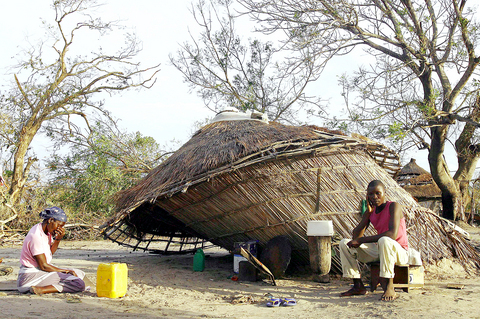
PHOTO: AP
Vilanculos, which used to be an idyllic resort boasting some of Mozambique's most exclusive tourist lodges, was left in ruins, with mighty palms uprooted and the main road cut in half by a meter-deep pothole. There was no electricity and no running water.
The central market, made of steel and tin, totally collapsed as did most other flimsy structures in an area where most homes are built of bamboo and straw.
Traumatized residents started cleaning up and some vendors were back on the street selling vegetables and fruit.
Simone Chivale, a 30-year-old artist who lost his home and all his possessions under the weight of a giant palm tree, said his main worry was about the next cyclone, which was reported to the north of Madagascar. It was unclear when and where it would hit Mozambique.
"What will happen to all these children?" asked Chivale, pointing to children playing in streets littered with debris.
The nearby town of Inhambane and the resort of Tofo Beach were also badly hit. The area has stunning beaches and is popular with divers, snorkelers and big game fishermen because of the array of sea life, including giant mantas and enormous whale sharks.
There were no signs of tourists in Vilanculos and locals said that they had all moved to safer ground.
The government has encouraged the development of the tourist industry as part of the economic revival in an impoverished country which is still suffering from the legacy of colonial rule and civil war.
Authorities said they were still assessing the full scale of the damage and the likely cost of reconstruction. The EU, UNICEF and CARE were among the agencies sending in relief supplies.
Neighboring South Africa sent two government ministers into the disaster area and said it was ready to provide material assistance, including helicopters to transport food to the temporary accommodation centers.
The government said it urgently needed tents for displaced people who are now living in temporary accommodation centers, roof sheeting for the reconstruction of homes and water treatment plants.
Fernanda Texeira, the head of the International Federation of the Red Cross in Mozambique, said on Friday that the number of homeless living in tented camps had jumped almost overnight from 88,600 to 121,000 and that more could still arrive.
One of the biggest fears was that the number of diarrhea cases were increasing with the flooding that also brought a heightened risk of cholera outbreaks, Texeira said.
Favio came ashore south of Beira at Vilankulos on Thursday with sustained winds of 200kph and heavy rain.

SPEAKING OUT: After Siranudh Scott’s allegations surfaced, celebrities and public figures took to social media to share their own experiences of sexual misconduct and abuse A high-profile alleged sexual abuse case within a wealthy Thai beer brewing family has prompted a wave of painful accounts from survivors of unconnected abuse in the conservative nation. Siranudh Scott, a member of the billionaire Thai family that founded the ubiquitous Singha beer brand, posted an emotional video this month accusing his elder brother Sunit of repeatedly abusing him when he was a teenager. Sunit, who is in his 30s, later denied the allegations in a video posted online, but Singha parent Boonrawd dismissed him from his executive role with the company on Tuesday last week. “I felt I needed to speak
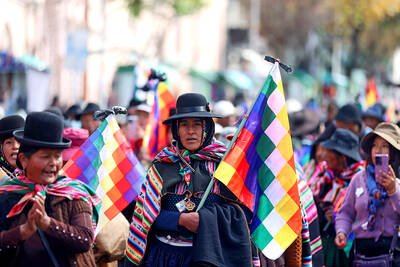
SEEKING ORDER: Rodrigo Paz said that ‘anyone who wants to destroy the nation will have to deal with this president and the full force of the constitution’ Bolivian President Rodrigo Paz on Wednesday said that the nation was at a “breaking point” after nearly a month of protests that have caused shortages of food, fuel and medicine. Paz, who took office six months ago amid the worst economic crisis there in four decades, is battling a groundswell of fury over his policies. The political capital, La Paz, has been besieged by low-income workers and members of the indigenous majority calling for his resignation. “The country needs order and is reaching breaking point,” the 58-year-old said at a public event in La Paz, renewing his appeal for dialogue. On Tuesday, the Bolivian
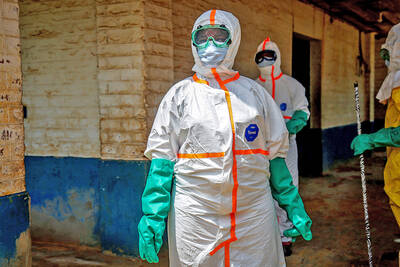
COMMUNITY CONFLICT: Concerns about disease spread from corpses has run up against friends and families’ desire to bury their dead as infection spreads in the area Angry residents of a town at the epicenter of the Ebola outbreak in the Democratic Republic of the Congo (DR Congo) attacked and burned a tent that was part of a health center where people are being treated for the virus, the staff there said Saturday. It was the second such attack in the region in a week. No one was hurt in the attack, according to reports but as patients ran out to escape the fire, 18 people with suspected Ebola infections fled the facility and are unaccounted for, a hospital director said. Angry residents arrived at the clinic in the

Forecasters in Europe yesterday warned of exceptional heat as record temperatures driven by a “heat dome” push temperatures well above seasonal norms across the continent. The surge follows a record-breaking Monday, with France logging its hottest day in the month of May on record, its weather agency said, and the UK also posting unprecedented highs. A so-called “heat dome” of warm air from northern Africa trapped under a high-pressure system over western Europe is behind the high temperatures not usually seen until high summer. Restrictions on outdoor work were imposed in parts of Italy, beaches in southwest France filled earlier than usual and


 RSS
RSS