


One of Russia's wealthiest men, billionaire metals magnate Mikhail Prokhorov, was taken into custody by French police in a crackdown on a suspected prostitution ring at an upmarket Alpine ski resort, officials said on Thursday.
Investigators suspect Russian call girls were brought to the resort in Courchevel, a favored playground of Russia's rich, to work during the holidays, authorities said. Clients allegedly paid the women with gifts from luxury boutiques.
A total of 26 people were taken in for questioning on Tuesday, Prosecutor Xavier Richaud said. As of Thursday, 15 were still being held in the southeast city of Lyon -- including Prokhorov -- and judicial officials extended their 48-hour detention period until yesterday, officials close to the investigation said.

PHOTO: AP
An Austrian who runs a travel agency and is suspected of helping Russian girls make their way to two luxury hotels at the ski resort also was among the 15, the officials said. They were not authorized to discuss the case, and asked not to be identified.
Some of the 15 were expected to be placed under investigation -- a step short of being charged -- yesterday. They would face counts of "aggravated procuring in an organized band" and "criminal association," the sources said.
Martine Monteil, director of France's judicial police, said earlier that a Russian oligarch was in custody for allegedly offering young women to his guests. She did not identify Prokhorov by name.
Prokhorov, the 41-year-old chief executive of Russian mining giant OAO Norilsk Nickel, is ranked No. 89 on Forbes magazine's list of the world's richest people last year. He is worth US$6.4 billion, according to Forbes, largely thanks to his holding in Norilsk Nickel, the world's largest nickel producer, and Polyus Gold, Russia's biggest gold miner.
The sporty, 2m tall Prokhorov is often described as Russia's most eligible bachelor. Even among Russia's big-spending business elite, he has a reputation for organizing lavish parties.
The arrests occurred in several hotels at fashionable Courchevel, which has its own airstrip that can accommodate private jets. Russian tycoons flock to the resort over the New Year and Orthodox Christmas holidays.
Investigators also seized US$65,000 at two four-star hotels in Courchevel, an official working on the probe said. The official was not authorized to speak to the media and requested anonymity. No drugs or weapons were found.
Those questioned include seven Russian women about 20 years old, as well as people suspected of helping bring the women to France, the official said. It was unclear whether they were among those still in custody.
Police suspect the women involved worked only occasionally as prostitutes and that their pay likely came mainly in the form of expensive presents from luxury boutiques in the ski station, the investigating official said.
That practice is also used by some prostitutes in the chic beach resorts of the French Riviera. The official said the giving of gifts could complicate efforts to prove the women were prostitutes and not simply friends.
Police began the investigation last year after noticing suspicious trips by young Russian women heading through Geneva to the French Alps, with tickets booked through Austrian travel agencies, the official said. Investigators were on the lookout for two waves of prostitutes arriving in Courchevel during the 2006 to 2007 holiday season.
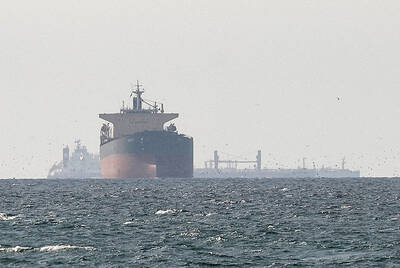
A ship that appears to be taking on the identity of a scrapped gas carrier exited the Strait of Hormuz on Friday, showing how strategies to get through the waterway are evolving as the Middle East war progresses. The vessel identifying as liquefied natural gas (LNG) carrier Jamal left the Strait on Friday morning, ship-tracking data show. However, the same tanker was also recorded as having beached at an Indian demolition yard in October last year, where it is being broken up, according to market participants and port agent’s reports. The ship claiming to be Jamal is likely a zombie vessel that

Cannabis-based medicines have shown little evidence of effectiveness for treating most mental health and substance-use disorders, according to a large review of past studies published in a major medical journal on Monday. Medical use of cannabinoids has been expanding, including in the US, Canada and Australia, where many patients report using cannabis products to manage conditions such as anxiety, post-traumatic stress disorder and sleep problems. Researchers reviewed data from 54 randomized clinical trials conducted between 1980 and May last year involving 2,477 participants for their analysis published in The Lancet. The studies assessed cannabinoids as a primary treatment for mental disorders or substance-use
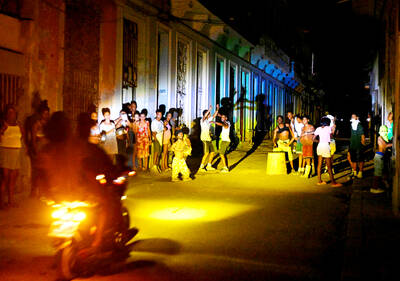
NATIONWIDE BLACKOUT: US President Donald Trump cut off Venezuelan oil shipments to Cuba, strangling the Caribbean island’s already antiquated grid Cuba’s national electric grid collapsed on Monday, the nation’s grid operator said, leaving about 10 million people without power amid a US-imposed oil blockade that has crippled the already obsolete generation system. Grid operator UNE on social media said that it is investigating the causes of the blackout, the latest in a series of widespread outages that last for hours or days and that this weekend sparked a rare violent protest in the communist-run nation. Officials ruled out a major power plant failure, but had still not pinpointed the root cause of the grid collapse, suggesting a problem with transmission. Officials said that

‘HEALTH ISSUE’: More than 250 women are hospitalized every day due to complications from unsafe abortions, and about three die, a study showed Jane had been bleeding heavily for days before finally seeking help, not from a hospital, but from the man who sold her the pills meant to end her six-week pregnancy. Abortions are strictly outlawed in the mainly Catholic Philippines, forcing women to turn to a patchwork of providers operating in the online shadows. While rare in practice, Philippine law allows for prison terms of up to six years for abortion patients and providers, leaving thousands of Filipinas to search for solutions in online forums where unlicensed sellers promote abortifacients. “It was very painful, as if my abdomen was being twisted,” said Jane, whose


 RSS
RSS